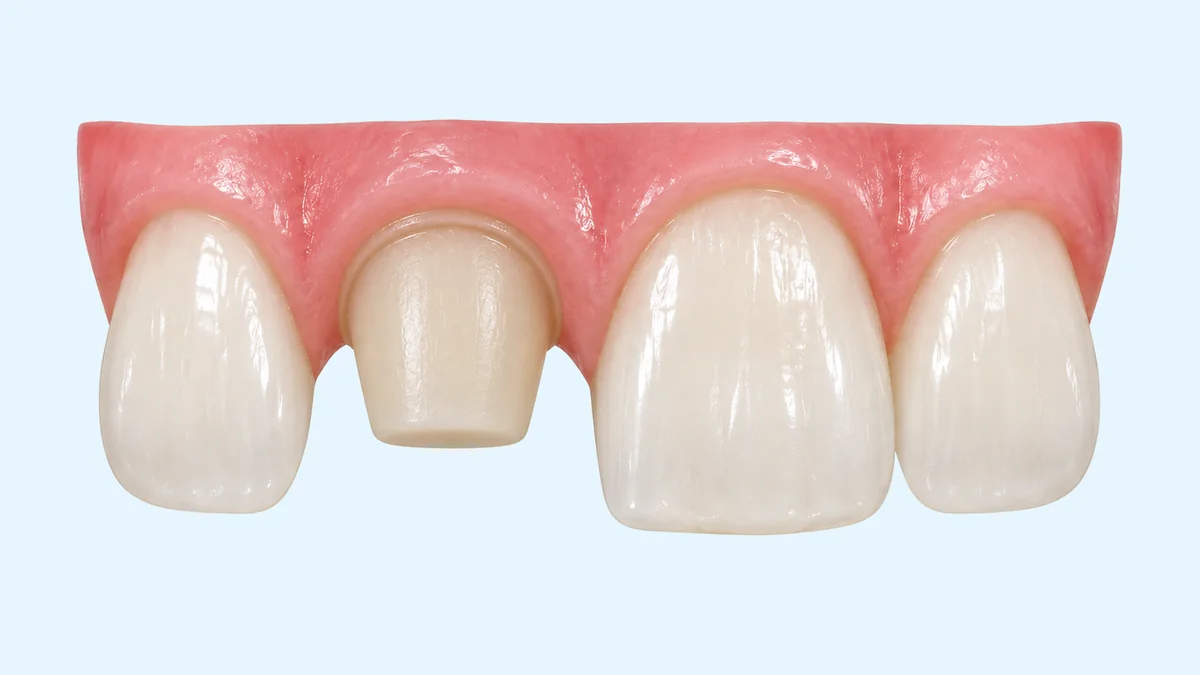
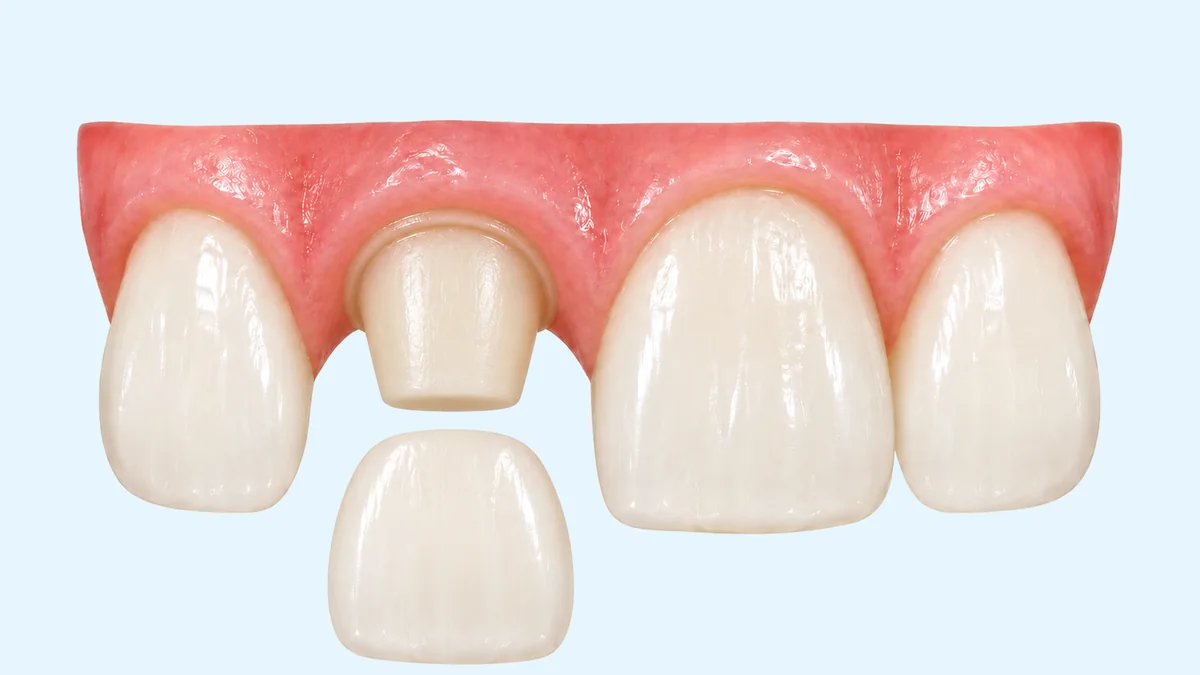
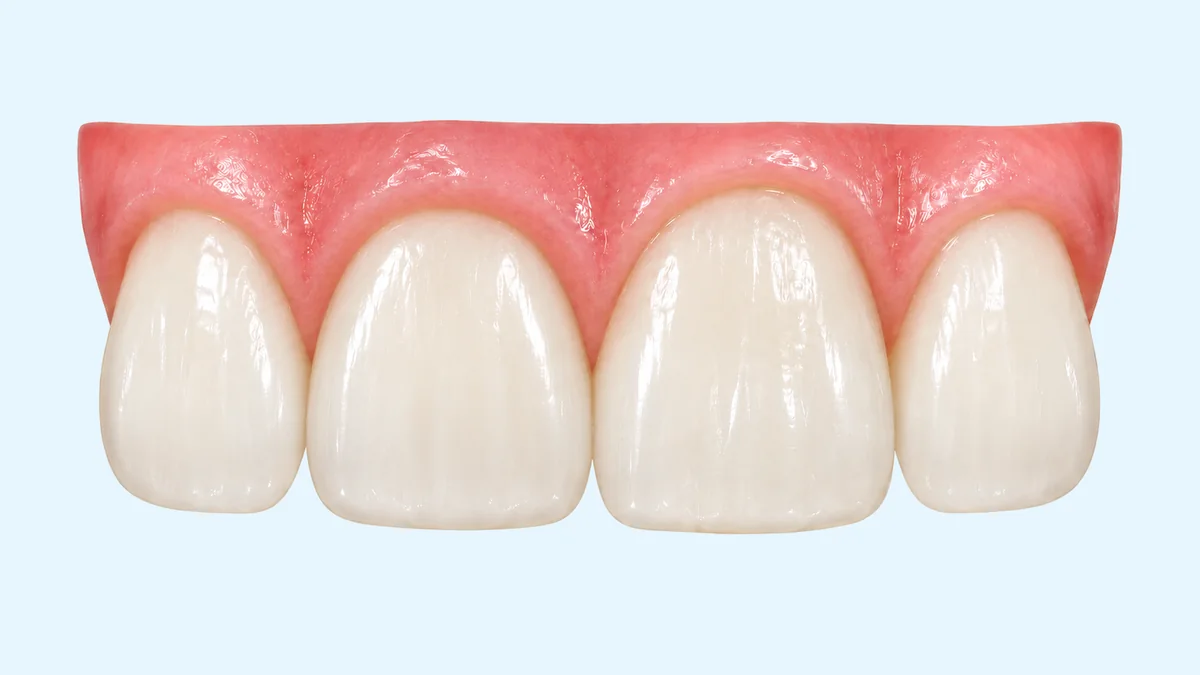
Layered ceramic crown
Who it suits: A front tooth that has to match its neighbours in fine detail.
What it does: A strong ceramic core with porcelain built up by hand on top for depth of colour. The outer layer can chip under a heavy bite.

Treatments · Vogue Clinics
Metal-free crowns made entirely of ceramic, chosen tooth by tooth for strength or translucency.

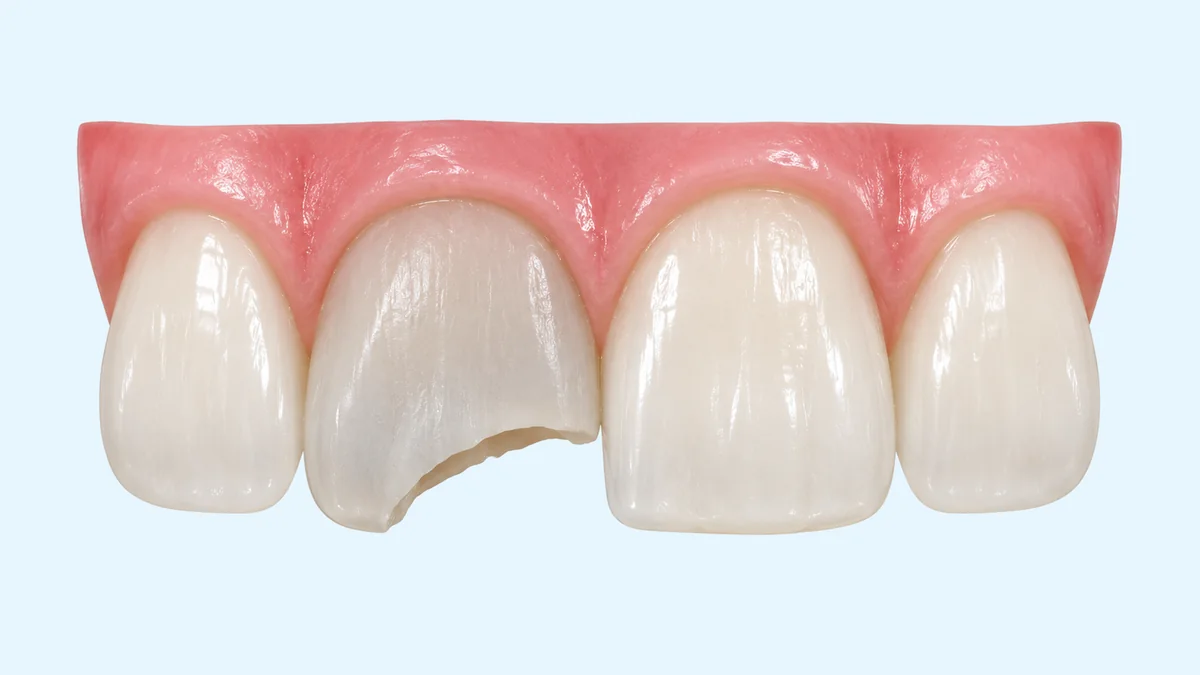
Illustration for explanation only. Which ceramic suits your tooth, and whether a dark tooth needs extra steps, is decided at your examination.
What are all-ceramic crowns, and who are they for?
All-ceramic crowns are made entirely of ceramic, with no metal inside. The name covers several materials: zirconia, chosen for strength, and glass-ceramics such as E.max, chosen for translucency. They suit most front teeth, people with a metal allergy and anyone who wants no metal edge at the gum.
Which option suits you is decided at your examination, not on this page.
Send photos of your smile from the front and both sides on WhatsApp or through the form, with an X-ray if you have one. Tell us about any old crowns, metal allergy or grinding.
Brush twice a day, clean between your teeth daily and keep up check-ups, where X-rays show the edges of the crowns. If you grind, a night guard protects the ceramic. Routine check-ups can be done by a dentist near your home, and your coordinator stays reachable.
The name tells you what a crown doesn't contain, not exactly what it is. Under it sit materials that behave quite differently.
A question we often hear is whether metal-free means weaker. Not necessarily: zirconia is very strong, while glass-ceramics trade some strength for a more lifelike look.
| All-ceramic | Metal-supported porcelain | |
|---|---|---|
| At the gum line | No metal edge to show | A grey edge may show if the gum recedes |
| Light | Passes through, more or less depending on the ceramic | Blocked by the metal |
| Metal allergy | No metal | Depends on the alloy |
| Strength | From good to very high, depending on the ceramic | High |
| Fixing | Bonded or cemented, depending on the ceramic | Cemented |
All-ceramic crowns suit most people. In these situations your dentist plans more carefully, and may choose a particular ceramic or treat something else first.
These words are often used loosely, which makes crowns hard to compare. Porcelain is one kind of ceramic, so a 'porcelain crown' can be metal-free or built on metal.
When you compare plans, ask one question: is there metal inside?
| What you hear | What it usually means |
|---|---|
| All-ceramic or full ceramic crown | No metal at all: zirconia or a glass-ceramic |
| Glass-ceramic crown | A translucent ceramic such as E.max |
| Zirconia crown | The strongest ceramic; one type of all-ceramic crown |
| Metal-ceramic or porcelain-fused-to-metal crown | Porcelain on a metal inner cap; not all-ceramic |
| Porcelain crown | Unclear on its own; ask whether there is metal inside |
Your treatment journey
From your first message to the follow-up after you fly home, one coordinator stays with you.
From home
A few smile photos or a recent X-ray on WhatsApp is enough to start.
From home
Our dentists prepare your treatment plan and quote, in writing.
Istanbul
We organise appointments, hotel and transfers around your treatment.
At the clinic
Digital impressions and smile design let you see the plan before anything begins. A coordinator translates in the chair and explains each step.
Back home
Your coordinator stays reachable after you've flown home.
Every dentist at our clinics provides this treatment.

Head Dentist · Founder · Ataşehir and Bağdat Caddesi

Dentist · Branch director, Bağdat Caddesi

Dentist

Dentist · Aesthetic and prosthetic dentistry

Orthodontist

Endodontist

Dentist · Pediatric dentistry

Dentist

Dentist · Bağdat Caddesi

Dentist · PhD programme in Restorative Dentistry

Dentist

Dentist

Pediatric Dentist
Dentist
You can have this treatment at both of our Istanbul clinics: Dental clinic in Ataşehir, Istanbul and Dental clinic in Kadıköy, Bağdat Caddesi.
A ceramic crown is cemented or bonded in place and is meant to stay, but there is no fixed number of years. Decay or gum problems at the edge and heavy grinding usually matter more than the ceramic itself. The type matters too: zirconia handles heavy loads best, while glass-ceramic can crack under a heavy bite. Cleaning, check-ups and a night guard if you grind all help.
Zirconia is one kind of all-ceramic crown, so every zirconia crown is ceramic but not every ceramic crown is zirconia. The term also covers glass-ceramics such as E.max. Zirconia is the stronger choice for back teeth, bridges and people who grind; glass-ceramic lets more light through and often looks more natural on front teeth. Your dentist chooses tooth by tooth.
Strong enough for most teeth, though strength varies with the ceramic. Zirconia is very strong, and a single-piece zirconia crown has no outer layer to chip. Glass-ceramics trade a little strength for a more lifelike look and can crack under heavy grinding, while layered crowns can chip in the outer porcelain. Your bite and any grinding guide which ceramic your dentist suggests.
The ceramic itself resists staining well, but it can't be whitened either: whitening only works on natural enamel. The edge at the gum and your natural teeth can still pick up colour from coffee, tea or smoking, so the teeth around a crown may change while the crown stays the same. If you want lighter teeth, whiten them before the crown's shade is chosen.
The tooth is numbed with local anaesthetic before it is shaped, and most people feel pressure and vibration rather than pain. Afterwards the tooth can be sensitive to cold and the gum at the edge may feel tender; this usually settles. A tooth that hurts more over time, or when you bite, should be checked, as the bite may need adjusting.
Sometimes. A small chip, especially in the outer porcelain of a layered crown, can often be smoothed or repaired with composite. A crack that runs through the ceramic, or decay under the crown, usually means a new crown. Keep any broken piece, avoid chewing on that side and contact us so a sharp edge can be smoothed.
Yes. At the back the choice is usually zirconia, often as a single-piece crown milled from one block, because it handles chewing forces well and has no outer layer to chip. Glass-ceramics suit back teeth less often, mainly where the bite is light. Your dentist checks your bite and any grinding before choosing the ceramic for each tooth.
All-ceramic crowns contain no metal, which is why they are often chosen for people with a metal allergy and for thin gums, where a metal edge could come into view. Be aware that 'ceramic' and 'porcelain' are sometimes used for metal-supported crowns too. When comparing plans, ask one question: is there any metal in the crown?
Crowns don't need a healing period between visits. How many days to allow depends on how many teeth are treated and what comes first; your written plan states it.
This page is for general information and doesn't replace an examination by a dentist.
Start here
A dentist looks at it and we reply with honest options and a written plan. You don't have to commit to anything.
Mon–Sat 09:30–18:30
Get directions