
Treatments · Vogue Clinics

Invisalign and orthodontics in Istanbul

Clear aligners or fixed braces for adults and teens.

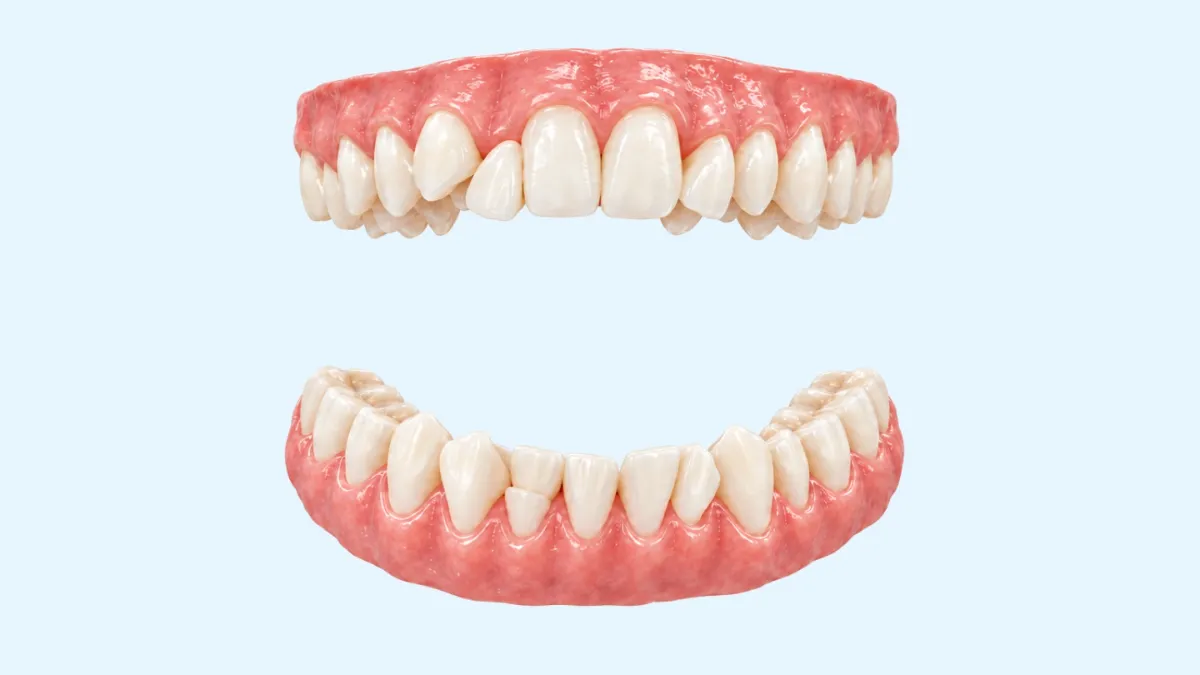
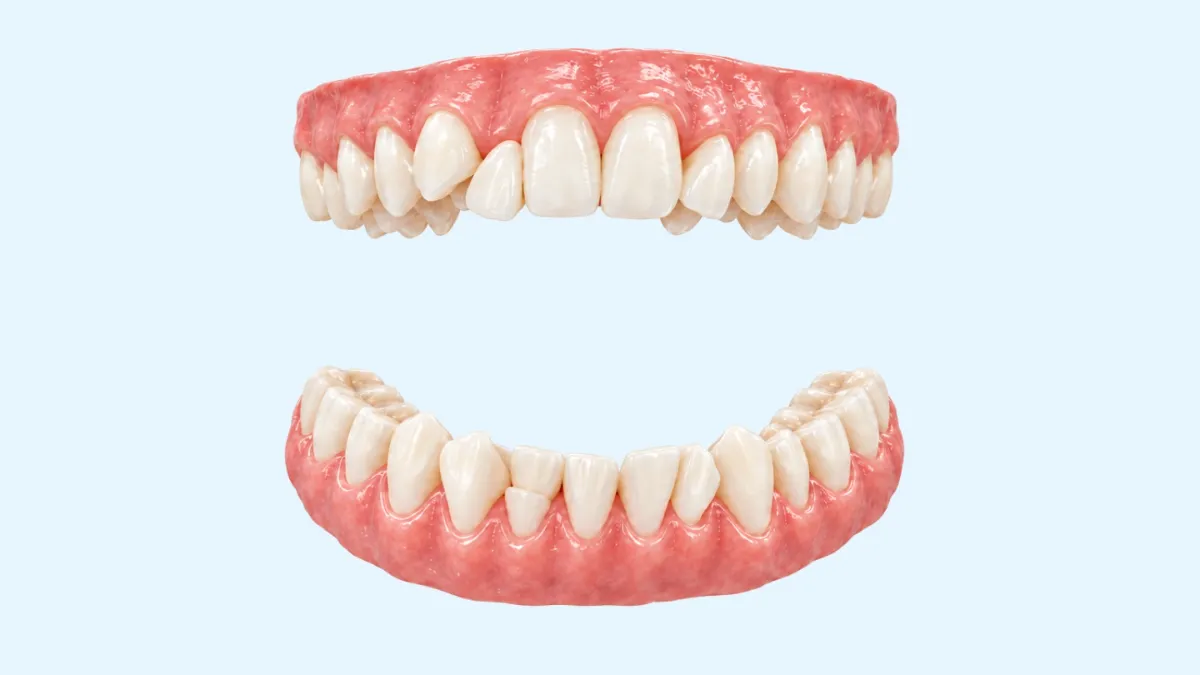
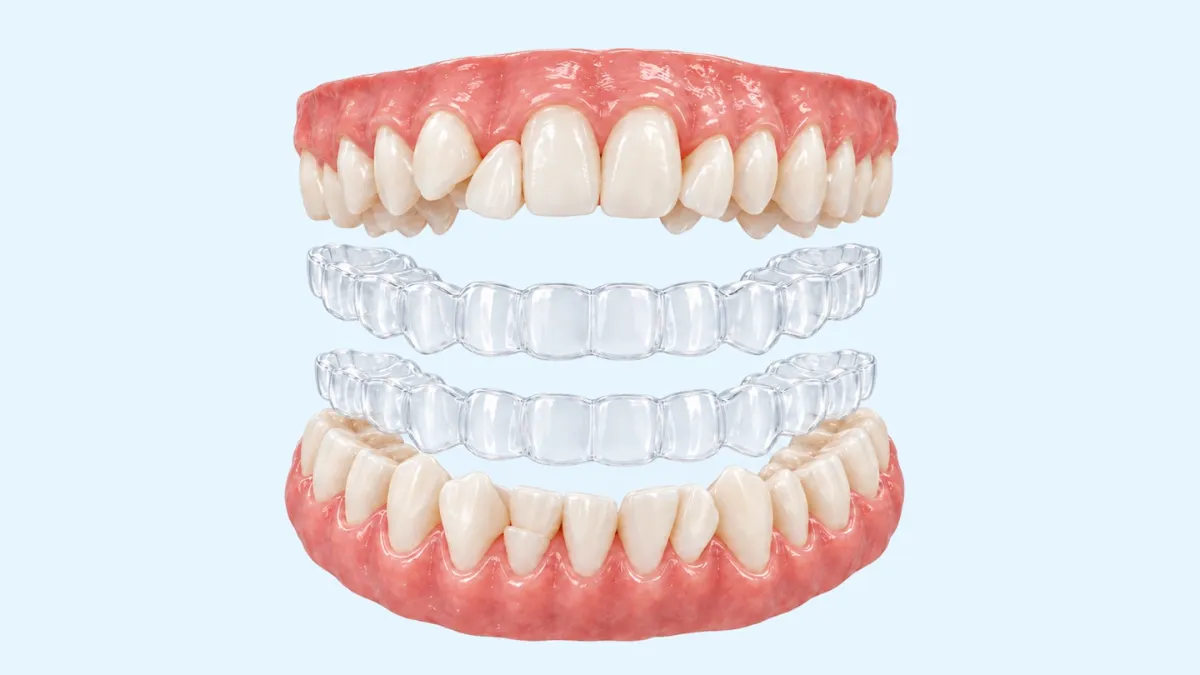
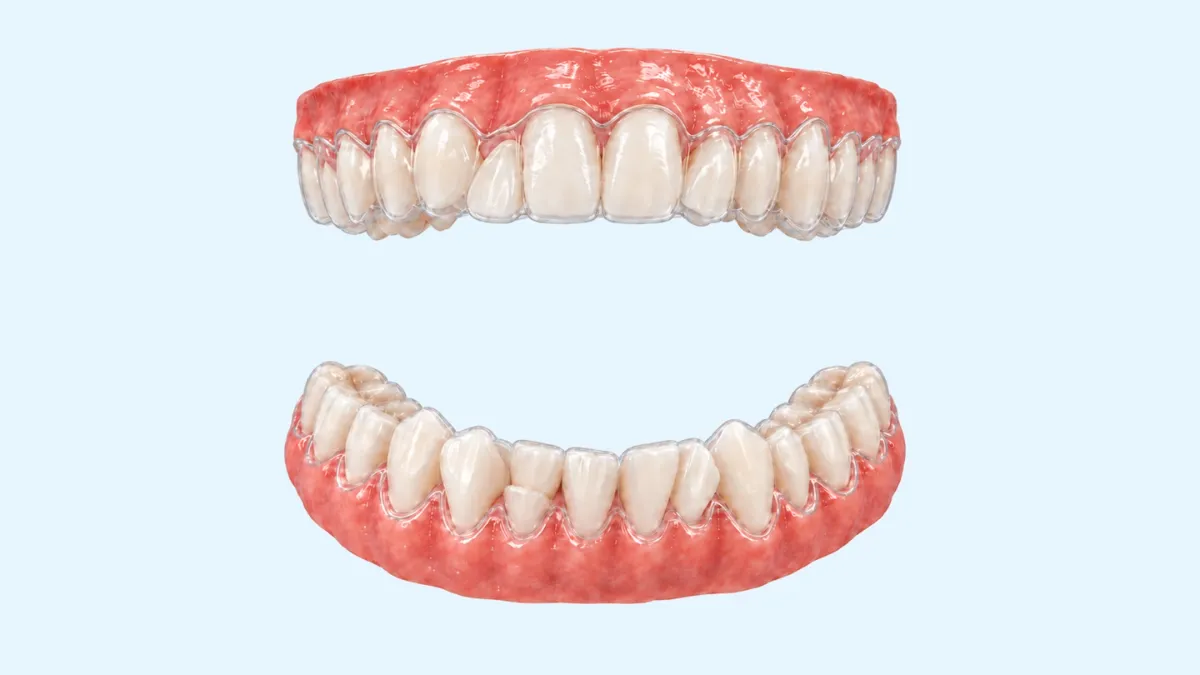
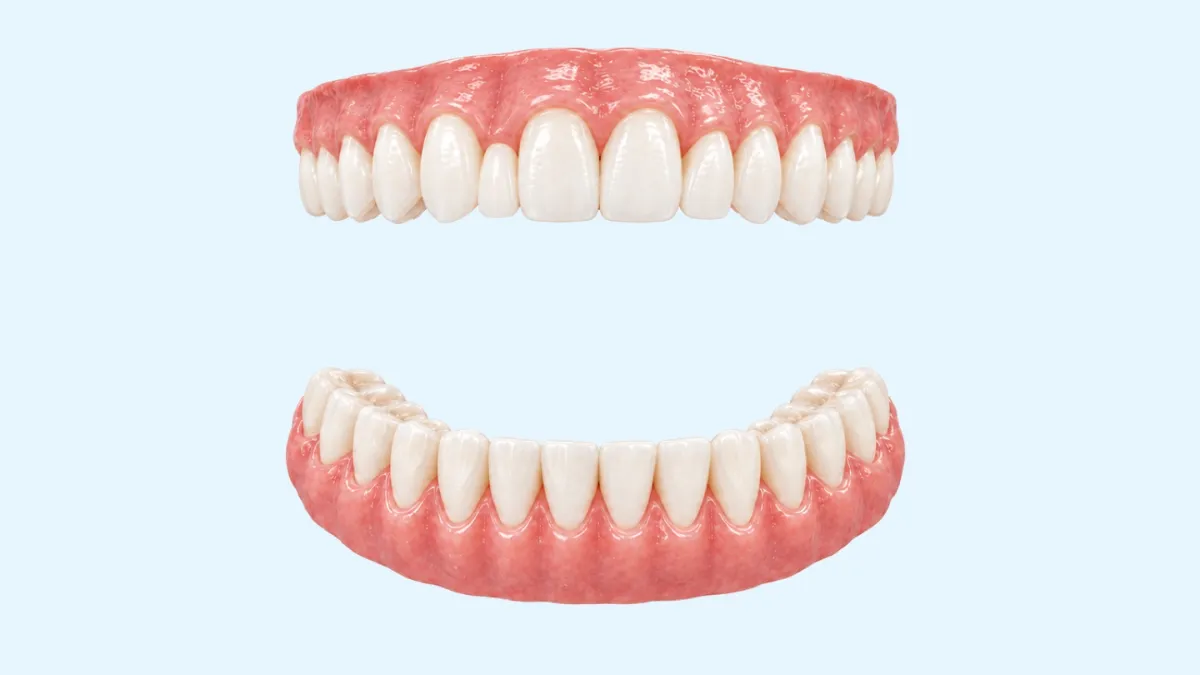
Invisalign and braces, 3D illustration of the upper and lower teeth from the front: crowded teeth straightened with a clear aligner

Treatment at a glanceHow Invisalign and braces straighten teeth, step by step

Illustration for explanation only. Clear aligners are worn on both the upper and lower teeth. Your orthodontist plans how each tooth moves from your own records.

The short answer

Is Invisalign as good as braces?

For many mild and moderate cases, Invisalign clear aligners work very well, and they're removable and hard to notice. Complex rotations or problems with the jaws themselves may respond better to fixed braces. Either way, results depend on wearing aligners for as many hours a day as your orthodontist recommends, and they tell you which suits you after a scan.

How it works

  1. Send your photosA few smile photos or a recent X-ray on WhatsApp is enough to start.
  2. Get a written planOur dentists prepare your treatment plan and quote, in writing.
  3. Come to IstanbulWe organise appointments, hotel and transfers around your treatment.
  4. Your treatmentDigital impressions and smile design let you see the plan before anything begins. A coordinator translates in the chair and explains each step.
  5. Stay in touchYour coordinator stays reachable after you've flown home.

Invisalign clear aligners

Who it suits: Adults and teens with mild to moderate crowding, gaps or bite problems who want treatment that is hard to notice.

What it does: A series of thin, removable trays, each made from your scan, moves the teeth a little at a time.


Fixed metal braces

Who it suits: Patients with complex crowding, rotated teeth or bite problems, or who would rather not rely on a removable appliance.

What it does: Small brackets are bonded to the teeth and joined by a wire that your orthodontist adjusts at your check-ups.

Tooth-coloured ceramic braces

Who it suits: Patients who need fixed braces but want them to show less than metal.

What it does: They work the same way as metal braces, with brackets made of a ceramic that blends in with the teeth.

Diastema closure

Who it suits: Adults whose teeth are otherwise straight and who only mind a small gap or an uneven edge.

What it does: The gap or edge is closed with tooth-coloured composite or veneers instead of moving the teeth; your dentist tells you if this is the simpler route.

About this treatment

Orthodontics with jaw surgery

Who it suits: Adults whose bite problem comes from the position of the jaws themselves, not only the teeth.

What it does: Braces line the teeth up before and after an operation that repositions the jaw; your orthodontist explains whether this applies to you.

Which option suits you is decided at your examination, not on this page.

1 From home

A first opinion from your photos

Send a few photos of your smile and bite, front and sides, on WhatsApp or through the form, and tell us what bothers you most. Our orthodontist looks at them before we reply.

What we ask you

  • Photos of your smile and bite, front and sides
  • Whether you have had braces or aligners before
  • Your general health and any medication
  • Which dates could work for you

What you receive

  • Whether aligners or braces are likely to suit you
  • A written plan and quote
  • How many visits you would need in Istanbul and how follow-up works
  • A final plan only after your scan

2 Istanbul · First visit

Your examination, your scan, your plan

  • Arrival and translation. Your airport pick-up, hotel and transfers are arranged around your appointments, as written in your quote, and a coordinator translates in the chair.
  • Examination and X-rays. Your orthodontist checks your teeth, gums and bite and takes the X-rays you need. Any decay or gum problem is treated before teeth are moved.
  • Digital scan. An iTero intraoral scanner records your teeth in three dimensions, with no putty impressions. For aligners, each tooth's movement is planned on screen from this scan, and you see the plan before anything is ordered.

3 Istanbul · Start

The first day of treatment

  • If you have aligners. Small tooth-coloured bumps called attachments are bonded to some teeth so the aligners can grip. You practise putting your first aligners in and taking them out.
  • Making a little room. Some plans need a fine layer of enamel polished from between certain teeth. Your orthodontist tells you beforehand if yours does, and where.
  • If you have braces. The teeth are cleaned, the brackets are bonded one by one and the wire is placed. This doesn't need anaesthesia.
  • Before you fly home. You're shown how to clean, what to eat at first and who to contact if something feels wrong.

4 At home · Progress

While your teeth move

With aligners, you move to each new set when your orthodontist says and wear them as many hours a day as they tell you. Results depend on this more than anything.

Braces need regular clinic visits to adjust the wire. We agree how your check-ups will work before you start, and your coordinator is there for photos and questions in between.

5 Istanbul · Final visit

The end of active treatment

  • Final check. Your orthodontist checks each tooth and your bite. If a tooth hasn't moved as planned, a few extra aligners may be needed.
  • Removal. Brackets or attachments are taken off and the teeth are polished smooth.
  • Retainers. Moved teeth tend to drift back. A retainer holds them: a thin wire bonded behind the front teeth, a clear removable retainer, or both.

6 Back home · Aftercare

Keeping your teeth where they are

Wear your retainer the way your orthodontist explains, for as long as you want to keep the result. Routine check-ups can be done by a dentist near your home, and your coordinator stays reachable after you've flown home.

Some patients come in asking for veneers on crowded teeth. Moving the teeth first can mean far less enamel removed later, or no veneers at all. We'll raise this if it applies to you.

Dt. Emine Karslı Çağlar plans aligner and fixed cases with an iTero intraoral scanner.

Most patients describe pressure or tightness rather than pain. It is usually strongest in the first days after a new aligner or a wire adjustment.

Brackets can rub the inside of the cheeks at first; orthodontic wax over them helps until the skin gets used to it. If you need pain relief, your orthodontist tells you which suits you.

The choice often comes down to how you live.

AlignersFixed braces
EatingTake them out and eat as usualAvoid hard and sticky food
DrinkingOnly plain water with aligners inRinse after sugary or acidic drinks
CleaningBrush before putting them back inClean around each bracket; small interdental brushes help
What keeps it workingYou, by wearing them as toldIt works all the time; you keep it clean

Orthodontics moves healthy teeth through bone. Most people finish without problems, but that isn't the same as no risk. Your orthodontist goes through this list with you before you decide.

  • White marks, decay and sore gums: plaque left around brackets or under aligners can mark the enamel, start decay or inflame the gums. Careful cleaning prevents most of it.
  • Shorter roots: moving teeth can slightly shorten the tips of some roots (root resorption). It is usually minor, and X-rays during treatment help your orthodontist watch for it.
  • Teeth that lag behind: a tooth may not follow the plan, especially when aligners aren't worn enough. Extra aligners or a change of plan may follow.
  • Teeth moving back: without a retainer, teeth tend to drift towards where they started. This is the most common reason a result is lost.

With fixed braces, the brackets stay on the teeth from start to finish; what changes is the wire. Your orthodontist swaps or adjusts it at your check-ups, and each stage has its own job.

  • The first wires: thin, flexible wires start lining the teeth up gently.
  • Adjustments: at each check-up the wire is changed or adjusted. The teeth may feel tender for a short while afterwards.
  • Elastics: small rubber bands between the upper and lower braces may be used to correct the bite. They only work if you wear them as told.
  • The final wire: towards the end, a firmer wire fine-tunes each tooth's position before the braces come off and the retainer goes in.

Your treatment journey

Your visit, step by step.

From your first message to the follow-up after you fly home, one coordinator stays with you.

From home

Send your photos

A few smile photos or a recent X-ray on WhatsApp is enough to start.

  • Photos or X-ray on WhatsApp
  • A dentist takes a look

From home

Get a written plan

Our dentists prepare your treatment plan and quote, in writing.

  • Written plan
  • Written quote

Istanbul

Come to Istanbul

We organise appointments, hotel and transfers around your treatment.

  • Airport pick-up
  • Hotel
  • Daily transfers

At the clinic

Your treatment

Digital impressions and smile design let you see the plan before anything begins. A coordinator translates in the chair and explains each step.

  • Digital planning
  • Translation at appointments

Back home

Stay in touch

Your coordinator stays reachable after you've flown home.

  • Coordinator stays reachable

Our dentists

Every dentist at our clinics provides this treatment.

Dt. Veysel Bilge, Head Dentist, Vogue Clinics Istanbul

Dt. Veysel Bilge

Head Dentist · Founder · Ataşehir and Bağdat Caddesi

Dt. Uğur Öğüt, Dentist, Vogue Clinics Istanbul

Dt. Uğur Öğüt

Dentist · Branch director, Bağdat Caddesi

Dt. Melike Yaylakaşı, Dentist, Vogue Clinics Istanbul

Dt. Melike Yaylakaşı

Dentist

Dt. Mazlum Üren, Dentist, Vogue Clinics Istanbul

Dt. Mazlum Üren

Dentist · Aesthetic and prosthetic dentistry

Dt. Emine Karslı Çağlar, Orthodontist, Vogue Clinics Istanbul

Dt. Emine Karslı Çağlar

Orthodontist

Dr. Samet Fatih Gücer, Endodontist, Vogue Clinics Istanbul

Dr. Samet Fatih Gücer

Endodontist

Dt. Burcu İrem Başer, Dentist, Vogue Clinics Istanbul

Dt. Burcu İrem Başer

Dentist · Pediatric dentistry

Dt. Defne İyigün, Dentist, Vogue Clinics Istanbul

Dt. Defne İyigün

Dentist

Dt. İrem Karakaya, Dentist, Vogue Clinics Istanbul

Dt. İrem Karakaya

Dentist · Bağdat Caddesi

Dt. Asel Hoş, Dentist, Vogue Clinics Istanbul

Dt. Asel Hoş

Dentist · PhD programme in Restorative Dentistry

Dt. Kübra Yıldırım, Dentist, Vogue Clinics Istanbul

Dt. Kübra Yıldırım

Dentist

Dt. Didem Yağımlı, Dentist, Vogue Clinics Istanbul

Dt. Didem Yağımlı

Dentist

Dt. Ceren Tiken, Pediatric Dentist, Vogue Clinics Istanbul

Dt. Ceren Tiken

Pediatric Dentist

Dt. Elif Selçuk

Dentist

You can have this treatment at both of our Istanbul clinics: Dental clinic in Ataşehir, Istanbul and Dental clinic in Kadıköy, Bağdat Caddesi.

Common questions

Is a retainer the same as Invisalign?

No, although they can look alike. Invisalign aligners are a series of trays that move the teeth a little at a time, while a retainer holds the teeth where they are once treatment ends. After aligners or braces you wear a retainer: a thin wire bonded behind the front teeth, a removable clear one, or both.

Is Invisalign worth it?

For many mild to moderate cases, yes, if you will wear the aligners as told. They are removable and hard to notice, and you take them out to eat and brush as usual. The trade-off is discipline: the result depends on wearing them for the hours your orthodontist sets. Complex rotations or jaw problems may suit fixed braces better.

How long does Invisalign take?

It depends on how far your teeth need to move, so there is no single answer. Each tooth's movement is planned on screen from your scan, and your written plan states how long treatment should take before you start. Wearing the aligners as told keeps you on schedule; if a tooth lags behind, extra aligners may be needed.

Are Invisalign results permanent?

Only if you wear a retainer. Teeth that have been moved tend to drift back towards where they started, and this is the most common reason a result is lost. Once active treatment ends, a retainer holds the teeth in place; your orthodontist explains how to wear it, and you keep using it for as long as you want to keep the result.

Can you eat with clear aligners in?

No, you take them out to eat, so you can eat as usual. With aligners in, drink only plain water, because other drinks can collect under the trays and mark the teeth. Brush your teeth before putting the aligners back in, so food and plaque aren't held against the enamel.

How many hours a day do you wear clear aligners?

Your orthodontist tells you how many hours a day to wear them, and this matters more than anything else for the result. Aligners only move teeth while they are in, so you take them out mainly to eat, drink anything other than water and clean. When a tooth falls behind the plan, it is often because the aligners weren't worn enough.

What are Invisalign attachments?

Attachments are small, tooth-coloured bumps bonded to some teeth so the aligners can grip them and move them in the right direction. They are placed on the first day of treatment and, being tooth-coloured, are hard to notice at a normal talking distance. When treatment ends, they are removed and the teeth are polished smooth.

Can Invisalign fix an overbite?

Often, when the overbite is mild to moderate and comes from the position of the teeth; clear aligners suit many bite problems of this kind. When the problem comes from the position of the jaws themselves, fixed braces, sometimes combined with jaw surgery, may be needed instead. Your orthodontist confirms which applies to you after your scan.

How do clear aligners move teeth?

Each aligner is made from your scan to be very slightly different from the last, so it presses the teeth gently towards their next position. You move to a new aligner when your orthodontist says, and the teeth follow step by step. Small attachments on some teeth help the trays grip, and some pressure is normal with each new aligner.

What are Invisalign refinements?

Refinements are extra aligners made when a tooth hasn't followed the plan exactly. At the final check your orthodontist looks at every tooth and your bite, and if something needs fine-tuning, a few more aligners may be needed. This happens more often when aligners haven't been worn for as long as advised.

Can I do aligners if I live abroad?

Ask us about your situation. Aligners need regular check-ins, so we'd need to agree a follow-up plan first.

How many trips to Istanbul would I need?

It depends on your case and on the follow-up plan we agree before you start. Your written plan lists the visits; fixed braces usually need more appointments in the clinic than aligners.

This page is for general information and doesn't replace an examination by a dentist.

Start here

Send us a photo of your smile.

A dentist looks at it and we reply with honest options and a written plan. You don't have to commit to anything.

Bağdat Caddesi

5.0 ★ Google
Caddebostan, Şerafettin Sk. No: 2/1 D: 4, 34728 Kadıköy / İstanbul
Get directions

Ataşehir

4.8 ★ Google
Barbaros Mah. Begonya Sok. No: 3/N, Nidakule Kuzey, 34750 Ataşehir / İstanbul
+90 216 606 68 04

Mon–Sat 09:30–18:30

Get directions

Request your treatment plan

We only use your details to answer this request. Your plan is confirmed after a clinical examination. Privacy policy











