Fluoride varnish
Who it suits: Young children and most patients, especially those with a higher decay risk.
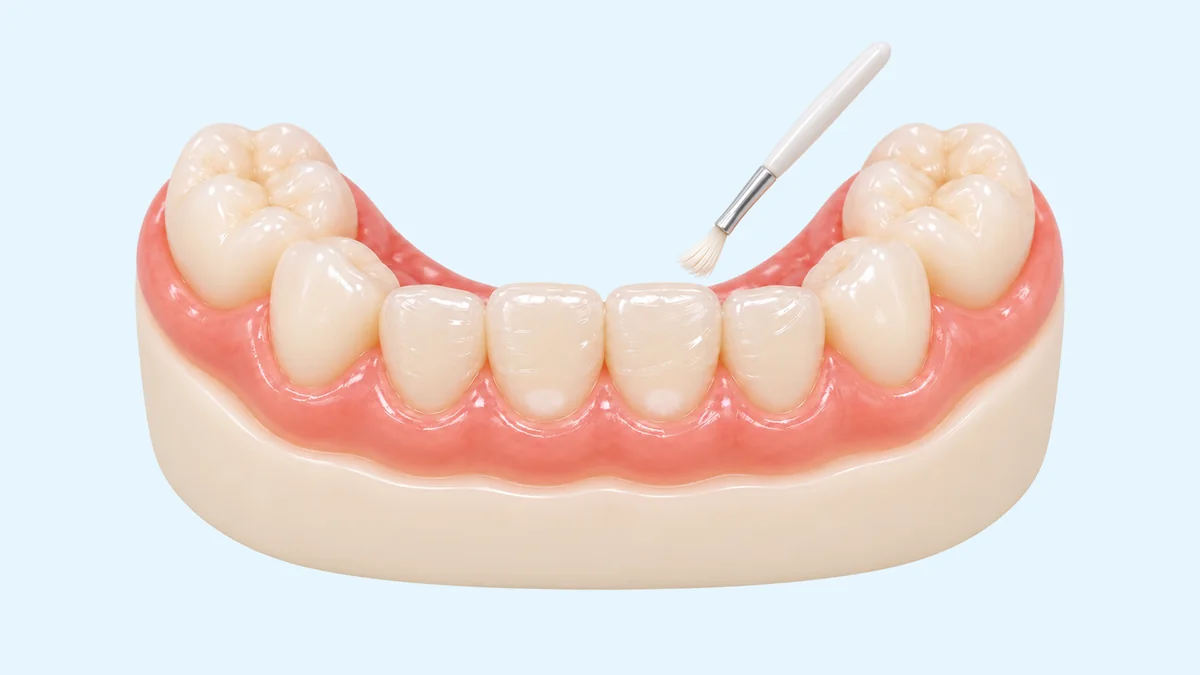
What it does: Painted on with a small brush. It sticks to the teeth, so very little is swallowed.

Treatments · Vogue Clinics
A fluoride varnish painted onto the teeth to strengthen enamel and help prevent decay.

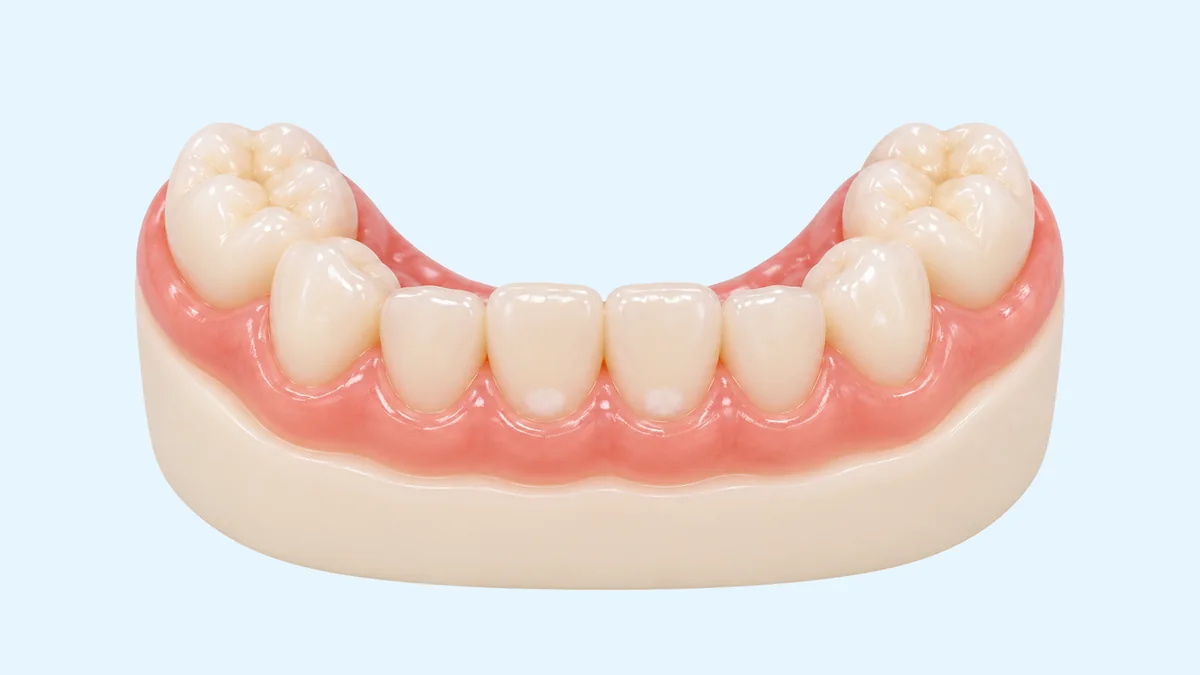
Illustration for explanation only. Whether your child needs fluoride in the clinic, and how often, our dentist decides from their decay risk at the examination.
What does a fluoride treatment do, and does my child need one?
A fluoride treatment puts a concentrated layer of fluoride on the teeth, usually as a varnish. It strengthens enamel and can help very early weak spots harden again before they turn into cavities. It suits most children, especially those with a higher decay risk. Our children's dentist decides how often it is worth repeating.
Which option suits you is decided at your examination, not on this page.
Write to us on WhatsApp or through the form. Tell us who the treatment is for, their age, and whether there has been decay, sensitivity or white spots on the teeth.
It fits into a check-up and needs no numbing. The teeth are dried and the varnish is brushed on with a small brush; it sets quickly once saliva touches it.
Afterwards:
Fluoride helps nearly everyone's teeth, but some children gain more from an extra layer in the clinic. Adults with a dry mouth, exposed roots or many fillings can benefit too; ask your dentist.
The clinic treatment adds to fluoride toothpaste at home; it doesn't replace it. For young children, use only a small amount of toothpaste and stay with them while they brush so they spit rather than swallow. Our dentist tells you the right amount for your child's age.
Fluoride protects every surface but can't fill the deep grooves on back teeth. That is the job of a fissure sealant, which is why many children have both.
Fluoride treatment is simple, but a few things change how or whether we do it. Mention them at booking or at the start of the appointment.
Your treatment journey
From your first message to the follow-up after you fly home, one coordinator stays with you.
From home
A few smile photos or a recent X-ray on WhatsApp is enough to start.
From home
Our dentists prepare your treatment plan and quote, in writing.
Istanbul
We organise appointments, hotel and transfers around your treatment.
At the clinic
Digital impressions and smile design let you see the plan before anything begins. A coordinator translates in the chair and explains each step.
Back home
Your coordinator stays reachable after you've flown home.
Every dentist at our clinics provides this treatment.

Head Dentist · Founder · Ataşehir and Bağdat Caddesi

Dentist · Branch director, Bağdat Caddesi

Dentist

Dentist · Aesthetic and prosthetic dentistry

Orthodontist

Endodontist

Dentist · Pediatric dentistry

Dentist

Dentist · Bağdat Caddesi

Dentist · PhD programme in Restorative Dentistry

Dentist

Dentist

Pediatric Dentist
Dentist
You can have this treatment at both of our Istanbul clinics: Dental clinic in Ataşehir, Istanbul and Dental clinic in Kadıköy, Bağdat Caddesi.
Not for every adult, but it can help some. Adults with a dry mouth, exposed root surfaces, many fillings or a high decay risk may benefit from an extra layer of fluoride in the clinic. If your teeth are healthy and you brush with a fluoride toothpaste, it may not be needed; your dentist decides at your check-up.
Side effects are usually mild. The most common is a slightly yellowish, sticky film on the teeth, which is temporary. Because varnish sticks to the teeth, very little is swallowed, and swallowing a little isn't usually a concern. Some varnishes contain a resin from pine trees, so tell us about any allergy beforehand, including to plasters or cosmetics.
No. A fluoride treatment needs no numbing, no drilling and no injection. The teeth are dried and the varnish is brushed on with a small brush, so most children simply notice the coating on their teeth. If your child is nervous, tell us beforehand; we go at their pace and explain each step.
The varnish works best when it is left in place for the time your dentist gives you, so avoid brushing or rinsing it off straight away. It sets quickly once saliva touches it and comes off with brushing. Your dentist tells you when brushing can start again; until then, stick to soft food and cool drinks.
Soft food and cool drinks are usually fine after the treatment. Hard, crunchy or very hot food is best skipped for as long as your dentist tells you, so the varnish isn't rubbed off early. Before you leave, you're told what your child can eat and drink and when brushing can start again.
It is quick and usually fits into a routine check-up rather than needing its own appointment. The teeth are dried, the varnish is painted on tooth by tooth, and it sets as soon as saliva touches it. Older children and adults may have a gel or foam held in a soft tray for a short time instead.
It can help a very early white spot on the enamel harden again before it turns into a cavity. Once decay has made a hole in the tooth, fluoride can't rebuild it and a filling is needed. Fluoride then helps protect the other surfaces, alongside daily brushing with a fluoride toothpaste.
Fluoride toothpaste is the everyday protection and does most of the work. A fluoride treatment adds a concentrated layer, applied in the clinic, for teeth that need extra help, such as a child with a higher decay risk. It adds to brushing at home and doesn't replace it; our dentist tells you whether the extra layer is worth it.
Fluoride varnish can leave a slightly yellowish, sticky film, but this is normal and temporary; it comes off once brushing starts again. It doesn't whiten teeth either, since its job is to strengthen the enamel. Lasting faint white marks, called fluorosis, come from swallowing too much fluoride over a long period while teeth are forming; clinic amounts are chosen to avoid this.
It can ease sensitivity from exposed roots for a while. If the sensitivity keeps coming back, it is worth finding out why, because decay, a crack or gums that have pulled back can all cause it. Our dentist looks for the cause first and then suggests whether fluoride, a filling or another treatment makes more sense.
This page is for general information and doesn't replace an examination by a dentist.
Start here
A dentist looks at it and we reply with honest options and a written plan. You don't have to commit to anything.
Mon–Sat 09:30–18:30
Get directions