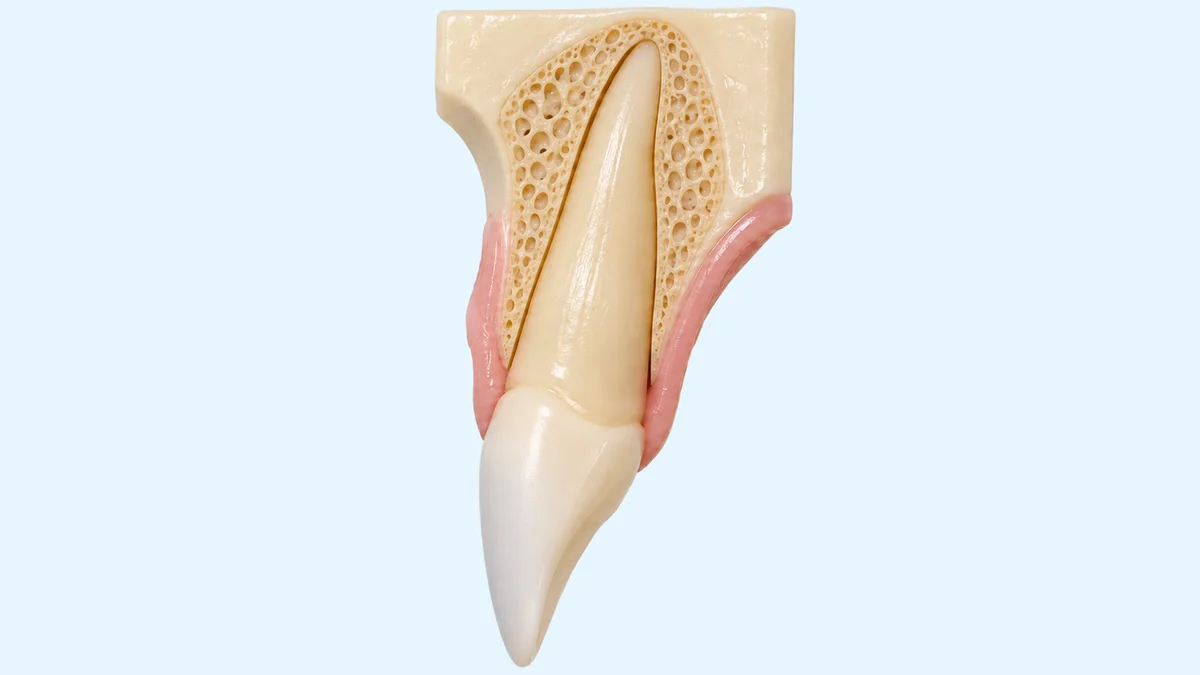
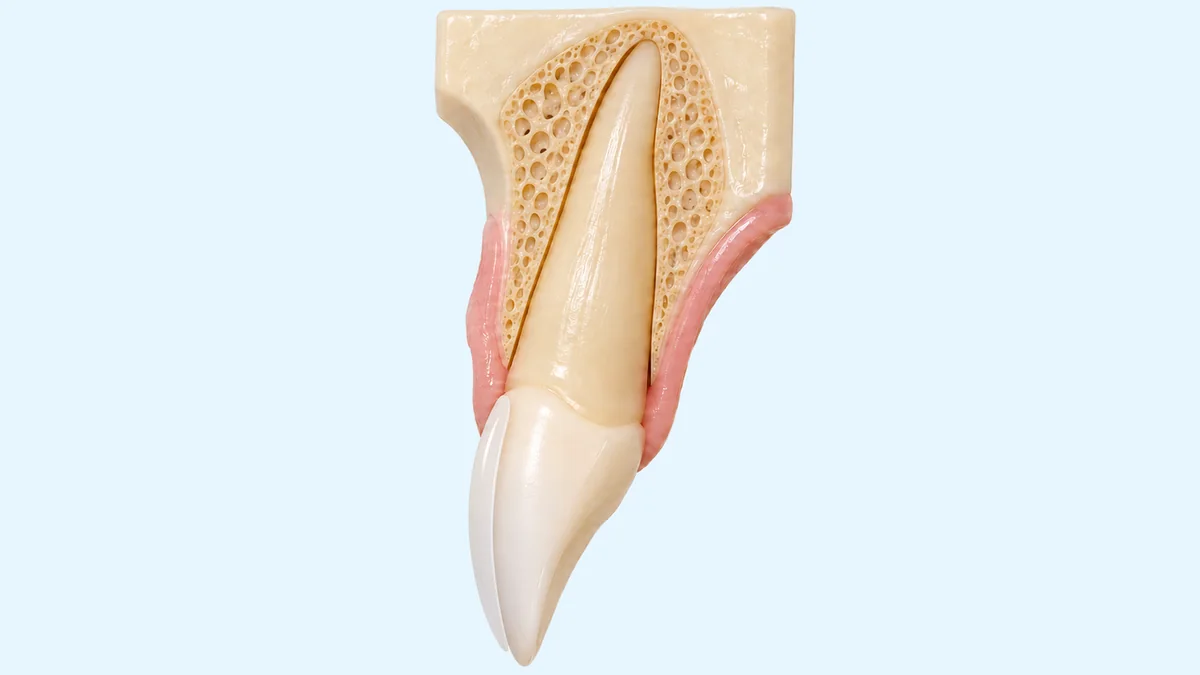
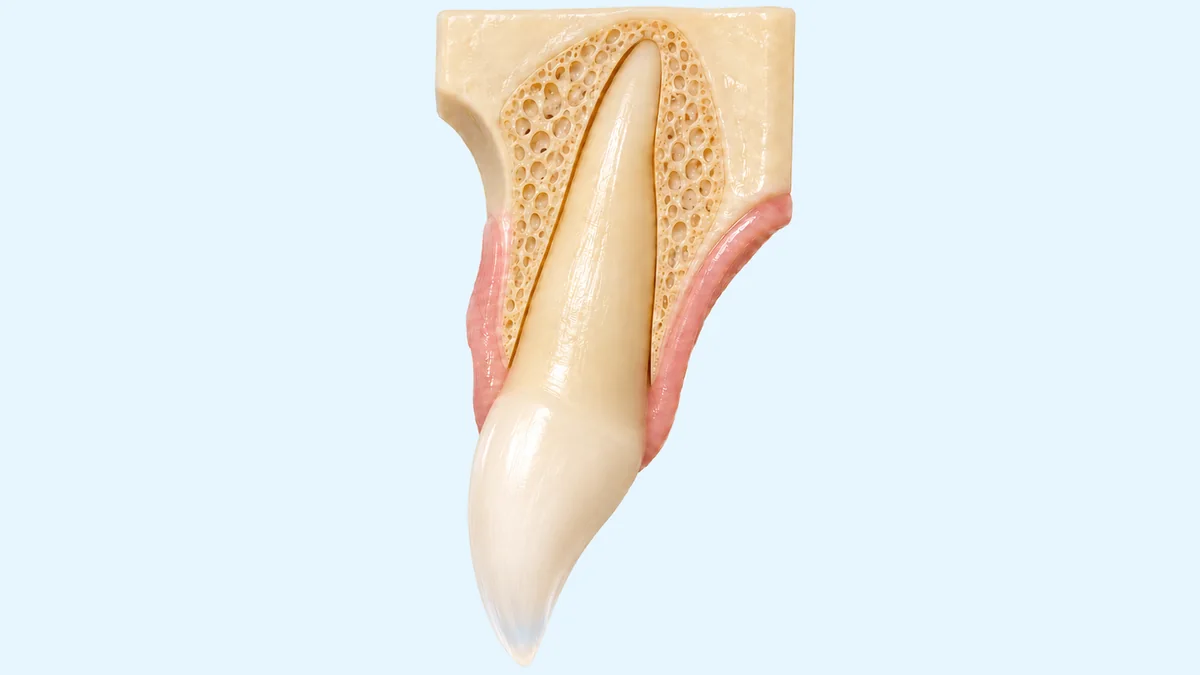
E.max veneer
Who it suits: Front teeth with healthy enamel and a normal bite, where colour, shape or small chips need changing.
What it does: A thin, strong glass-ceramic shell bonded to the front of the tooth, often with conservative preparation.

Treatments · Vogue Clinics
Lithium disilicate glass-ceramic veneers: thin, translucent and stronger than classic porcelain, the usual choice for front teeth.

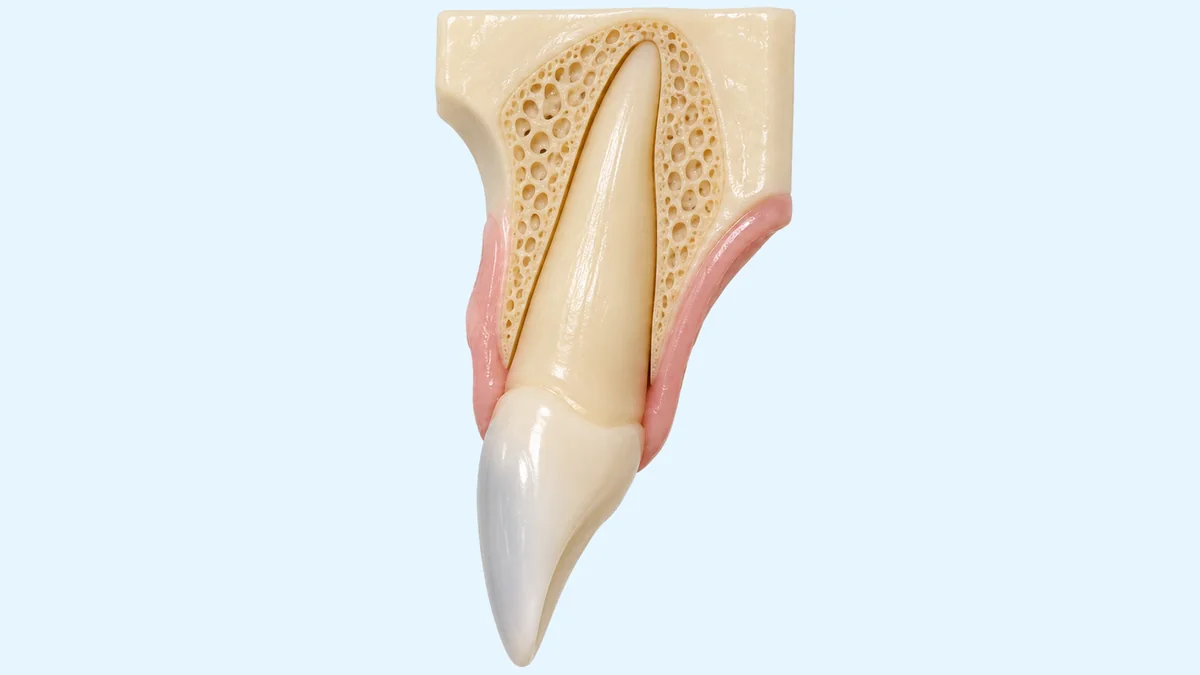
Illustration for explanation only. How thin your veneer can be, and whether E.max suits the colour of your tooth, is decided at your examination.
What is an E.max veneer and who is it for?
E.max is a lithium disilicate glass-ceramic. It can be made very thin while staying stronger than classic layered porcelain, and it lets light through much like enamel does. It suits most people who want ceramic veneers on front teeth and have a normal bite, often with only conservative preparation. Very dark teeth may need a different approach.
Which option suits you is decided at your examination, not on this page.
Send close-up photos of your front teeth and your smile on WhatsApp or through the form. Mention any tooth that looks darker than the others, as that affects which ceramic is planned.
Clean them as you would your own teeth, with floss at the edges, and keep up regular check-ups. If you grind, a night guard protects the ceramic. Routine check-ups can be done near your home, and your coordinator stays reachable.
Strength in a thin layer is the main reason. Because E.max holds up even when it is thin, your dentist can often remove less enamel than a weaker ceramic would need.
It is also etched and bonded to the tooth, so veneer and enamel lock together. On a well-prepared tooth, that bond is a large part of what keeps the veneer in place.
E.max comes in several levels of translucency. The technician picks one for your case, then adds surface colour and texture so the veneer sits naturally beside the teeth around it.
Both are used at the front of the mouth, but they solve different problems. For most veneer cases E.max is the starting point, and zirconia is kept for the situations below.
| E.max | Zirconia | |
|---|---|---|
| Light | Lets light through, like enamel | More opaque; hides dark colour |
| Bonding | Etched and bonded strongly to enamel | Bonds less predictably and needs special steps |
| Thickness | Can be made very thin | Usually needs a little more room |
| Typical use | Most front-tooth veneers | Dark teeth, or cases where strength comes first |
The names overlap, which is why people ask whether E.max veneers are porcelain. You may also see it written emax or e max; it is the same thing. This is how the terms fit together:
Your treatment journey
From your first message to the follow-up after you fly home, one coordinator stays with you.
From home
A few smile photos or a recent X-ray on WhatsApp is enough to start.
From home
Our dentists prepare your treatment plan and quote, in writing.
Istanbul
We organise appointments, hotel and transfers around your treatment.
At the clinic
Digital impressions and smile design let you see the plan before anything begins. A coordinator translates in the chair and explains each step.
Back home
Your coordinator stays reachable after you've flown home.
Every dentist at our clinics provides this treatment.

Head Dentist · Founder · Ataşehir and Bağdat Caddesi

Dentist · Branch director, Bağdat Caddesi

Dentist

Dentist · Aesthetic and prosthetic dentistry

Orthodontist

Endodontist

Dentist · Pediatric dentistry

Dentist

Dentist · Bağdat Caddesi

Dentist · PhD programme in Restorative Dentistry

Dentist

Dentist

Pediatric Dentist
Dentist
You can have this treatment at both of our Istanbul clinics: Dental clinic in Ataşehir, Istanbul and Dental clinic in Kadıköy, Bağdat Caddesi.
There's no fixed number of years, but with good care E.max veneers can last a long time, including on front teeth. Much of their staying power comes from the bond: the inside of the veneer is etched and bonded to enamel, so healthy enamel underneath matters. Grinding, biting hard objects and skipped check-ups shorten their life, and a night guard helps if you grind.
E.max itself resists staining and keeps its colour, so coffee, tea and red wine don't change the ceramic the way they change composite. What may pick up colour over time is the bonding line at the edge and your natural teeth around the veneers. Brushing, flossing and regular cleaning keep this in check. E.max can't be whitened, so the shade is chosen carefully with you.
The main advantages are strength in a thin layer, which often means less enamel is removed, a strong bond to the tooth, and translucency that looks much like enamel. The drawbacks: preparation usually can't be undone, the veneers are made between appointments, a very dark tooth may show through, and people who grind heavily may need a night guard or bite treatment first.
Your dentist first checks your bite, enamel and shade. Under local anaesthesia, the front of each tooth is shaped just enough for the planned thickness, scanned and covered with temporaries. At the fitting you see the veneers on your teeth before anything is fixed; then the inside of each veneer is etched, bonded to the enamel in a dry field, and your bite is checked.
Usually a little. Because E.max stays strong when thin, your dentist can often remove less enamel than a weaker ceramic would need, but on most teeth a thin layer is still shaped. E.max veneers cover only the front of the tooth, not the whole tooth like a crown. Your dentist shows how much will be removed on each tooth before you agree.
They are a long-term decision rather than a reversible one. Where a thin layer of enamel has been removed, the tooth will need a veneer or another covering from then on. Where little or no enamel was removed, removal may be possible, but it's fairer to treat them as permanent. The veneer itself isn't forever and may need replacing one day.
Not easily. E.max is strong for a glass-ceramic, and stronger than classic layered porcelain in a thin layer, but it can still chip under heavy force. Grinding, an edge-to-edge bite and biting nails, pens or ice are the usual causes, so if you grind, a night guard or bite treatment usually comes first. A large chip generally means a new veneer for that tooth.
They can look very natural, because E.max lets light through much like enamel and comes in several levels of translucency. The technician then adds surface colour and texture to match the teeth around it. They only look too white if that's the shade you choose: shade and translucency are picked with you, and you see the veneers in your mouth before bonding.
Clean them as you would your own teeth: brush every day with a non-abrasive toothpaste, floss at the edges and keep up regular check-ups. Use your back teeth for hard food and avoid biting ice, pens or nails. If you grind, wear a night guard to protect the ceramic. E.max can't be whitened, so lighten your natural teeth before the veneers are made.
Yes. Send photos of your smile, a dentist looks at them, and you receive a written plan and quote. It is confirmed only after your examination in Istanbul, because shade and enamel can't be judged fully from photos.
This page is for general information and doesn't replace an examination by a dentist.
Start here
A dentist looks at it and we reply with honest options and a written plan. You don't have to commit to anything.
Mon–Sat 09:30–18:30
Get directions