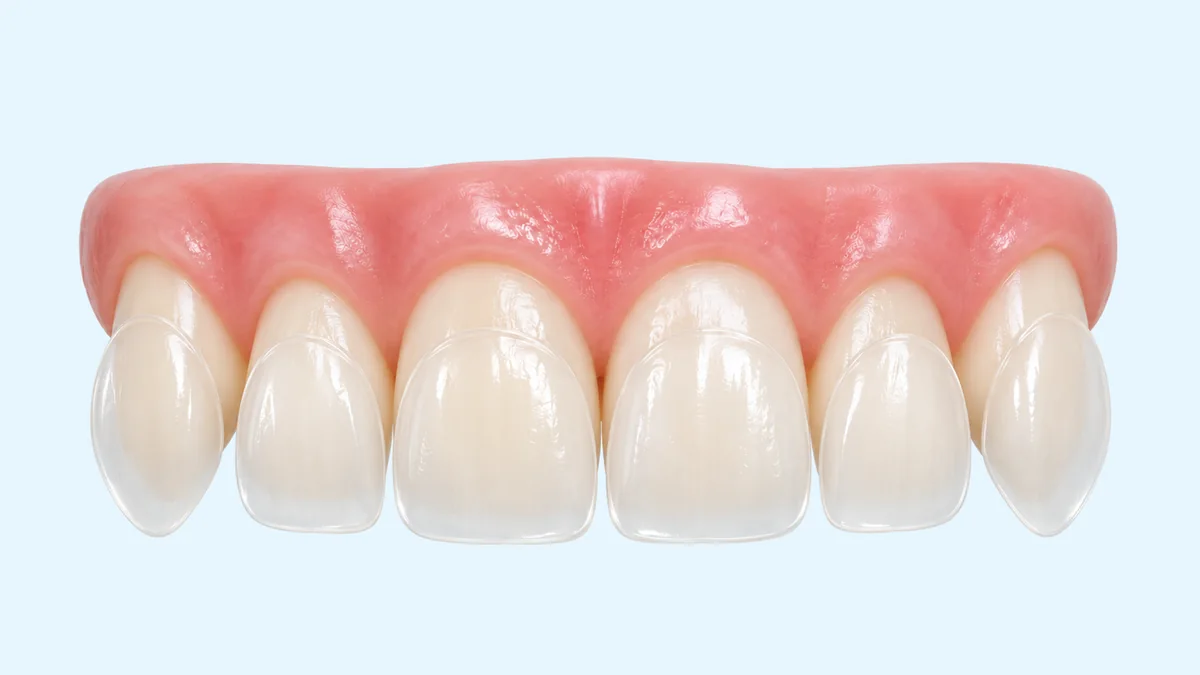
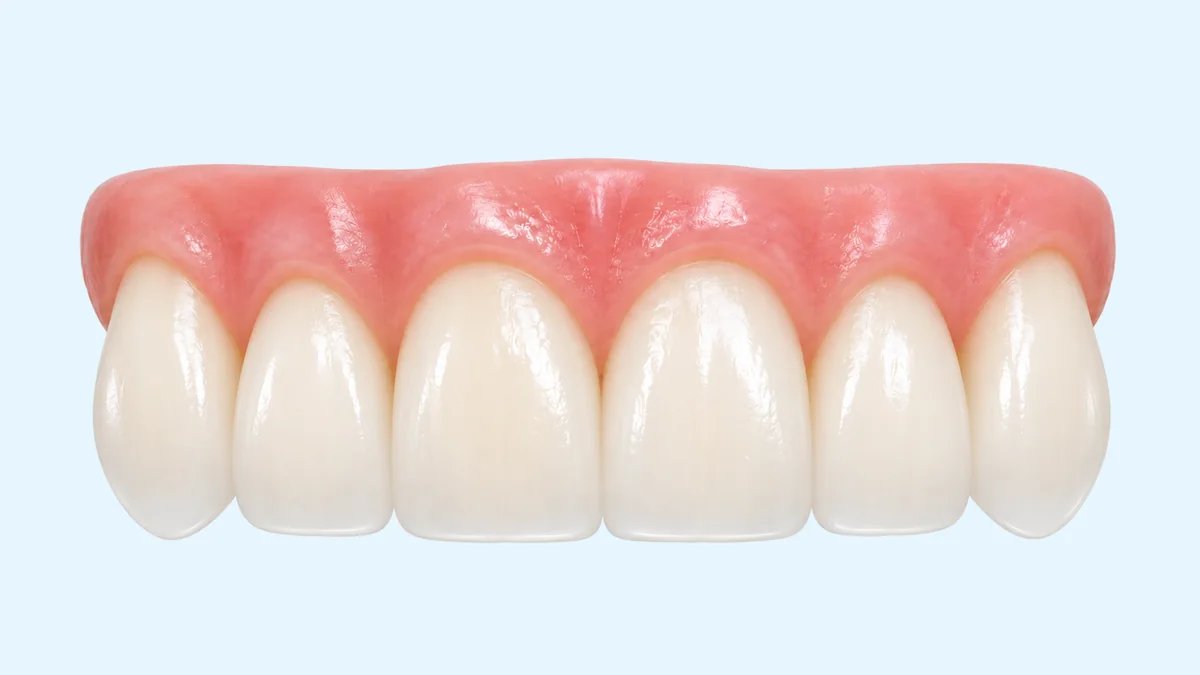
Lumineers
Who it suits: Small, narrow or worn teeth, or teeth set slightly back, with a colour close to the shade you want.
What it does: Very thin ceramic bonded on top of the enamel, which is roughened but not reduced.

Treatments · Vogue Clinics
Very thin ceramic veneers bonded with little or no filing; a good fit for small or set-back teeth, but not for everyone.

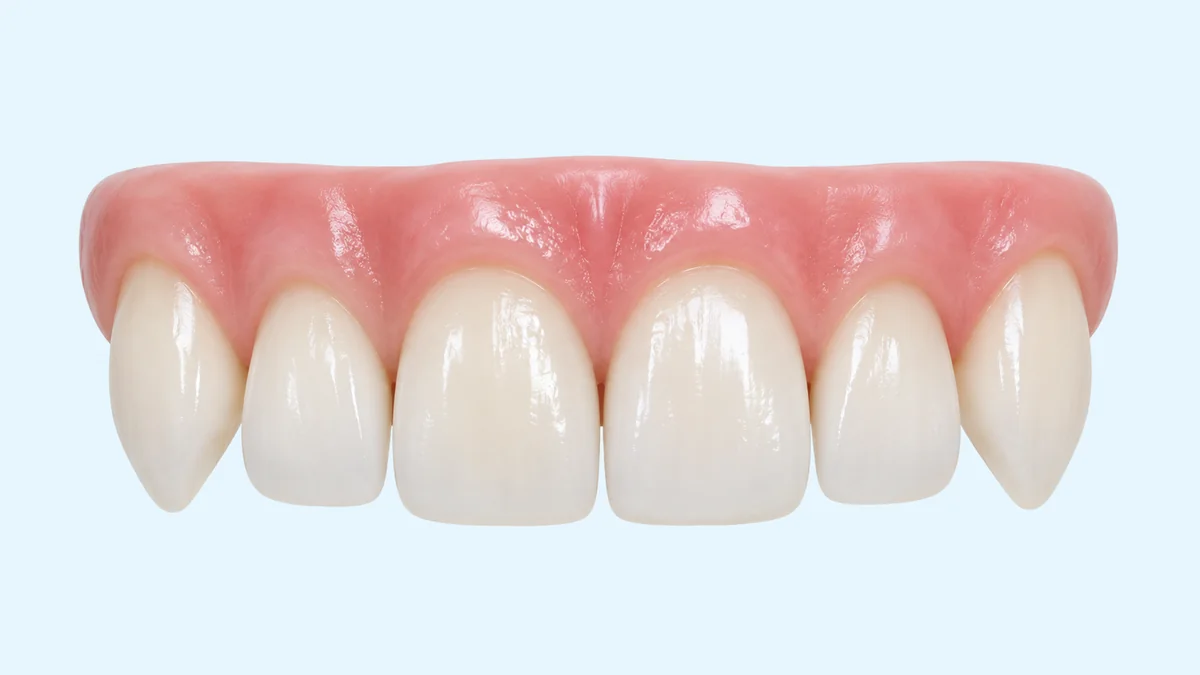
Illustration for explanation only. Not every tooth can take a veneer without preparation; whether yours can is decided at your examination and on a trial.
What are Lumineers, and are they better than veneers?
Lumineers are very thin ceramic veneers bonded with no or minimal filing. They are not better or worse than conventional veneers, just suited to other teeth. Small, worn or set-back teeth can take the added thickness well, while teeth that sit forward or are dark usually look better with a prepared veneer. A trial on your teeth shows which applies.
Which option suits you is decided at your examination, not on this page.
Send photos of your smile from the front and from the side on WhatsApp or through the form. The side view helps us see whether your teeth sit back enough to take added thickness.
Brush and floss every day, paying attention to the gum line, where plaque can collect at the edge of a veneer that sits on top of the tooth. Routine check-ups can be done near your home, and your coordinator stays reachable.
No-prep means your dentist doesn't reduce the enamel to make room. The surface is still cleaned and etched so the veneer can bond, and sometimes a sharp edge is smoothed.
The veneer itself is made thin enough to sit on top of the tooth. That is the whole idea, and also the limit: every tooth ends up slightly fuller than before.
You may hear that Lumineers are reversible. Removal is sometimes possible, but the enamel has been etched and bonded, so it is fairer to treat them as a long-term decision.
A question we often hear is whether veneers can be done without filing. The honest answer is that it depends on where your teeth sit.
A veneer with minimal preparation is often the middle ground. A thin layer of enamel is removed so the veneer sits in line with the rest of the smile, and your dentist can show both options on a trial.
| Lumineer | Minimal-prep veneer | |
|---|---|---|
| Enamel | None or almost none removed | A thin layer removed |
| Tooth thickness | Increases | Stays close to the original |
| Hiding colour | Limited | Better, depending on the ceramic |
| Best for | Small or set-back teeth | Teeth in a normal position or slightly forward |
Often, because adding length is something a no-prep veneer does well. Before planning it, your dentist looks at why the teeth wore down and how much length your bite allows.
Your treatment journey
From your first message to the follow-up after you fly home, one coordinator stays with you.
From home
A few smile photos or a recent X-ray on WhatsApp is enough to start.
From home
Our dentists prepare your treatment plan and quote, in writing.
Istanbul
We organise appointments, hotel and transfers around your treatment.
At the clinic
Digital impressions and smile design let you see the plan before anything begins. A coordinator translates in the chair and explains each step.
Back home
Your coordinator stays reachable after you've flown home.
Every dentist at our clinics provides this treatment.

Head Dentist · Founder · Ataşehir and Bağdat Caddesi

Dentist · Branch director, Bağdat Caddesi

Dentist

Dentist · Aesthetic and prosthetic dentistry

Orthodontist

Endodontist

Dentist · Pediatric dentistry

Dentist

Dentist · Bağdat Caddesi

Dentist · PhD programme in Restorative Dentistry

Dentist

Dentist

Pediatric Dentist
Dentist
You can have this treatment at both of our Istanbul clinics: Dental clinic in Ataşehir, Istanbul and Dental clinic in Kadıköy, Bağdat Caddesi.
A fixed lifespan can't honestly be given. Like other ceramic veneers, Lumineers can serve for a long time with good care, and whether they last as long as conventional veneers depends mostly on the bond and your habits. They are bonded on top of the enamel, so healthy enamel matters. Grinding, biting hard objects and plaque at the gum edge shorten their life.
Treat them as a long-term decision. Because the enamel isn't reduced, removal is sometimes possible, but the surface has been etched and bonded, so the tooth isn't exactly as it was before. The added fullness is also part of how your smile was planned. Your dentist explains what taking them off would involve for your teeth before you go ahead.
They are among the gentlest veneers, because the enamel isn't reduced to make room; it is only cleaned and etched so the veneer can bond. The main thing to watch is the gum edge: a veneer sitting on top of the tooth can leave a small ledge where plaque collects and inflames the gum. Daily brushing, flossing and check-ups keep that in check.
The ceramic itself resists staining. Because the shells are so thin, though, the colour of your own teeth affects the result and a dark tooth can show through, which is why Lumineers suit teeth already close to the shade you want. The bonding line and natural teeth can pick up colour, and Lumineers can't be whitened, so whiten first if you want lighter teeth.
On the right teeth, yes. Small, narrow, worn or set-back teeth can take the added thickness and still look natural. On large teeth, or teeth that already sit forward, Lumineers can look bulky and push the lip out, and that is when they look fake. That's why the planned veneers are first copied onto your teeth as a trial, so you can see the fullness.
Usually not. Because the enamel isn't drilled, most people need no anaesthesia: the teeth are scanned as they are, and the enamel is only lightly roughened for bonding. If a small edge needs smoothing and that requires numbing, your dentist tells you beforehand. With no preparation there is usually nothing to cover in the meantime, so no temporaries either.
After an examination of your enamel, gums and bite, the planned veneers are copied onto your teeth in a temporary material, so you can see and feel the fullness and hear how you speak. If you go ahead, the teeth are scanned as they are and the shade is chosen. At the fitting the enamel is lightly roughened, each veneer is bonded on top and the gum edge is smoothed.
Only mild unevenness, on teeth that sit back rather than forward. Lumineers add thickness, so crowded or protruding teeth usually end up looking bulky. In those cases aligning the teeth first with braces or clear aligners gives a better result, and veneers can follow if you still want them. Small gaps can often be closed with Lumineers; large ones may make teeth look too wide.
It's usually not the first choice. Ceramic bonds best to enamel, so a veneer placed on an existing crown or a large filling doesn't grip as reliably as one on natural tooth. If an old crown or filling on a front tooth doesn't match, it is often replaced instead, or a different veneer is suggested. Your dentist looks at each restoration at the examination.
This page is for general information and doesn't replace an examination by a dentist.
Start here
A dentist looks at it and we reply with honest options and a written plan. You don't have to commit to anything.
Mon–Sat 09:30–18:30
Get directions