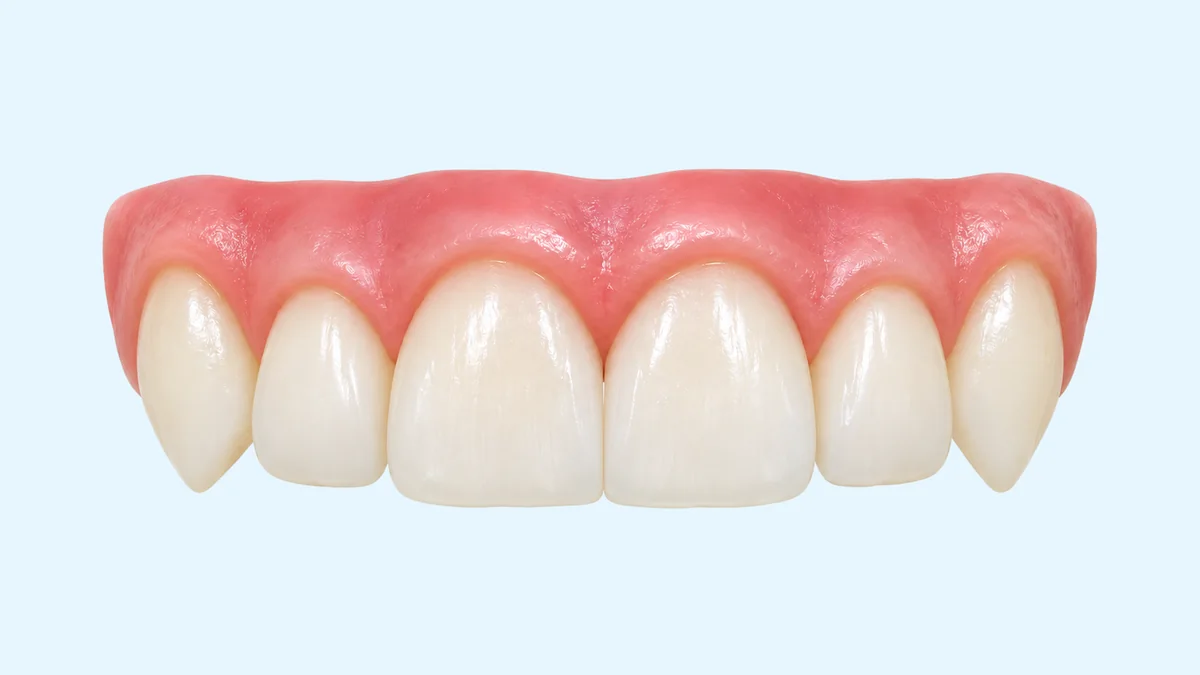
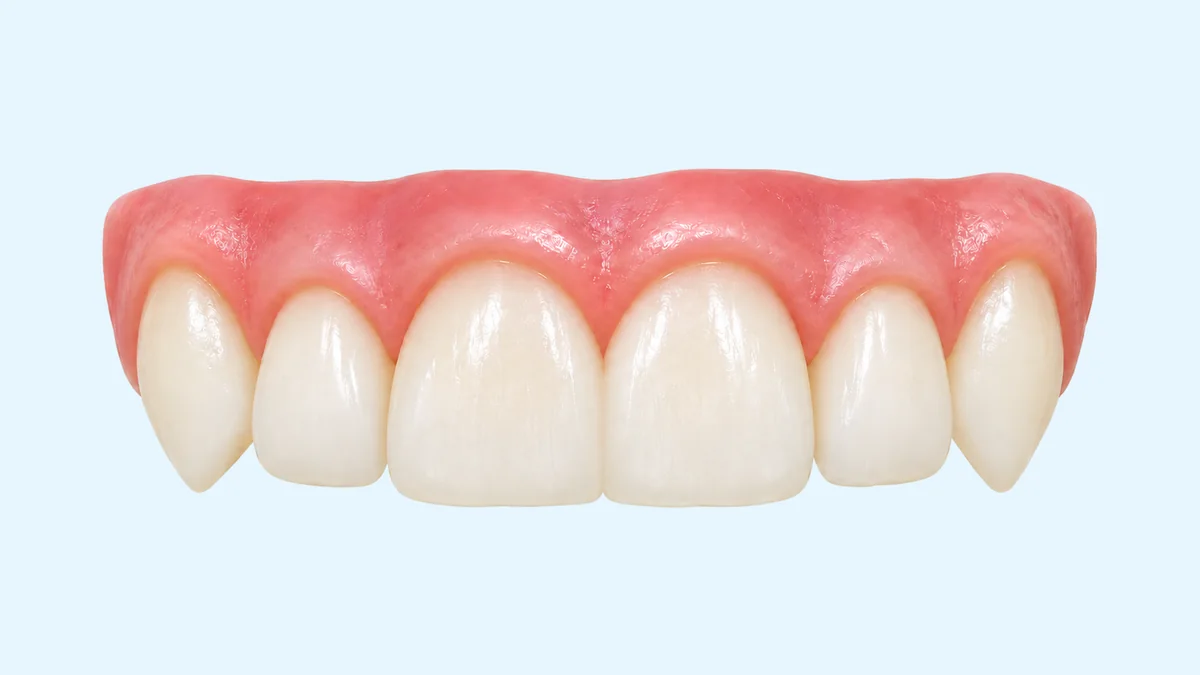
Orthodontics, then bonding
Who it suits: For a gap too large to close with material alone without making the teeth look wide.
What it does: Aligners or braces share the space out between the teeth, then composite finishes the shape.

Treatments · Vogue Clinics
Closing gaps between teeth with composite bonding, veneers or orthodontics, chosen once we know why the gap is there.

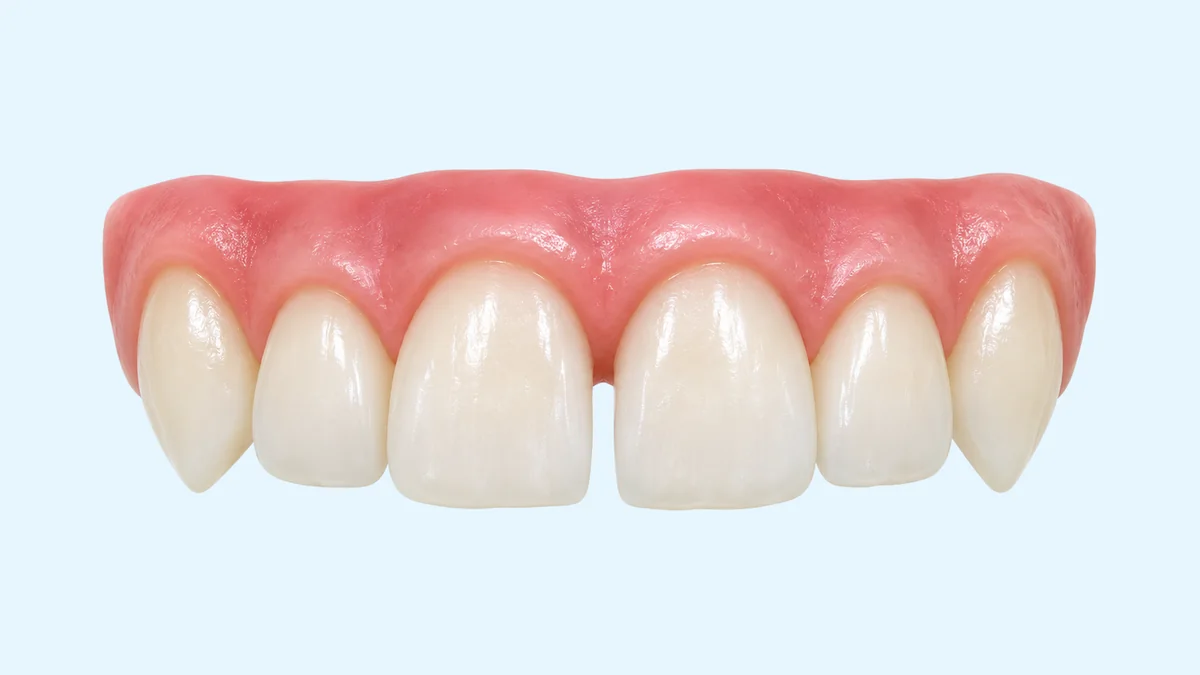
Illustration for explanation only. Bonding is one of several ways to close a gap; your dentist explains which suits yours after the examination.
What is diastema closure, and how is a gap between front teeth closed?
Diastema closure means closing a gap between teeth, most often between the upper front teeth. Composite bonding adds tooth-coloured material to the sides, usually without filing them. Veneers cover the front surfaces and can change shape and colour too. Orthodontics moves the teeth together. The size and cause of the gap decide which suits you.
Which option suits you is decided at your examination, not on this page.
Send a photo of your smile from the front, on WhatsApp or through the form, and tell us whether the gap has always been there or is new.
We look for the cause first. If only the teeth are covered and the cause stays, some gaps open again.
Sometimes the answer is a mix: aligners or braces share out the space, then bonding finishes the shape.
| Option | Usually suits | Keep in mind |
|---|---|---|
| Composite bonding | Small gaps on teeth whose shape and colour you like | Can stain or chip over time, and can usually be repaired |
| Veneers | A gap plus teeth you'd like to change in shape or colour | Usually a thin layer of enamel is removed; not fully reversible |
| Orthodontics | Large or several gaps, or a bite that also needs correcting | Teeth are moved, not covered; a retainer is needed afterwards |
Teeth closed with orthodontics tend to drift back without a retainer, so wearing it as advised matters more than anything else. If the lip band keeps pulling the front teeth apart, your dentist may suggest a small procedure to release it.
Bonded edges collect plaque like any other surface. Floss them every day, and have chips looked at early, while they are small.
Often, yes. Clear aligners close a gap by moving the teeth towards each other, so the teeth stay as they are and nothing is added to them. They suit several gaps, or a gap that comes with crowding or a bite problem.
Moving teeth takes longer than bonding, and your orthodontist tells you how long after the scan. A retainer is needed afterwards, and sometimes a little composite at the end finishes the shape.
Your treatment journey
From your first message to the follow-up after you fly home, one coordinator stays with you.
From home
A few smile photos or a recent X-ray on WhatsApp is enough to start.
From home
Our dentists prepare your treatment plan and quote, in writing.
Istanbul
We organise appointments, hotel and transfers around your treatment.
At the clinic
Digital impressions and smile design let you see the plan before anything begins. A coordinator translates in the chair and explains each step.
Back home
Your coordinator stays reachable after you've flown home.
Every dentist at our clinics provides this treatment.

Head Dentist · Founder · Ataşehir and Bağdat Caddesi

Dentist · Branch director, Bağdat Caddesi

Dentist

Dentist · Aesthetic and prosthetic dentistry

Orthodontist

Endodontist

Dentist · Pediatric dentistry

Dentist

Dentist · Bağdat Caddesi

Dentist · PhD programme in Restorative Dentistry

Dentist

Dentist

Pediatric Dentist
Dentist
You can have this treatment at both of our Istanbul clinics: Dental clinic in Ataşehir, Istanbul and Dental clinic in Kadıköy, Bağdat Caddesi.
In children it often does: gaps are common while baby teeth are being replaced, and many close as the other teeth come through. In adults a gap usually doesn't close by itself, and one that is new or growing should be checked, because it may point to gum disease. Our children's dentist or orthodontist can tell you whether to wait.
Yes, a gap between the front teeth is common and isn't a disease. If your gums are healthy and the gap doesn't bother you, it can simply be left. It is worth an examination if the gap is new or growing, if food keeps catching there, or if the gums around it bleed or feel sore.
It is called a diastema. The word describes any gap between two teeth, but it is most often used for the space between the upper front teeth, sometimes called a midline diastema. Closing it is called diastema closure, which can be done with bonding, veneers or orthodontics depending on the size and cause of the gap.
Most often because the teeth have drifted back without a retainer, which is the most common reason a result is lost. Tongue pressure, a low lip band or gum changes can also reopen a space. Contact your orthodontist early, while the gap is small; it can sometimes be closed again with aligners or a little bonding.
It can run in families, because tooth size, jaw size and the band under the upper lip are partly inherited. Habits such as childhood thumb sucking or tongue pressure, a missing tooth and gum disease can also cause a gap. Our dentist looks for the cause first, because if it stays, some gaps open again after closing.
It depends on the method. Bonding is done in the chair, veneers need a laboratory stage, and orthodontics takes much longer, moving the teeth with regular check-ups. If you have aligners or braces, your orthodontist tells you how long after the scan, and how many appointments you need is stated in your written plan.
Often, yes. A small gap between teeth whose shape and colour you like can be filled with composite bonding, usually with little or no enamel removed. Veneers can close a gap and change shape or colour at the same time. A large gap closed with material alone can make teeth look wide, so orthodontics or a mix may be suggested.
It can for some people, especially on sounds like s, but many people with a gap notice no difference. Closing the gap can also change how the tongue feels at first, and this usually settles as you get used to it. If speech is a concern, mention it at the examination so your dentist can take it into account when planning.
It can. A gap that is new or growing in adulthood may point to gum disease or a change in the bite; an examination confirms it. Tongue pressure or a missing tooth nearby can also let teeth drift apart over time. Gums are treated before any gap is closed, otherwise the space may open again.
It depends on the method and on keeping the cause under control. Bonding can stain or chip over time but can usually be repaired, while veneers usually mean a thin layer of enamel is removed, so they aren't fully reversible. After orthodontics, teeth stay closed only if you wear your retainer as advised. Daily flossing and early checks for small chips help the result last.
Bonding often can, because it is done in the chair. Veneers need a laboratory stage, and orthodontics takes much longer with follow-up visits. How many appointments you need is stated in your written plan.
This page is for general information and doesn't replace an examination by a dentist.
Start here
A dentist looks at it and we reply with honest options and a written plan. You don't have to commit to anything.
Mon–Sat 09:30–18:30
Get directions