Treatments · Vogue Clinics

Zygomatic implants in Istanbul

Long implants anchored in the cheekbone, for an upper jaw with too little bone for standard implants.

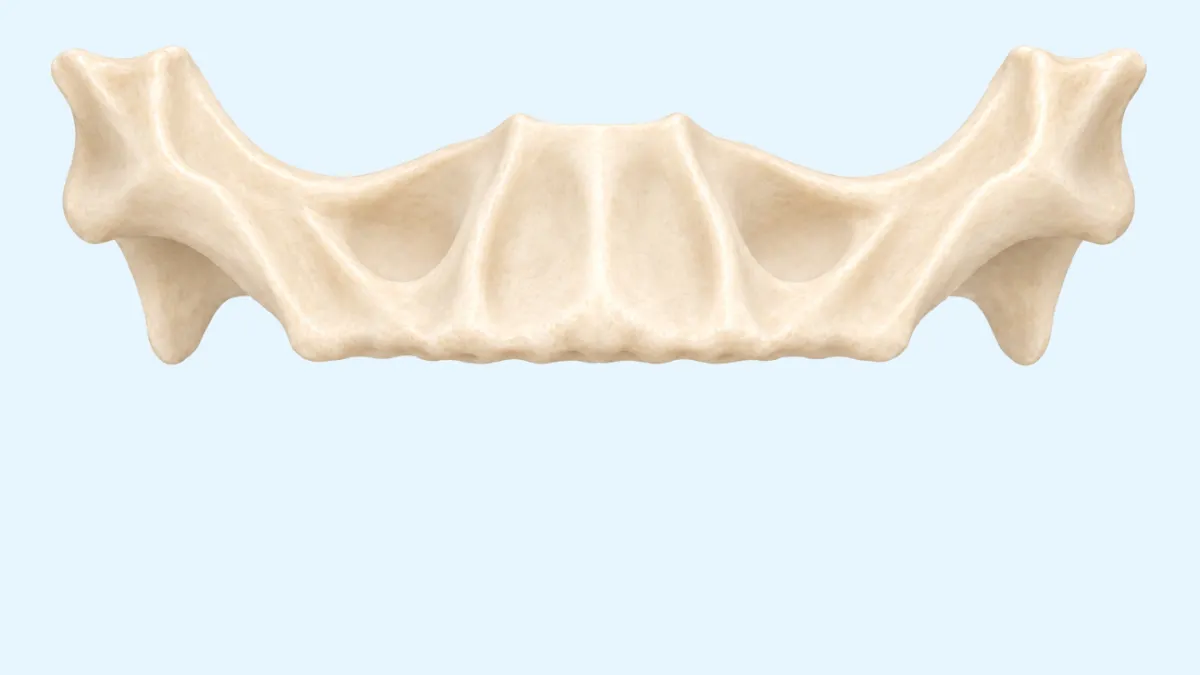
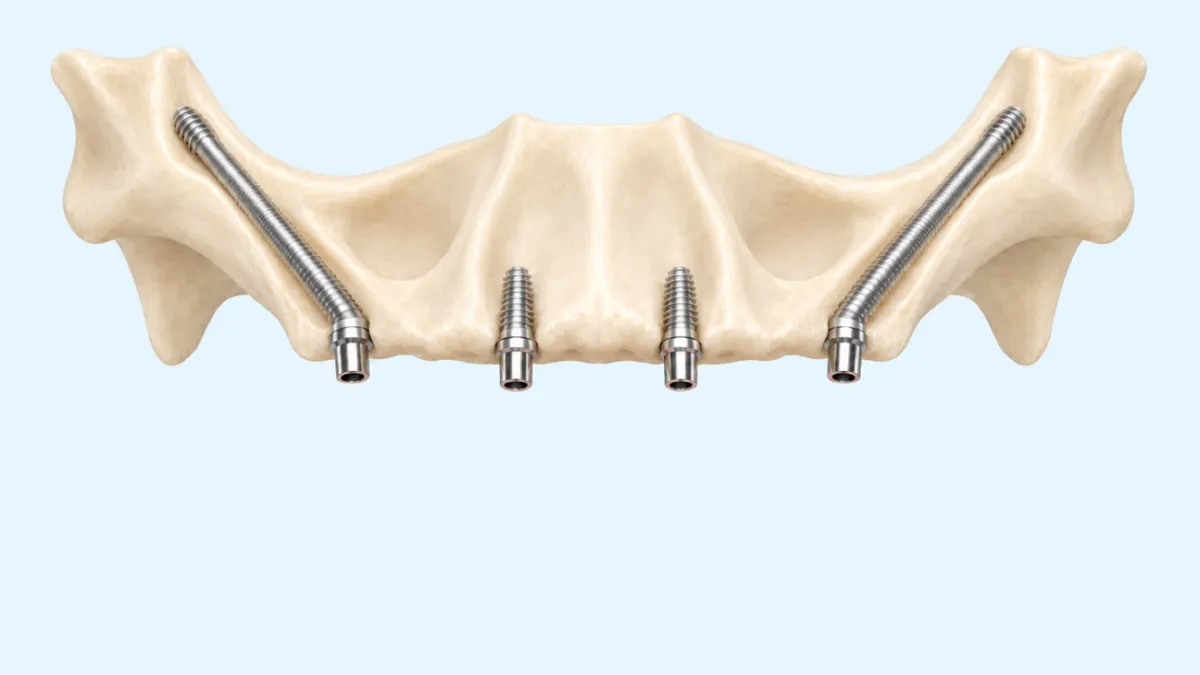
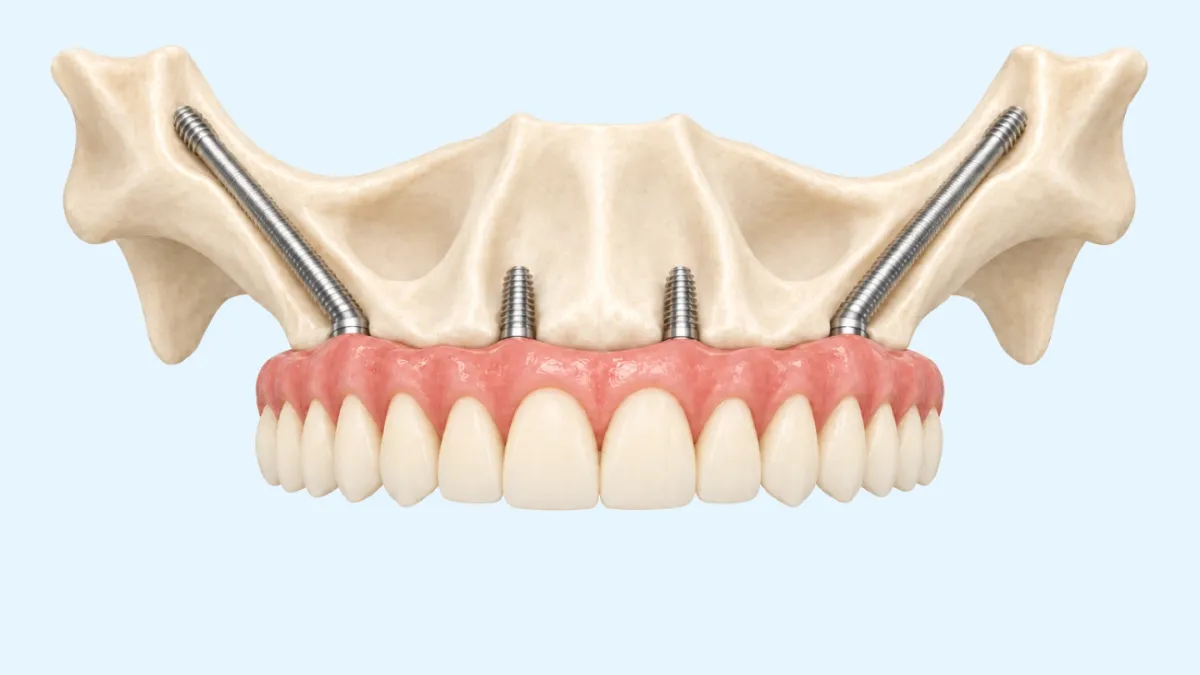
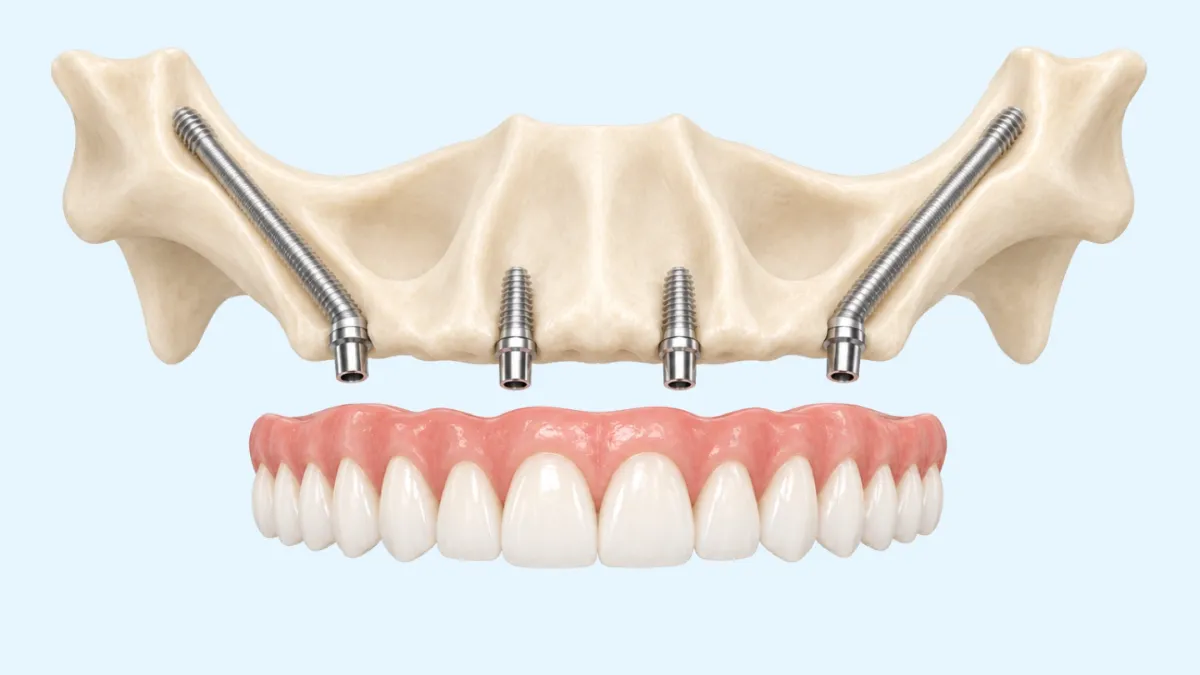
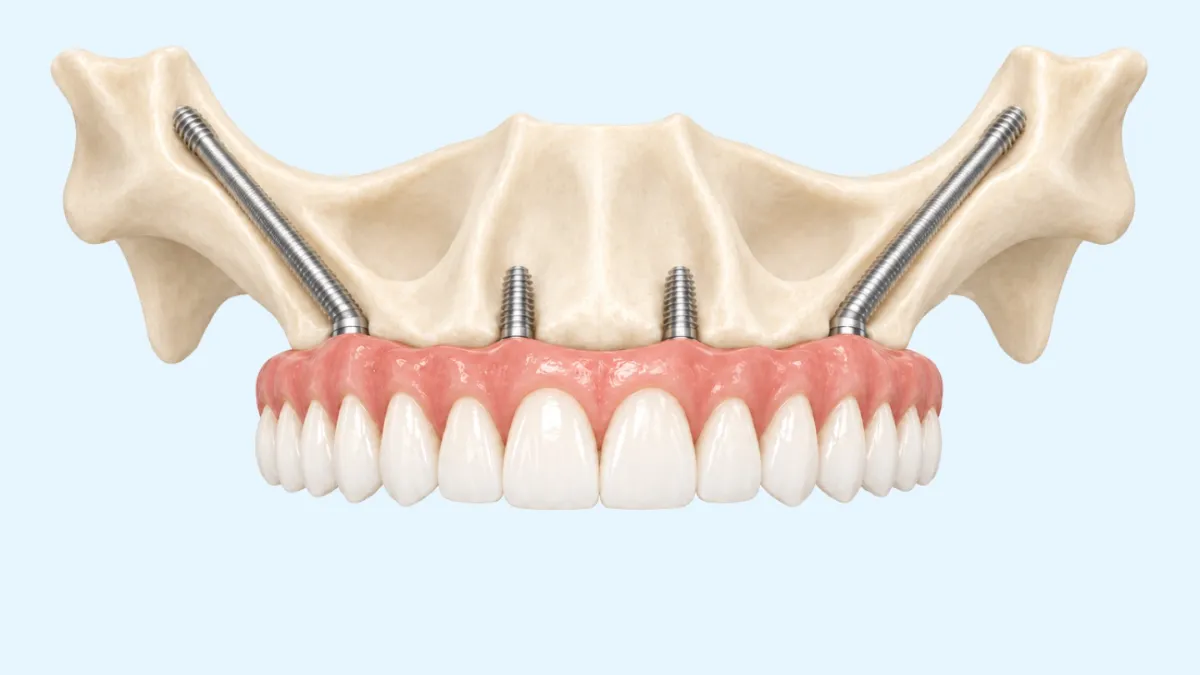
Zygomatic implants, 3D illustration of an upper jaw and cheekbones: long implants into the cheekbone and a fixed upper bridge

Treatment at a glanceHow zygomatic implants are placed, step by step

Illustration for explanation only. Your surgeon decides from your own 3D scan whether zygomatic implants are needed, how many, and how they combine with standard implants.

The short answer

What are zygomatic implants and who are they for?

Zygomatic implants are longer than standard implants and are anchored in the cheekbone (zygoma) rather than in the upper jaw alone. They are used when the upper jaw has lost so much bone that standard implants, even with grafting or a sinus lift, are not a good option. They usually hold a fixed upper bridge.

How it works

  1. Send your photosA few smile photos or a recent X-ray on WhatsApp is enough to start.
  2. Get a written planOur dentists prepare your treatment plan and quote, in writing.
  3. Come to IstanbulWe organise appointments, hotel and transfers around your treatment.
  4. Your treatmentDigital impressions and smile design let you see the plan before anything begins. A coordinator translates in the chair and explains each step.
  5. Stay in touchYour coordinator stays reachable after you've flown home.

1 From home

A first answer before you book anything

If you have a 3D scan or a panoramic X-ray, send it on WhatsApp or through the form, together with what you have been told about your bone so far. A dentist looks at it before we reply.

What we ask you

  • A 3D scan or panoramic X-ray, if you have one
  • Any earlier grafts or implants, and what happened to them
  • Sinus problems, past or present
  • Your general health and medication, including blood thinners

What you receive

  • Whether zygomatic implants may be worth considering
  • The other options for your upper jaw
  • A written plan and quote
  • A final plan only after your 3D scan

2 Istanbul · First visit

The scan shows what the bone allows

  • Arrival. Your airport pick-up, hotel and transfers are arranged around your appointments, as written in your quote.
  • Examination and 3D scan. The scan covers the upper jaw, the sinuses and the cheekbones, so the path of each implant can be planned.
  • Your health and sinuses. Your surgeon asks about your health and any sinus history, and may ask for an ear, nose and throat check first.
  • Translation. A coordinator translates in the chair and explains each step.

3 Istanbul · Surgery day

The implants go in, with a fixed temporary where possible

  • Before surgery. Your surgeon explains beforehand how the surgery is carried out and how you are kept comfortable.
  • The implants. The zygomatic implants and any standard implants are placed along the paths planned on your scan.
  • Temporary bridge. Where the implants sit firmly, a fixed temporary bridge is attached soon after surgery.
  • Before you fly home. Your surgeon tells you how to care for the area and when it is safe to fly.

4 Istanbul · Second visit

Your final bridge, after healing

  • Healing. You wear the temporary bridge while the implants bond with the bone. Keep to softer food on it.
  • Try-in. The new bridge is tried in, and your dentist checks how it supports your lips and cheeks.
  • Fitting. The final bridge is fixed onto the implants and your bite is adjusted.

5 Back home · Aftercare

Looking after a zygomatic bridge

Clean under the bridge every day with the brushes your dentist shows you, and tell us about any sinus symptoms. Routine check-ups can be done by a dentist near your home, and your coordinator stays reachable after you've flown home.

After teeth are lost, the upper jaw bone shrinks and the sinus above it can expand downward. In some people very little bone is left at the back, or across the whole upper jaw.

The usual answers are a bone graft, a sinus lift or angled implants as in All-on-4. Zygomatic implants come in when those would be very extensive, have already failed, or the bone simply isn't there. They are for the upper jaw only.

  • Severe bone loss in the upper jaw: seen on a three-dimensional scan.
  • Earlier grafts or implants that didn't hold: another graft may not be the best next step.
  • Grafting that would be very large: when the scan shows a long grafting stage would be needed first.

Zygomatic implants are usually combined with standard implants at the front of the upper jaw, where more bone tends to remain. Together they hold one fixed bridge, much like an All-on-4 bridge.

This is more complex surgery than standard implants, and it is planned in detail on the scan. Your surgeon explains how it is carried out, how you are kept comfortable and what recovery involves.

Where the case allows, a fixed temporary bridge is fitted soon after surgery. The final bridge follows once healing is complete. How many visits it takes depends on your case; your written plan states it.

Most people heal well, but zygomatic surgery carries risks that standard implants don't. Your dentist goes through this list with you before you decide.

  • Swelling and bruising: often spread to the cheek and around the eye, then settle as the days pass.
  • Sinus problems: the implant passes close to or through the sinus, so congestion or sinus inflammation can follow. Tell us about any sinus history beforehand.
  • Numbness: rarely, the cheek or lip feels numb because of nerves near the surgical area.
  • An implant that doesn't bond: removing and replacing a zygomatic implant is more involved than with a standard one.
  • Cleaning: the bridge has to be cleaned underneath every day, as with any full-arch bridge.

Both aim at the same thing: fixed teeth in an upper jaw that has lost bone. A graft rebuilds the jaw so standard implants can go in later; zygomatic implants use the cheekbone instead. Your surgeon compares the two on your own scan.

Graft, then standard implantsZygomatic implants
Extra surgeryUsually a grafting stage that has to heal firstUsually none
Fixed teethUsually after the graft and implants have healedOften a fixed temporary soon after surgery
SurgeryStandard implant surgeryMore complex, close to the sinus
If an implant failsSimpler to replaceMore involved to replace

Your treatment journey

Your visit, step by step.

From your first message to the follow-up after you fly home, one coordinator stays with you.

From home

Send your photos

A few smile photos or a recent X-ray on WhatsApp is enough to start.

  • Photos or X-ray on WhatsApp
  • A dentist takes a look

From home

Get a written plan

Our dentists prepare your treatment plan and quote, in writing.

  • Written plan
  • Written quote

Istanbul

Come to Istanbul

We organise appointments, hotel and transfers around your treatment.

  • Airport pick-up
  • Hotel
  • Daily transfers

At the clinic

Your treatment

Digital impressions and smile design let you see the plan before anything begins. A coordinator translates in the chair and explains each step.

  • Digital planning
  • Translation at appointments

Back home

Stay in touch

Your coordinator stays reachable after you've flown home.

  • Coordinator stays reachable

Our dentists

Every dentist at our clinics provides this treatment.

Dt. Veysel Bilge, Head Dentist, Vogue Clinics Istanbul

Dt. Veysel Bilge

Head Dentist · Founder · Ataşehir and Bağdat Caddesi

Dt. Uğur Öğüt, Dentist, Vogue Clinics Istanbul

Dt. Uğur Öğüt

Dentist · Branch director, Bağdat Caddesi

Dt. Melike Yaylakaşı, Dentist, Vogue Clinics Istanbul

Dt. Melike Yaylakaşı

Dentist

Dt. Mazlum Üren, Dentist, Vogue Clinics Istanbul

Dt. Mazlum Üren

Dentist · Aesthetic and prosthetic dentistry

Dt. Emine Karslı Çağlar, Orthodontist, Vogue Clinics Istanbul

Dt. Emine Karslı Çağlar

Orthodontist

Dr. Samet Fatih Gücer, Endodontist, Vogue Clinics Istanbul

Dr. Samet Fatih Gücer

Endodontist

Dt. Burcu İrem Başer, Dentist, Vogue Clinics Istanbul

Dt. Burcu İrem Başer

Dentist · Pediatric dentistry

Dt. Defne İyigün, Dentist, Vogue Clinics Istanbul

Dt. Defne İyigün

Dentist

Dt. İrem Karakaya, Dentist, Vogue Clinics Istanbul

Dt. İrem Karakaya

Dentist · Bağdat Caddesi

Dt. Asel Hoş, Dentist, Vogue Clinics Istanbul

Dt. Asel Hoş

Dentist · PhD programme in Restorative Dentistry

Dt. Kübra Yıldırım, Dentist, Vogue Clinics Istanbul

Dt. Kübra Yıldırım

Dentist

Dt. Didem Yağımlı, Dentist, Vogue Clinics Istanbul

Dt. Didem Yağımlı

Dentist

Dt. Ceren Tiken, Pediatric Dentist, Vogue Clinics Istanbul

Dt. Ceren Tiken

Pediatric Dentist

Dt. Elif Selçuk

Dentist

You can have this treatment at both of our Istanbul clinics: Dental clinic in Ataşehir, Istanbul and Dental clinic in Kadıköy, Bağdat Caddesi.

Common questions

How long do zygomatic implants last?

There is no fixed number of years. How long zygomatic implants and the bridge they carry last depends mostly on cleaning under the bridge every day, regular check-ups, smoking and teeth grinding. The bridge may need repairs or renewal over time. Looking after the implants matters all the more because replacing a zygomatic implant is more involved than replacing a standard one.

Are zygomatic implants safe?

Most people heal well when the case is chosen carefully and planned on a 3D scan. It is still more complex surgery than a standard implant and carries extra risks, mainly for the sinus: congestion or sinus inflammation, and rarely numbness in the cheek or lip. Tell your surgeon about any sinus history; they go through these risks with you before you decide.

How long is recovery after zygomatic implants?

There are two kinds of recovery. Swelling and bruising, often spreading to the cheek and around the eye, are usually most noticeable in the first days and then settle. The implants keep bonding with the bone for months afterwards; where the case allows, you wear a fixed temporary bridge during that time. Your surgeon tells you when you can return to work.

Do zygomatic implants hurt?

It is more involved surgery than a standard implant, so your surgeon explains beforehand how the procedure is done and what is done to keep you comfortable. Afterwards, expect soreness, swelling and bruising for some days, often spreading to the cheek and around the eye; it usually settles day by day. Your surgeon tells you which pain relief suits you.

Can zygomatic implants be used in the lower jaw?

No. Zygomatic implants anchor in the cheekbone, so they are only used in the upper jaw. They usually work together with standard implants at the front of the upper jaw to hold a fixed bridge. Bone loss in the lower jaw is handled in other ways, such as grafting, angled implants or an implant-supported denture, depending on what your scan shows.

Do zygomatic implants go through the sinus?

They can. A zygomatic implant runs from the back of the upper jaw up to the cheekbone, passing close to or through the sinus depending on your anatomy. That is why sinus problems such as congestion or inflammation are among its specific risks. Tell your surgeon about any history of sinus trouble; the path of each implant is planned on your 3D scan.

Zygomatic implants or All-on-4: which is right for me?

It depends on how much bone is left in your upper jaw. All-on-4 places four implants directly in the jaw bone, with the back ones often angled, and suits people with enough bone for that. Zygomatic implants are for upper jaws with advanced bone loss, or where grafts or implants have failed before. They are usually combined with standard implants at the front.

Can zygomatic implants be removed?

Yes, a surgeon can remove a zygomatic implant if it doesn't bond with the bone or causes a problem, but it is more involved than removing or replacing a standard implant. That is one reason careful case selection and 3D planning matter so much. If an implant does have to come out, your surgeon explains the options for supporting the bridge again.

Can you see or feel zygomatic implants?

You can't see them: the implants sit inside the bone. What you notice is the fixed bridge, which supports your lips and cheeks; that can change how the lower face looks, and it is checked at the try-in. As with any full-arch bridge, the new teeth feel different at first, and most people adjust as the tongue and lips get used to them.

How many trips will I need, and when can I fly?

Usually two stages: surgery with a temporary bridge, then the final bridge after healing. Your surgeon tells you when it is safe to fly, your written plan and quote set out both stages, and your coordinator arranges hotel and transfers.

This page is for general information and doesn't replace an examination by a dentist.

Start here

Send us a photo of your smile.

A dentist looks at it and we reply with honest options and a written plan. You don't have to commit to anything.

Bağdat Caddesi

5.0 ★ Google
Caddebostan, Şerafettin Sk. No: 2/1 D: 4, 34728 Kadıköy / İstanbul
Get directions

Ataşehir

4.8 ★ Google
Barbaros Mah. Begonya Sok. No: 3/N, Nidakule Kuzey, 34750 Ataşehir / İstanbul
+90 216 606 68 04

Mon–Sat 09:30–18:30

Get directions

Request your treatment plan

We only use your details to answer this request. Your plan is confirmed after a clinical examination. Privacy policy