
Treatments · Vogue Clinics

Full mouth dental implants in Istanbul

Implant-supported teeth for both jaws, planned as one mouth rather than one arch at a time.

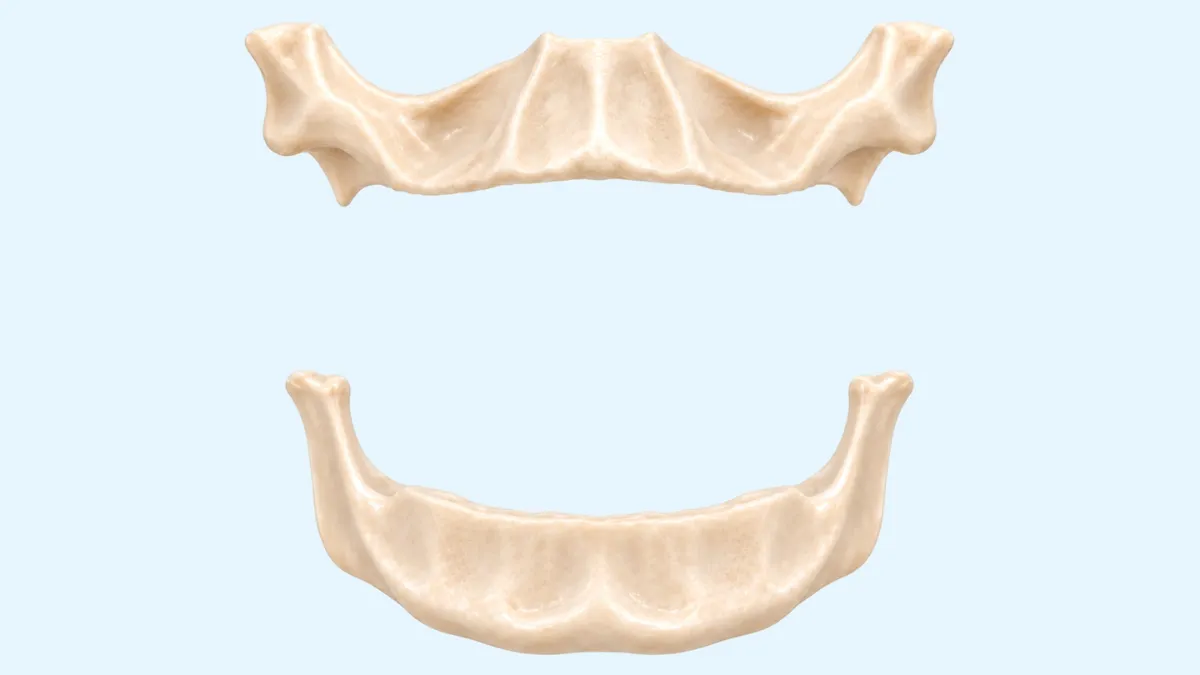
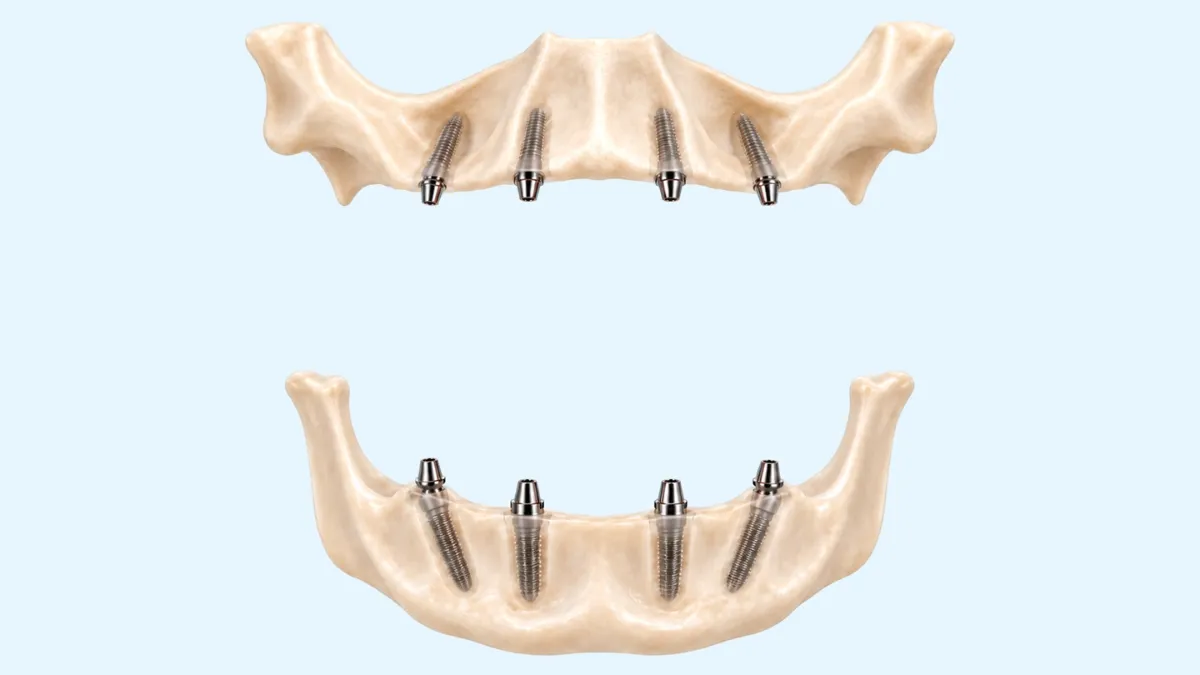
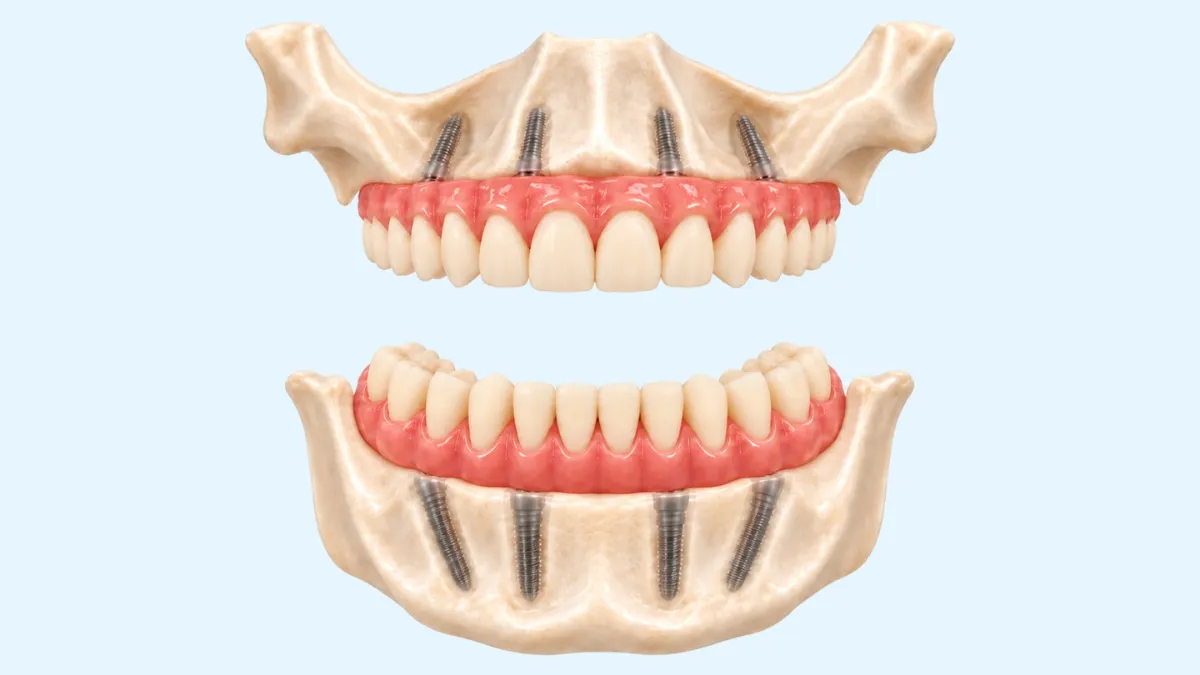
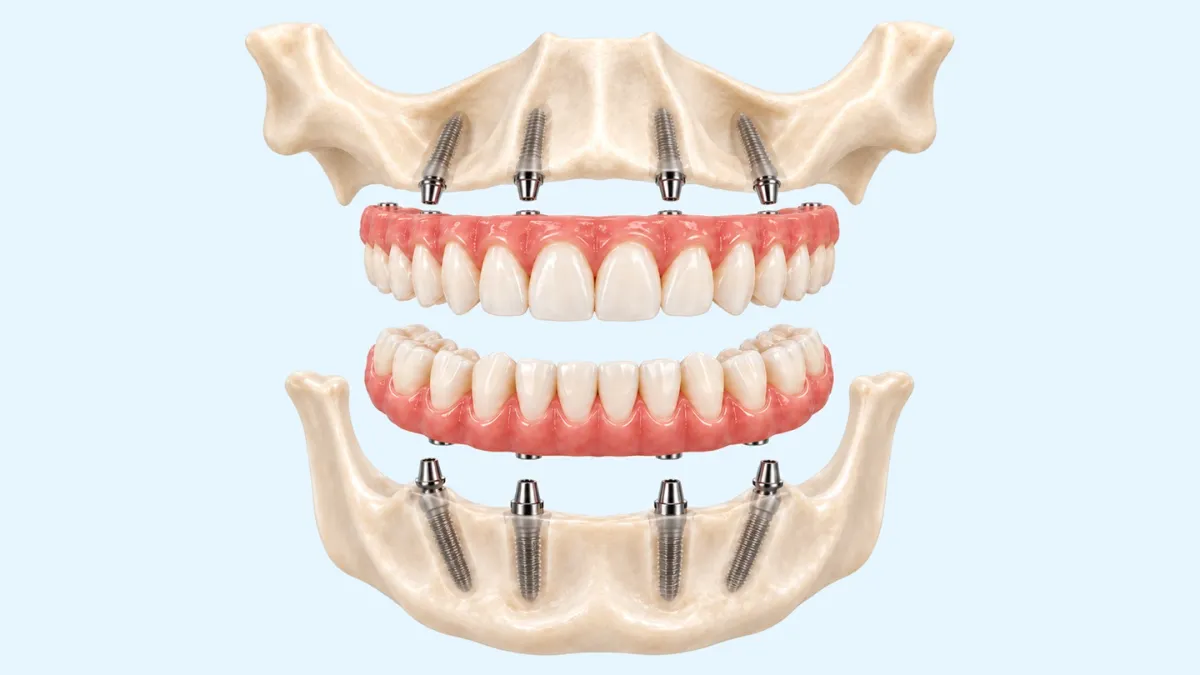
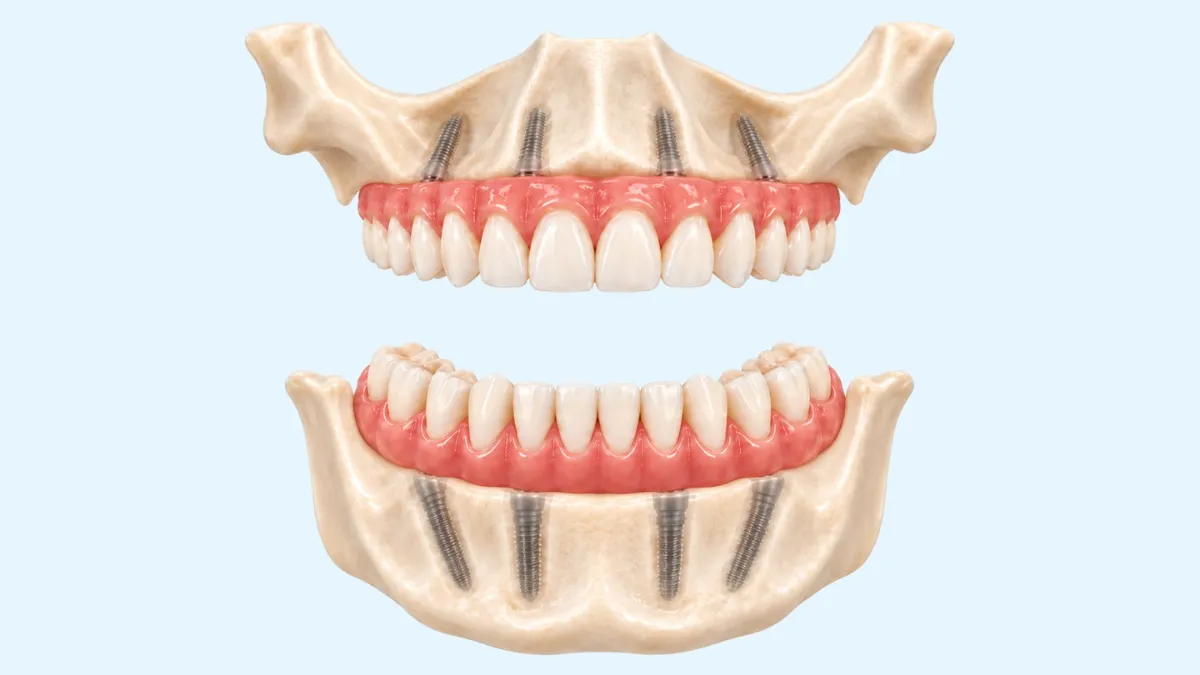
Full-mouth dental implants, 3D illustration of an upper and a lower jaw: implants in both jaws and a fixed bridge on each

Treatment at a glanceHow full-mouth dental implants are placed, step by step

Illustration for explanation only. It shows four implants in each jaw as an example. Your dentist decides from your own 3D scan how many implants each jaw gets, and whether it carries one bridge or several sections.

The short answer

What are full-mouth dental implants, and who are they for?

Full-mouth dental implants replace the teeth in both the upper and lower jaw with teeth held by implants. All-on-4 and All-on-6 are one way to do it. Where the bone allows more implants, each jaw can instead be rebuilt as several smaller bridges or single crowns. It suits people who have lost most of their teeth in both jaws.

How it works

  1. Send your photosA few smile photos or a recent X-ray on WhatsApp is enough to start.
  2. Get a written planOur dentists prepare your treatment plan and quote, in writing.
  3. Come to IstanbulWe organise appointments, hotel and transfers around your treatment.
  4. Your treatmentDigital impressions and smile design let you see the plan before anything begins. A coordinator translates in the chair and explains each step.
  5. Stay in touchYour coordinator stays reachable after you've flown home.

1 From home

A first answer before you book anything

Send a recent panoramic X-ray or a few photos on WhatsApp or through the form, and tell us what is happening in each jaw. If another clinic has already given you a plan, send that too. A dentist looks at everything before we reply.

What we ask you

  • A panoramic X-ray, a 3D scan or photos of your teeth
  • Any plan you have from another clinic
  • Your general health and medication, including blood thinners
  • Whether you smoke, have diabetes or grind your teeth

What you receive

  • Which designs may suit each jaw
  • Which of your teeth may be worth keeping
  • A written plan and quote
  • A final plan only after your 3D scan

2 Istanbul · First visit

One mouth, two plans that fit together

  • Arrival. Your airport pick-up, hotel and transfers are arranged around your appointments, as written in your quote.
  • Examination and 3D scan. Your dentist examines your teeth, gums and bite, and takes a 3D scan of both jaws to see the bone, the nerves and the sinuses.
  • A design for each jaw. Your dentist shows you on the scan where implants can go in each jaw, and whether each one suits a single bridge or sections. Nothing starts until you have agreed to the written plan.
  • Translation. A coordinator translates in the chair and explains each step.

3 Istanbul · Implant day

Implants in one jaw or both, with temporaries where possible

  • Local anaesthesia. The jaw being treated is numbed first, and you can ask for a break at any point.
  • Extractions and implants. Teeth that can't be saved are removed and the implants go in at the planned positions. If a jaw needs a graft first, your plan says so in advance.
  • Temporary teeth. Where the implants sit firmly, fixed temporary bridges are attached. Otherwise your dentist explains the alternative before surgery.
  • Before you fly home. You're shown how to clean around the temporaries and what to eat in the first days.

4 Istanbul · Second visit

Your final teeth, once the implants have healed

  • Healing first. The bone bonds with the implants, usually over three to six months, and longer if a graft was needed.
  • Scan and try-ins. Both jaws are scanned and the new teeth are tried in together, so the upper and lower teeth meet properly.
  • Fitting. The bridges or sections are fixed onto the implants and your bite is adjusted.

5 Back home · Aftercare

Looking after two jaws of implant teeth

Each design is cleaned a little differently: under a long bridge, or between sections like natural teeth. Your dentist shows you the brushes that fit yours. If you grind your teeth, a night guard protects both jaws.

Routine check-ups can be done by a dentist near your home, and your coordinator stays reachable after you've flown home.

All-on-4 and All-on-6 put one bridge on a small number of implants, some placed at an angle so that grafting can often be avoided. Full-mouth implant treatment is the wider plan. It covers both jaws and lets us choose the design for each one separately.

When there is enough bone, more implants can go where the roots used to be. The arch can then be split into sections or single crowns. This feels closer to natural teeth, and a problem in one section doesn't mean taking out the whole arch.

All-on-4 / All-on-6Sectioned bridges or single crowns
Implants per jawFewer, some placed at an angleMore, placed where the teeth were
Bone neededLess; often works without graftingMore; grafting is more likely
If something breaksThe whole bridge comes out for repairOnly that section is repaired
CleaningUnder one long bridge, with special brushesBetween sections, closer to natural teeth
Lost gumPink material in the bridge can rebuild itWorks best when gum and bone are still in good shape

It is for people whose teeth in both jaws are missing or can't be saved, and who want fixed teeth rather than dentures. The two jaws don't need the same solution. A sectioned upper jaw with an All-on-4 lower jaw, or the other way round, is a perfectly reasonable plan.

If some of your teeth are healthy, we keep them. Uncontrolled diabetes, active gum disease and heavy smoking raise the risk, so treatment usually waits until they are under control.

  • Bone: how much there is in each jaw, seen on a three-dimensional scan.
  • Bite and grinding: strong forces call for a sturdier design.
  • Smile line: whether the join between gum and bridge shows when you smile.
  • Cleaning: which design you can keep clean at home.

Planning starts with an examination, a three-dimensional scan and a conversation about what you want from your teeth. Your written plan shows the design for each jaw and the order of the steps.

Both jaws are sometimes treated in the same session; in other cases one jaw comes first. The implants then need time to bond with the bone, typically three to six months, and grafting can lengthen this. Where the case allows, you wear fixed temporary teeth in the meantime.

How many visits it takes depends on your case; your written plan states it.

Clinics use these names loosely, which makes plans hard to compare. This is how we use them on this site.

NameWhat it means
Full-arch implantsImplant teeth for one jaw
Full-mouth implantsImplant teeth for both jaws, planned together
All-on-4 and All-on-6One fixed bridge on four or six implants in a jaw
All-on-8A name some clinics use for a jaw on eight implants, often in sections
Sectioned bridgesThe arch split into shorter bridges or single crowns on more implants

A full-mouth plan is a big decision, and it's reasonable to want a second look before you agree to one. Bring the plan and any scan you have, and our dentists go through it with you on your own images.

We won't criticise another dentist's work. We tell you where we agree, where we would do something differently and why.

  • Teeth to be removed: are any of them worth keeping?
  • Number of implants per jaw: does it match the bone on the scan?
  • Grafting: is it needed, or could angled implants avoid it?
  • The design for each jaw: one bridge, sections, or a denture on implants.

Your treatment journey

Your visit, step by step.

From your first message to the follow-up after you fly home, one coordinator stays with you.

From home

Send your photos

A few smile photos or a recent X-ray on WhatsApp is enough to start.

  • Photos or X-ray on WhatsApp
  • A dentist takes a look

From home

Get a written plan

Our dentists prepare your treatment plan and quote, in writing.

  • Written plan
  • Written quote

Istanbul

Come to Istanbul

We organise appointments, hotel and transfers around your treatment.

  • Airport pick-up
  • Hotel
  • Daily transfers

At the clinic

Your treatment

Digital impressions and smile design let you see the plan before anything begins. A coordinator translates in the chair and explains each step.

  • Digital planning
  • Translation at appointments

Back home

Stay in touch

Your coordinator stays reachable after you've flown home.

  • Coordinator stays reachable

Our dentists

Every dentist at our clinics provides this treatment.

Dt. Veysel Bilge, Head Dentist, Vogue Clinics Istanbul

Dt. Veysel Bilge

Head Dentist · Founder · Ataşehir and Bağdat Caddesi

Dt. Uğur Öğüt, Dentist, Vogue Clinics Istanbul

Dt. Uğur Öğüt

Dentist · Branch director, Bağdat Caddesi

Dt. Melike Yaylakaşı, Dentist, Vogue Clinics Istanbul

Dt. Melike Yaylakaşı

Dentist

Dt. Mazlum Üren, Dentist, Vogue Clinics Istanbul

Dt. Mazlum Üren

Dentist · Aesthetic and prosthetic dentistry

Dt. Emine Karslı Çağlar, Orthodontist, Vogue Clinics Istanbul

Dt. Emine Karslı Çağlar

Orthodontist

Dr. Samet Fatih Gücer, Endodontist, Vogue Clinics Istanbul

Dr. Samet Fatih Gücer

Endodontist

Dt. Burcu İrem Başer, Dentist, Vogue Clinics Istanbul

Dt. Burcu İrem Başer

Dentist · Pediatric dentistry

Dt. Defne İyigün, Dentist, Vogue Clinics Istanbul

Dt. Defne İyigün

Dentist

Dt. İrem Karakaya, Dentist, Vogue Clinics Istanbul

Dt. İrem Karakaya

Dentist · Bağdat Caddesi

Dt. Asel Hoş, Dentist, Vogue Clinics Istanbul

Dt. Asel Hoş

Dentist · PhD programme in Restorative Dentistry

Dt. Kübra Yıldırım, Dentist, Vogue Clinics Istanbul

Dt. Kübra Yıldırım

Dentist

Dt. Didem Yağımlı, Dentist, Vogue Clinics Istanbul

Dt. Didem Yağımlı

Dentist

Dt. Ceren Tiken, Pediatric Dentist, Vogue Clinics Istanbul

Dt. Ceren Tiken

Pediatric Dentist

Dt. Elif Selçuk

Dentist

You can have this treatment at both of our Istanbul clinics: Dental clinic in Ataşehir, Istanbul and Dental clinic in Kadıköy, Bağdat Caddesi.

Common questions

How long does it take to get full mouth dental implants?

Usually two stages: first the implants, with fixed temporary teeth where the case allows, then the final teeth once the implants have bonded with the bone. Bonding typically takes three to six months and can take longer after a graft. Both jaws are sometimes done at the same session and sometimes one after the other, so your written plan gives the timeline for your case.

How long do full mouth dental implants last?

There is no fixed number of years; with good cleaning and regular check-ups they can last for many years. Smoking, grinding and missed check-ups shorten that. The design matters too: with sectional bridges, a problem in one part means only that part is repaired, while a one-piece bridge has to come out for repairs. The bridges may need renewing over time.

Do full mouth dental implants hurt?

The implants go in under local anaesthesia, so most people feel pressure rather than pain during surgery. Because a large part of the mouth is treated, soreness, swelling and bruising afterwards tend to be more noticeable than after a single implant, especially when both jaws are done at once. It usually peaks in the first days and then settles. Your dentist tells you which pain relief suits you.

Can full mouth dental implants be done in one day?

The implants for one or both jaws can often be placed at one session, and where they sit firmly enough, fixed temporary teeth are fitted soon after. The final teeth can't be made on the same day, because the implants first need to bond with the bone, typically over three to six months. Your written plan states whether temporaries at the same stage are possible for you.

Are full mouth dental implants permanent?

When the teeth are bridges or crowns on implants, they are fixed: you can't take them out, and only your dentist can remove a bridge for maintenance. If one jaw has an implant-supported denture instead, that denture clips onto the implants and you take it out to clean. Fixed doesn't mean maintenance-free; daily cleaning and check-ups keep the implants healthy.

What are full mouth dental implants made of?

The implants themselves are usually titanium. The teeth on top can be zirconia on a support bar, porcelain on a metal framework, or acrylic teeth on a framework, made as one bridge, as sections or as single crowns. Where gum has been lost, a bridge can include a pink part to replace it. You see the shape and colour of your new teeth at the try-in.

How do you care for full mouth dental implants?

Clean them every day, much like natural teeth, with extra attention where the teeth meet the gum. Under a one-piece bridge you use special brushes or a water flosser; sections and single crowns are cleaned more like natural teeth. Plaque left around implants can inflame the gum and bone. We show you the tools when the final teeth are fitted, and check-ups include professional cleaning.

Full mouth dental implants vs veneers: what is the difference?

They solve different problems. Veneers are thin shells bonded to the front of your own teeth to change their colour or shape, so the teeth underneath need to be healthy. Full-mouth implants replace teeth that are missing or can't be saved, with new teeth held by implants in the jaw. If your teeth are sound, your dentist will tell you; we keep healthy teeth.

What is the recovery time for full mouth dental implants?

There are two kinds of recovery. Swelling and soreness are usually most noticeable in the first days and then settle; speech and chewing feel different at first and improve as you get used to the temporary teeth. Bonding of the implants with the bone takes longer, typically three to six months, before the final teeth are made. Your dentist tells you when you can return to work.

Will I need more than one trip to Istanbul?

Usually yes: one stage for the implants and temporary teeth, and another for the final teeth once healing is complete. Your written plan and quote set out each stage, and your patient coordinator arranges your hotel and transfers.

This page is for general information and doesn't replace an examination by a dentist.

Start here

Send us a photo of your smile.

A dentist looks at it and we reply with honest options and a written plan. You don't have to commit to anything.

Bağdat Caddesi

5.0 ★ Google
Caddebostan, Şerafettin Sk. No: 2/1 D: 4, 34728 Kadıköy / İstanbul
Get directions

Ataşehir

4.8 ★ Google
Barbaros Mah. Begonya Sok. No: 3/N, Nidakule Kuzey, 34750 Ataşehir / İstanbul
+90 216 606 68 04

Mon–Sat 09:30–18:30

Get directions

Request your treatment plan

We only use your details to answer this request. Your plan is confirmed after a clinical examination. Privacy policy













