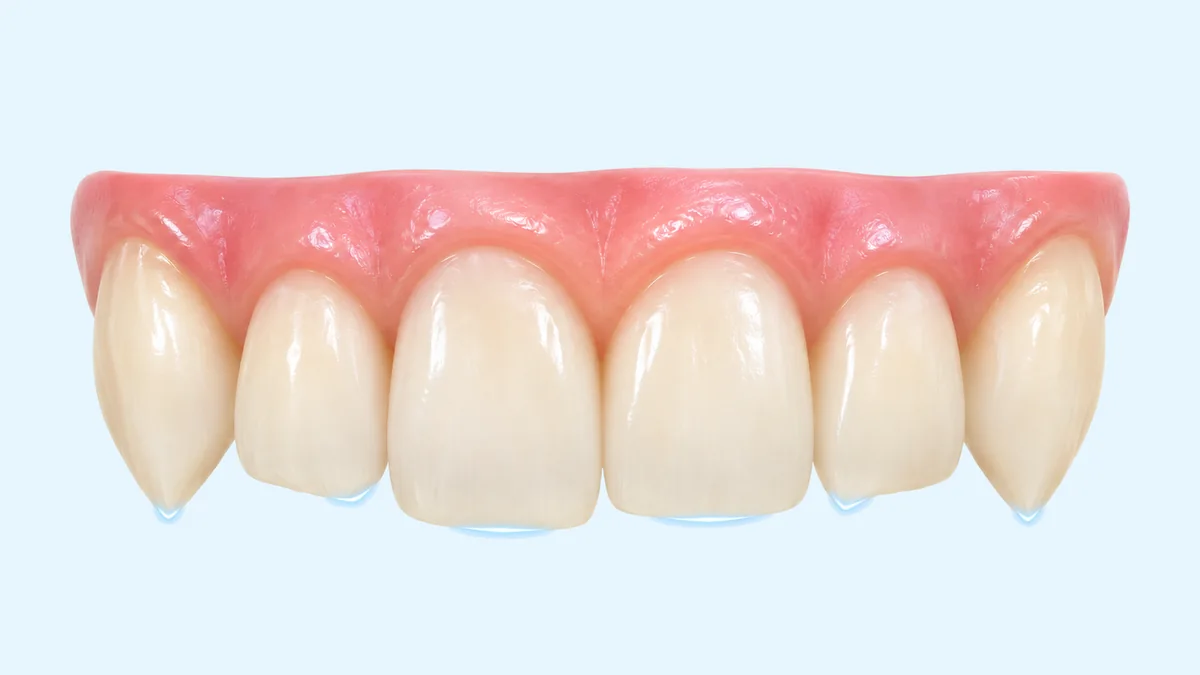
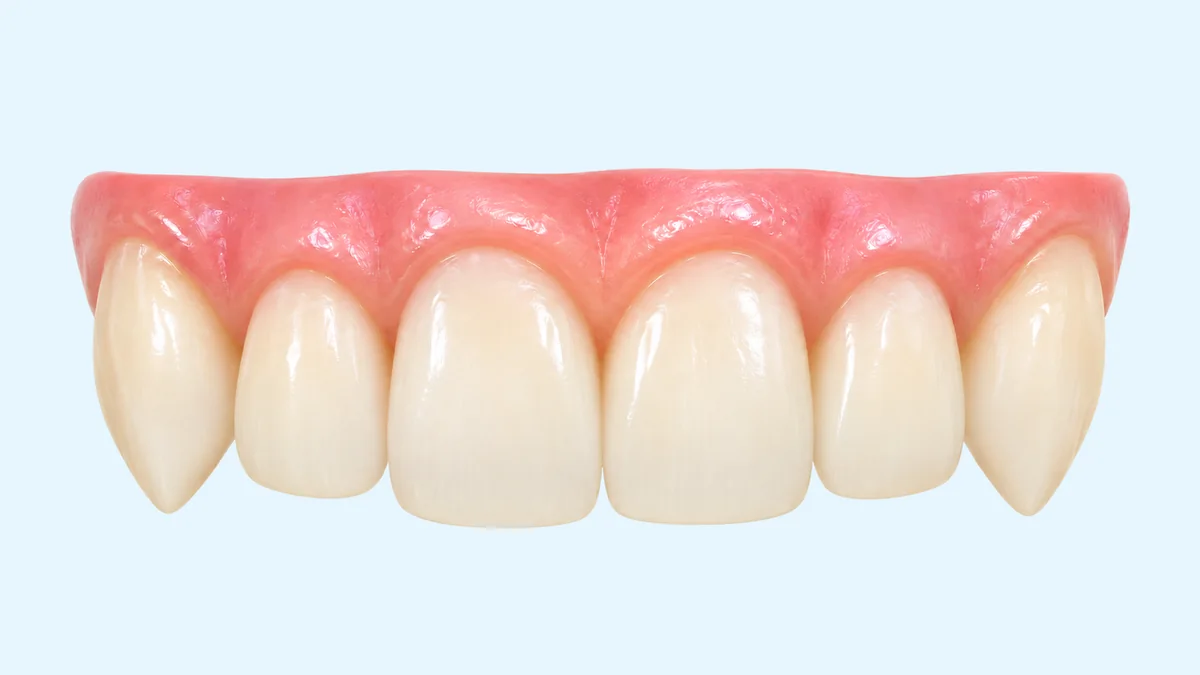
Reshaping the enamel
Who it suits: For small chips, pointed tips or a tooth slightly longer than its neighbour, on teeth with enough enamel.
What it does: Enamel is smoothed and polished in the chair; nothing is added and the colour stays the same.

Treatments · Vogue Clinics
Small changes to the shape of front teeth made by gently smoothing and polishing the enamel, with nothing added.

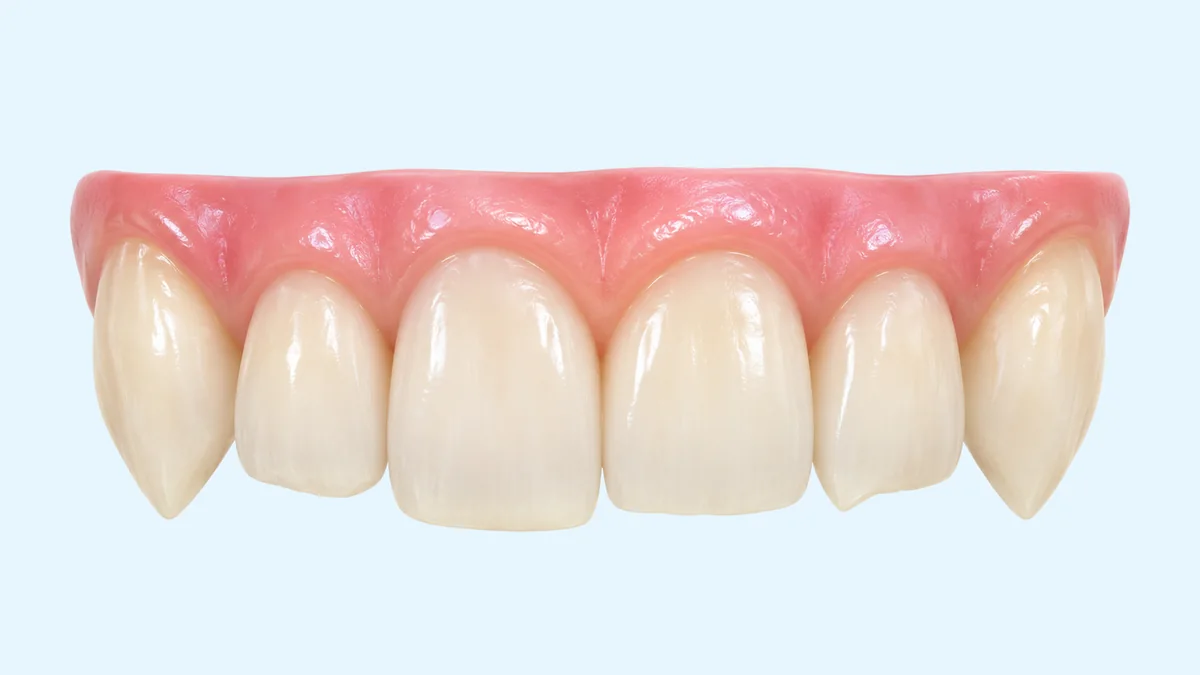
Illustration for explanation only. Where and how much enamel can be shaped is decided from your own examination, bite and enamel thickness.
What can tooth reshaping change, and who is it for?
Tooth reshaping, also called tooth contouring, removes a very small amount of enamel to smooth chipped or uneven edges, soften a pointed canine or level a tooth that looks slightly longer than its neighbour. It suits small differences on healthy teeth with enough enamel. Enamel doesn't grow back, so your dentist plans exactly where to shape first.
Which option suits you is decided at your examination, not on this page.
Send a close photo of your front teeth while smiling, on WhatsApp or through the form, and tell us which edges bother you.
First your dentist looks at your teeth, your bite and how thick the enamel is where it will be shaped; an X-ray may be needed. Then the edges are shaped with fine instruments and polishing discs, a little at a time.
You check the result in a mirror as the work goes on. Because it stays within the enamel, numbing is usually not needed. Your bite is checked at the end so the reshaped edges don't take extra load.
Contouring takes material away; bonding and veneers add it. That one difference decides most cases.
| Contouring | Bonding or veneers | |
|---|---|---|
| What it does | Removes a little enamel | Adds composite or ceramic |
| Usually suits | Small chips, uneven edges, pointed tips | Short or worn teeth, gaps, bigger changes of shape |
| Colour | Stays the same | Can be changed |
| If you change your mind | Enamel can't be put back | Composite can often be adjusted or redone |
The names are close, but they treat different things. Tooth contouring reshapes the enamel at the edges of the teeth. Gum contouring reshapes the gum line, so that teeth hidden under too much gum look longer; we explain it on our gummy smile page.
In a wider smile plan the two can come together: the gum line is evened out first, and the edges are refined afterwards.
Mostly the front teeth that show when you smile. Your dentist decides tooth by tooth, from the enamel thickness and your bite.
Your treatment journey
From your first message to the follow-up after you fly home, one coordinator stays with you.
From home
A few smile photos or a recent X-ray on WhatsApp is enough to start.
From home
Our dentists prepare your treatment plan and quote, in writing.
Istanbul
We organise appointments, hotel and transfers around your treatment.
At the clinic
Digital impressions and smile design let you see the plan before anything begins. A coordinator translates in the chair and explains each step.
Back home
Your coordinator stays reachable after you've flown home.
Every dentist at our clinics provides this treatment.

Head Dentist · Founder · Ataşehir and Bağdat Caddesi

Dentist · Branch director, Bağdat Caddesi

Dentist

Dentist · Aesthetic and prosthetic dentistry

Orthodontist

Endodontist

Dentist · Pediatric dentistry

Dentist

Dentist · Bağdat Caddesi

Dentist · PhD programme in Restorative Dentistry

Dentist

Dentist

Pediatric Dentist
Dentist
You can have this treatment at both of our Istanbul clinics: Dental clinic in Ataşehir, Istanbul and Dental clinic in Kadıköy, Bağdat Caddesi.
Yes, on healthy teeth with enough enamel, as long as the shaping stays within the enamel. Only a very small amount is removed, and your dentist plans exactly where before starting, after checking enamel thickness and your bite. On thin or worn enamel it can expose the dentine underneath, which is yellower and more sensitive, so adding material suits those teeth better.
The result is permanent, because enamel that has been removed doesn't grow back; that also means it can't be undone. The edges can still chip or wear again through grinding or biting hard objects such as nails, pens or thread. Your dentist checks the edges and your bite at regular check-ups.
Usually not. The work stays in the enamel, which has no nerves, so numbing is usually not needed and most people feel only a light vibration as the edges are smoothed. If a spot feels sensitive, tell your dentist and they will stop. You check the shape in a mirror as the work goes on.
It is done in the chair with no laboratory stage, so it can often be planned alongside your other treatment. The edges are shaped a little at a time with fine instruments and polishing discs, and you check the result in a mirror as the work goes on. How many appointments you need is stated in your written plan.
Yes, and it is a common finishing step. Once the teeth have been moved into line, small differences in the edges can show more, and contouring evens them up. Your dentist checks the enamel and your bite first. It can also be part of a wider smile plan with whitening or bonding.
Usually not, as long as the shaping stays within the enamel. Some people notice mild sensitivity to cold for a short while afterwards; if it doesn't settle, contact us. Teeth with thin or worn enamel are more likely to become sensitive, because shaping can expose the dentine, which is why your dentist checks enamel thickness first.
It goes by several names: tooth reshaping, tooth contouring, enamel shaping and, in dental terms, enameloplasty. All describe removing a very small amount of enamel to smooth chipped or uneven edges, soften a pointed canine or level a slightly long tooth. It isn't the same as gum contouring, which reshapes the gum line rather than the teeth.
A dentist does it, usually as part of cosmetic dentistry. At our clinic your dentist first examines your teeth, your bite and the enamel thickness, with an X-ray if needed, then shapes the edges in the chair. If the teeth are crooked or the gum line is uneven, orthodontics or gum contouring may be the better first step.
Usually, because nothing has to be made in a laboratory. How many appointments you need is stated in your written plan.
This page is for general information and doesn't replace an examination by a dentist.
Start here
A dentist looks at it and we reply with honest options and a written plan. You don't have to commit to anything.
Mon–Sat 09:30–18:30
Get directions