E.max crown
Who it suits: A broken, worn or heavily filled front tooth with a healthy colour underneath and a bite that isn't too heavy.
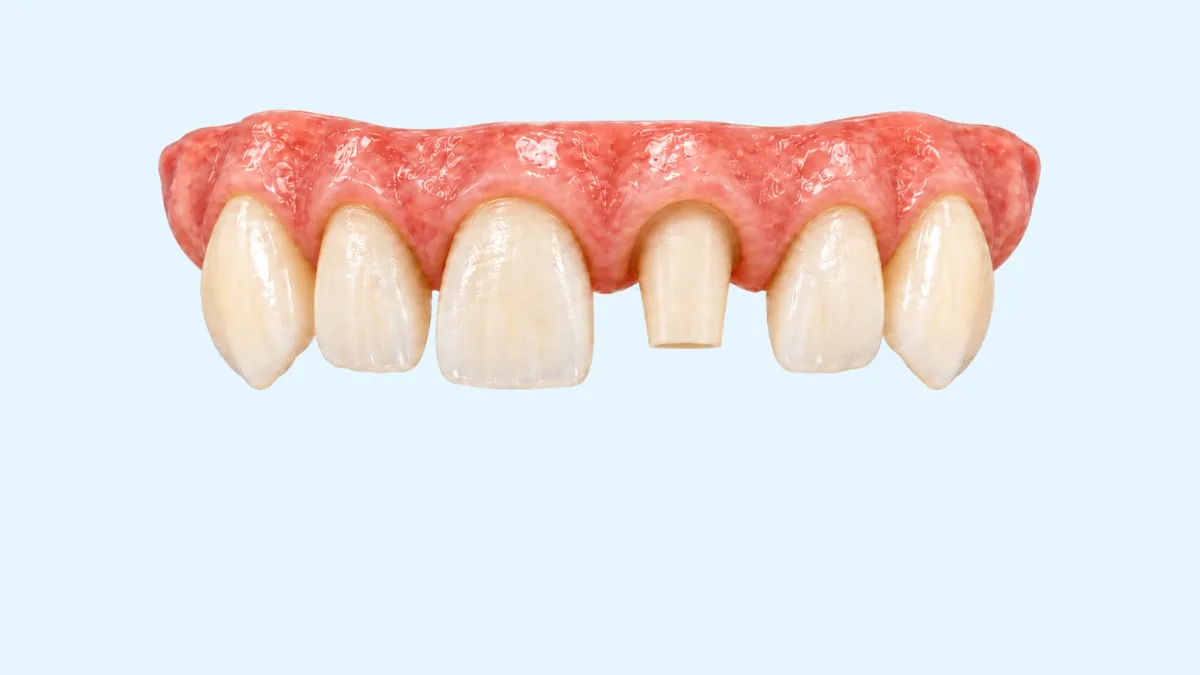
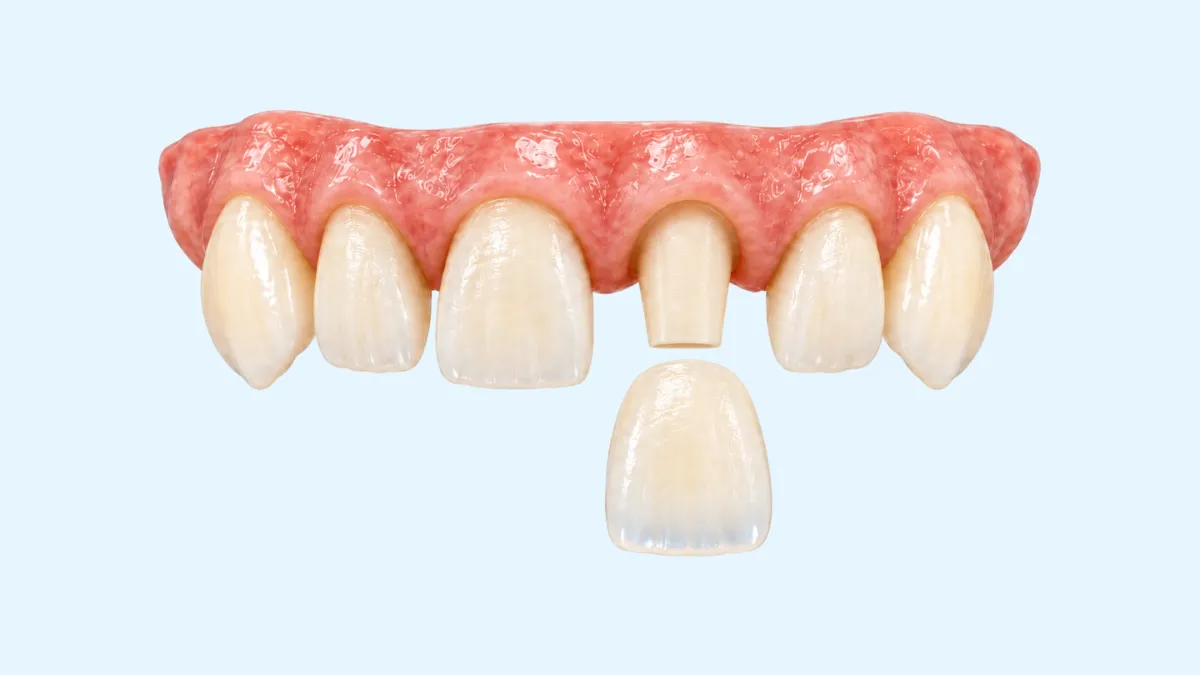
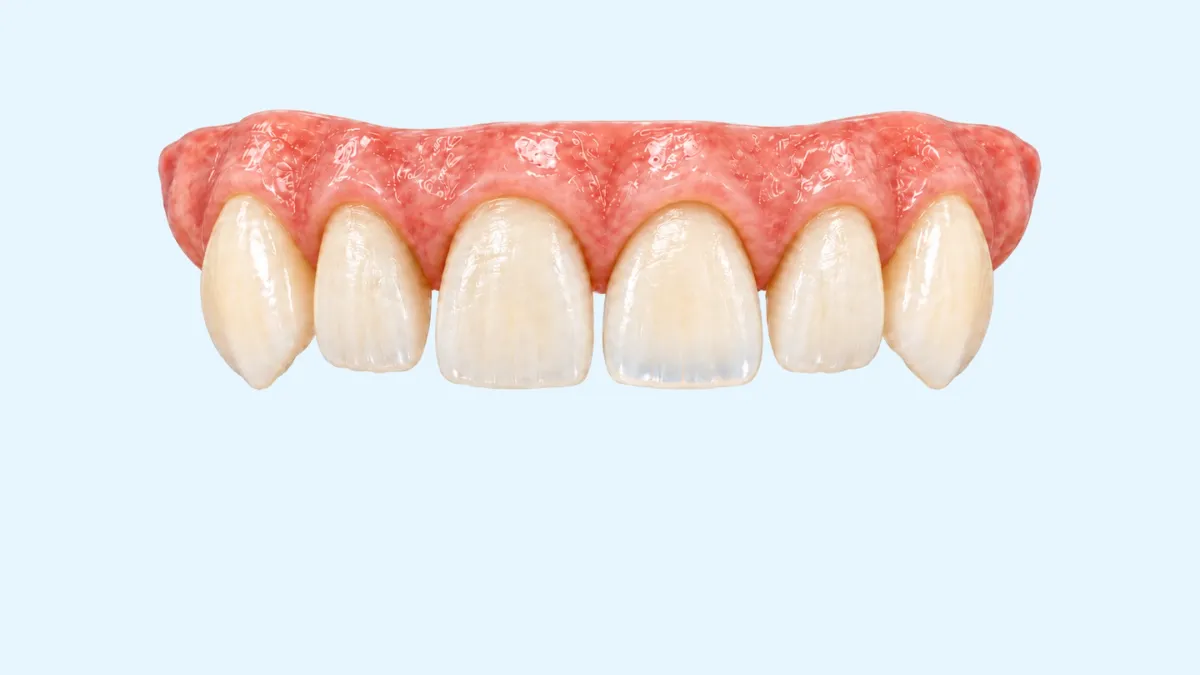
What it does: A glass-ceramic crown that covers the whole tooth and is bonded to it.

Treatments · Vogue Clinics
Glass-ceramic crowns that let light through much like enamel, mostly for front teeth and single crowns.

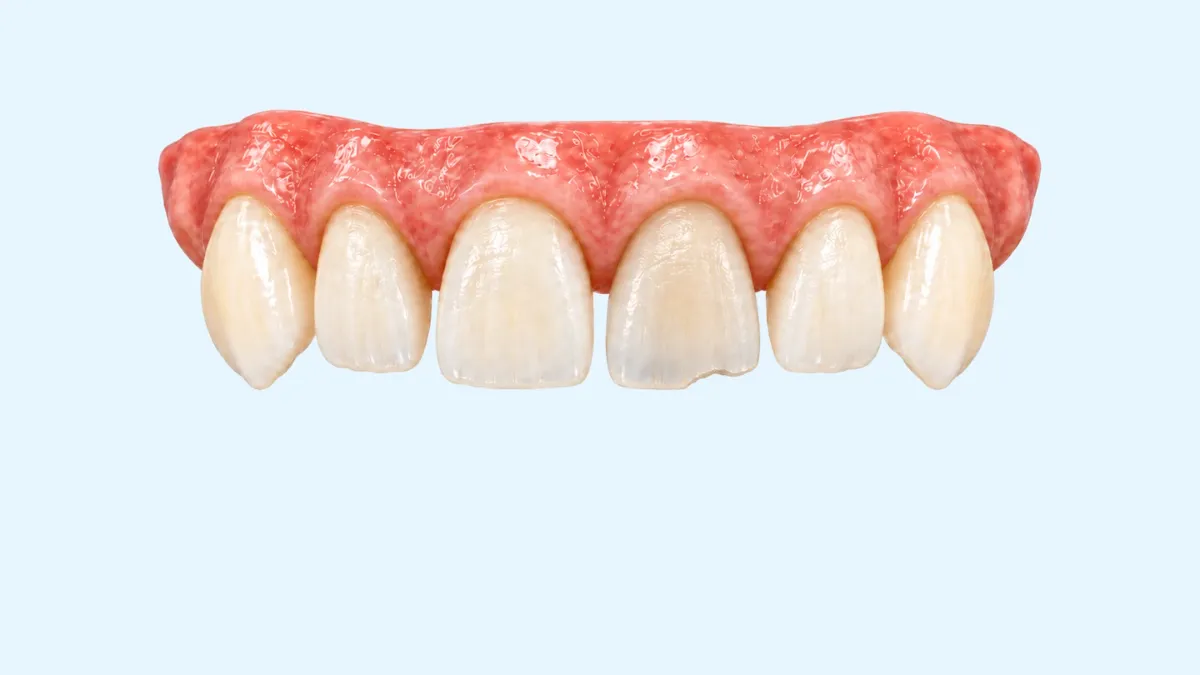
Illustration for explanation only. Whether a tooth suits E.max or needs a stronger ceramic is decided from your own examination and scan.
What is an E.max crown, and how is it different from zirconia?
An E.max crown is a glass-ceramic crown that lets light through much as enamel does, so it often looks natural on front teeth. It is bonded to the tooth. Zirconia is stronger and less translucent, so it is usually chosen for back teeth, bridges and people who grind. Your dentist decides tooth by tooth.
Which option suits you is decided at your examination, not on this page.
Send a clear, close photo of your front teeth in daylight on WhatsApp or through the form, with an X-ray if you have one. Tell us which tooth bothers you and whether it has had root canal treatment.
Brush twice a day, floss around the crown and keep up check-ups. Don't use your front teeth to open packets or bite very hard things, and if you grind, ask about a night guard. Routine check-ups can be done by a dentist near your home, and your coordinator stays reachable.
Natural enamel isn't solid white. Light passes into it and bounces back out, which gives a tooth its depth. E.max behaves in a similar way, so the crown looks like a tooth rather than a painted surface.
That same quality has a catch. Because E.max lets light through, whatever sits underneath can affect the colour: a tooth that darkened after root canal treatment, a metal post, or a stained core.
Your dentist looks at the colour of the prepared tooth before choosing. If it is dark, the tooth may be lightened first, or a more opaque ceramic chosen instead.
| Your situation | What we usually suggest |
|---|---|
| A front tooth with a healthy colour underneath | E.max is often a good fit |
| A front tooth that has turned dark | Lighten it first, or choose a more opaque ceramic |
| A back tooth with a heavy bite, or you grind | Zirconia is usually the safer choice |
| A large filling, but strong walls remain | An E.max onlay may keep more of your own tooth than a full crown |
| A gap that needs a bridge | Usually zirconia instead |
An E.max crown is bonded with a resin cement that grips both the ceramic and the tooth. A good bond adds to the strength of the crown, which is one reason E.max can sometimes be made thinner than other crowns and less tooth removed.
Bonding needs the tooth to stay completely dry, so your dentist isolates it, often with a thin rubber sheet. If the edge of the preparation sits deep under the gum, where keeping it dry is hard, a different material or cement may be the better plan.
After bonding, the bite is checked and any high spot polished. A smooth, well-adjusted surface protects both the crown and the tooth it bites against.
Both are metal-free ceramics, and many mouths have some of each. The difference is in how they handle light and load.
Zirconia has its own page. This table shows where we usually pick E.max, and where we don't.
| E.max (glass-ceramic) | Zirconia | |
|---|---|---|
| Light | Lets more through, much like enamel | Lets less through |
| Usual place | Front teeth and single crowns | Back teeth and bridges |
| Heavy bite or grinding | Can crack under the load | Usually the safer choice |
| A dark tooth underneath | Can show through | Usually hides it better |
| Fixing | Bonded with a resin cement | Cemented or bonded |
| Bridges | Mostly not used | Widely used |
Your treatment journey
From your first message to the follow-up after you fly home, one coordinator stays with you.
From home
A few smile photos or a recent X-ray on WhatsApp is enough to start.
From home
Our dentists prepare your treatment plan and quote, in writing.
Istanbul
We organise appointments, hotel and transfers around your treatment.
At the clinic
Digital impressions and smile design let you see the plan before anything begins. A coordinator translates in the chair and explains each step.
Back home
Your coordinator stays reachable after you've flown home.
Every dentist at our clinics provides this treatment.

Head Dentist · Founder · Ataşehir and Bağdat Caddesi

Dentist · Branch director, Bağdat Caddesi
Dentist

Dentist · Aesthetic and prosthetic dentistry

Orthodontist

Endodontist

Dentist · Pediatric dentistry

Dentist
Dentist · Bağdat Caddesi
Dentist · PhD programme in Restorative Dentistry

Dentist

Dentist

Pediatric Dentist
Dentist
You can have this treatment at both of our Istanbul clinics: Dental clinic in Ataşehir, Istanbul and Dental clinic in Kadıköy, Bağdat Caddesi.
E.max is a glass-ceramic, a lithium disilicate material, and the crown is ceramic all the way through. People often call it porcelain, since porcelain is also a ceramic, but it is not zirconia, which is a stronger and more opaque ceramic. Glass-ceramic lets light pass through much like enamel, which is why E.max often looks natural on front teeth.
There is no fixed number of years. As with other crowns, decay or gum problems at the edge usually matter more than the ceramic itself. Your bite matters too: glass-ceramic can crack under a heavy bite or grinding, which is why your dentist usually suggests zirconia in those cases. Daily cleaning, check-ups and a night guard if you grind help an E.max crown last.
The ceramic itself resists staining well, so an E.max crown is not expected to change colour. The edge at the gum and your natural teeth can still pick up colour from coffee, tea or smoking, which can make the crown look different over time. Because E.max lets light through, a tooth that darkens underneath can also change how the crown looks.
No. Whitening only works on natural enamel, so an E.max crown keeps the shade it was made in. If you would like lighter teeth, whiten them first and the crown is then matched to the new shade. If your natural teeth are whitened after the crown is fitted, the crown may need replacing to match them again.
No. An E.max crown is ceramic all the way through, so there is no metal edge to show at the gum if it recedes, and no metal inside to block light. That is one reason it is often chosen for front teeth. If you have a known allergy, tell your dentist before planning all the same.
E.max is a strong glass-ceramic, especially once it is bonded to the tooth, but it can crack under a heavy bite, grinding or biting something very hard. A small chip can sometimes be smoothed or repaired with composite; a crack that runs through the crown means making a new one. Avoid opening packets with your front teeth, and ask about a night guard if you grind.
Sometimes, where the bite on that tooth is light and there is room for enough ceramic. E.max is used mostly on front teeth and single teeth; with a heavy bite or grinding, your dentist will usually suggest zirconia instead. For a back tooth with sound walls and a large filling, an E.max onlay may keep more of your own tooth than a full crown.
Small adjustments are possible: a high spot or edge can be reshaped and then polished smooth so it doesn't wear the opposite tooth. Shape and colour are best changed at the try-in, before bonding. Because an E.max crown is bonded to the tooth with resin cement, removing it usually means cutting it off and making a new one.
An E.max crown is ceramic all the way through and lets light pass much like enamel. A porcelain-fused-to-metal crown has a metal inner cap under the porcelain, which blocks light and can show as a grey edge if the gum recedes. E.max is usually chosen for front teeth; metal-supported crowns are now used mainly for some back teeth and bridges.
That depends on how many teeth are treated and whether fillings or root canal treatment come first. Your written plan states how many days to allow.
This page is for general information and doesn't replace an examination by a dentist.
Start here
A dentist looks at it and we reply with honest options and a written plan. You don't have to commit to anything.
Mon–Sat 09:30–18:30
Get directions