Zirconia veneer
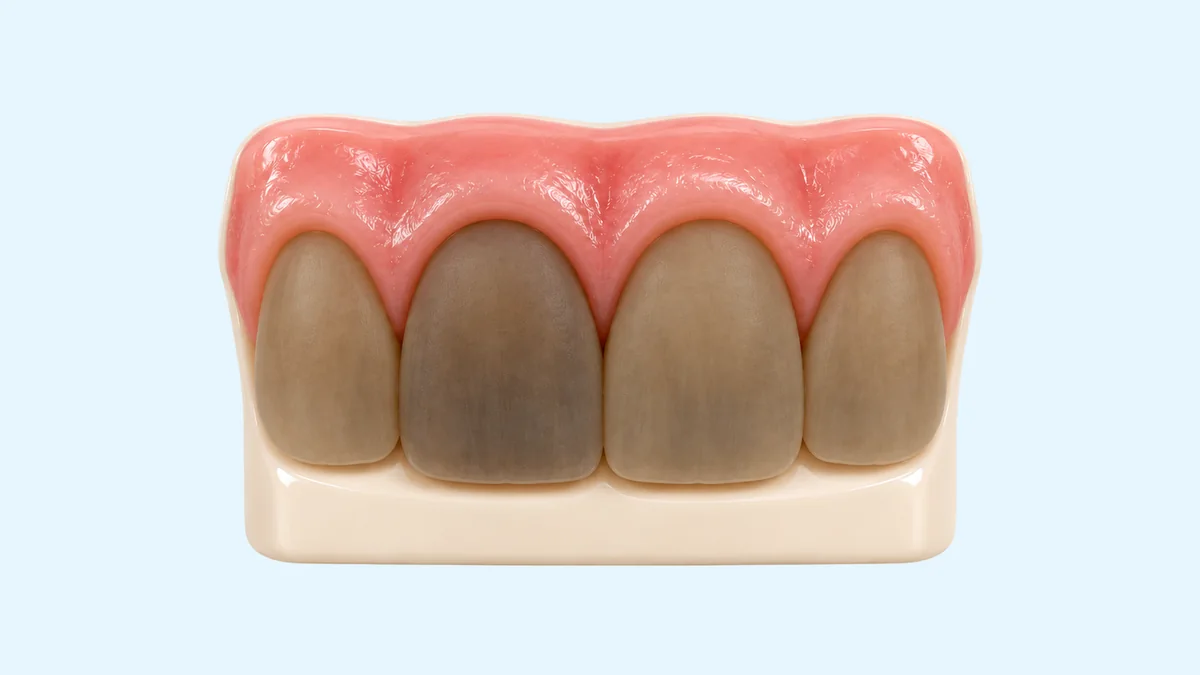
Who it suits: A sound front tooth that is very dark, or has a metal post that shows through.
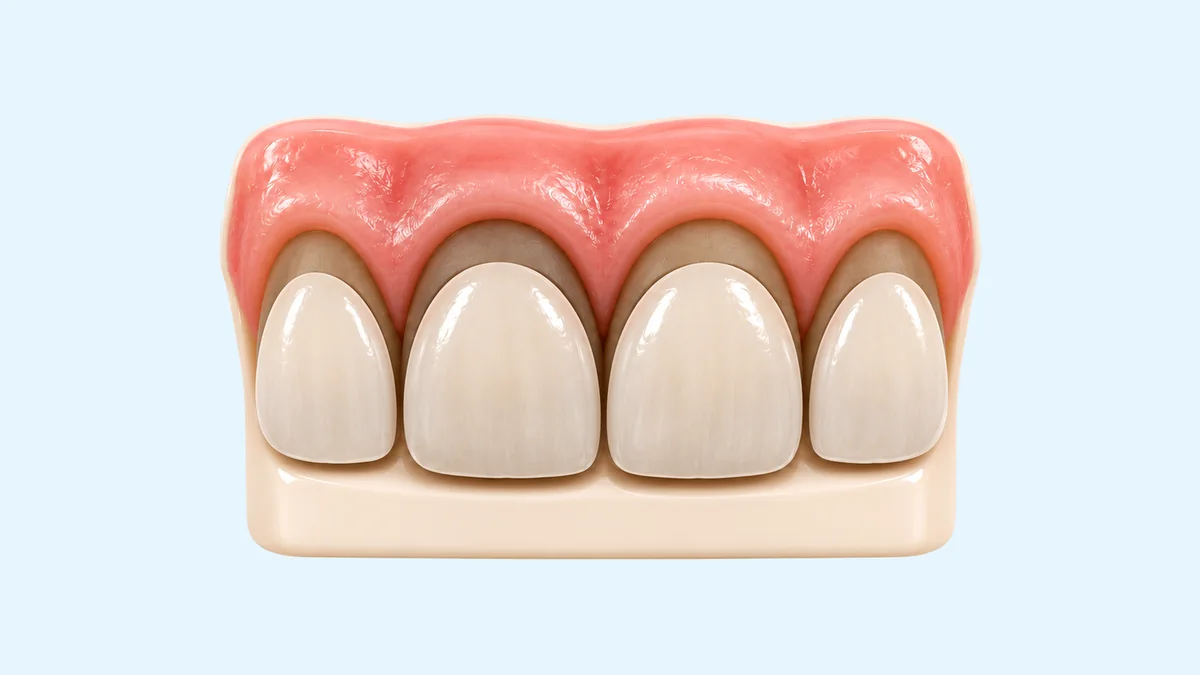
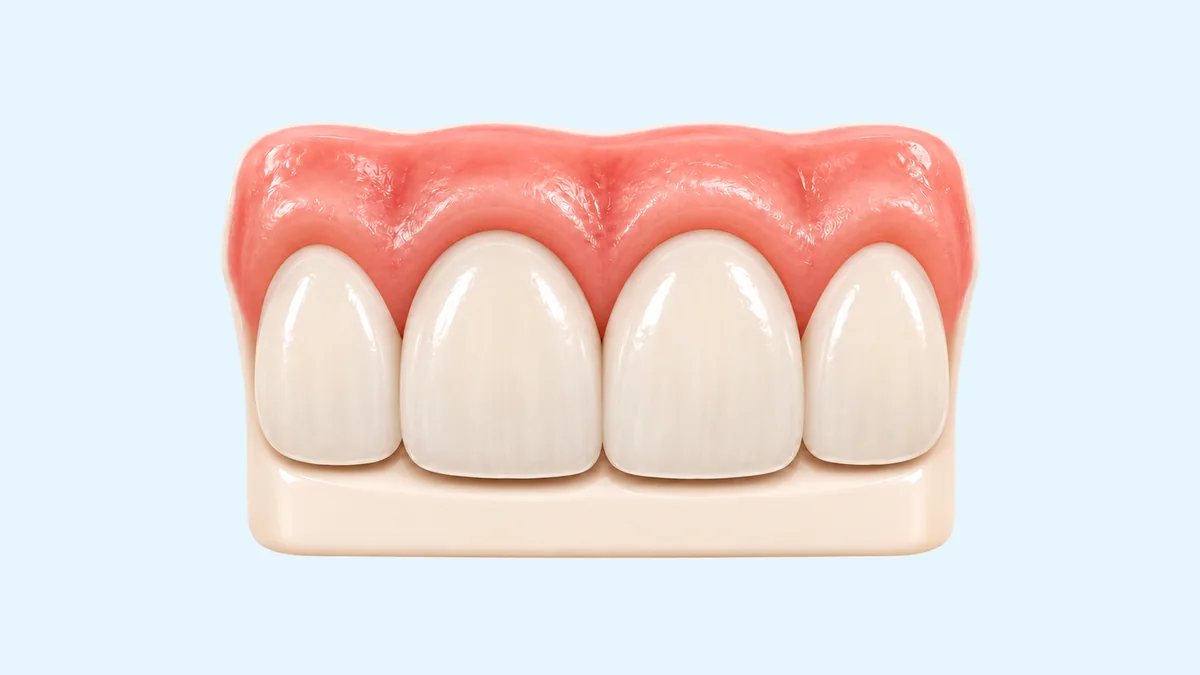
What it does: An opaque, strong shell bonded to the front surface that blocks the colour underneath.

Treatments · Vogue Clinics
Strong, more opaque ceramic veneers, used mainly to mask very dark teeth or where strength matters more than translucency.

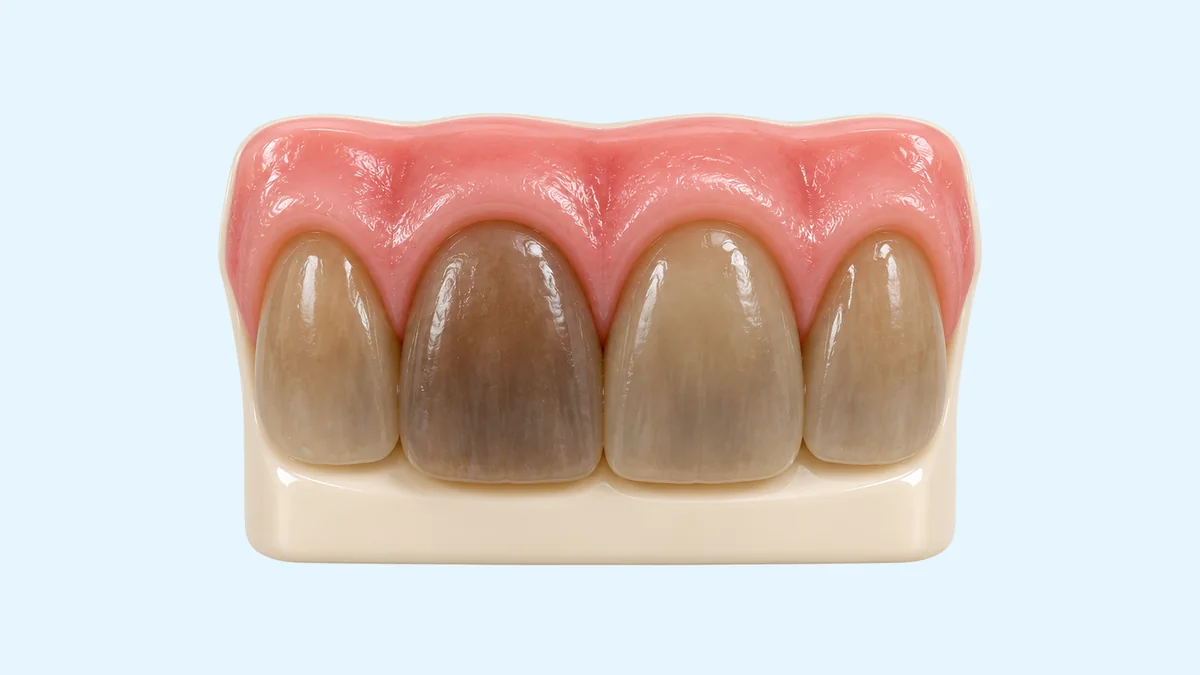
Illustration for explanation only. Why a tooth is dark, and whether zirconia, another ceramic or a crown suits it, is decided at your examination.
What is a zirconia veneer and who is it for?
A zirconia veneer is a thin shell of zirconium oxide bonded to the front of a tooth. Zirconia is the strongest veneer material but also the most opaque, so it is mainly chosen to hide a very dark tooth or where strength matters more than translucency. On healthy front teeth, a glass-ceramic such as E.max is usually preferred.
Which option suits you is decided at your examination, not on this page.
Send photos of the dark tooth and your full smile on WhatsApp or through the form. Tell us whether the tooth was knocked or had root canal treatment, and since when it has looked darker.
It hides colour. A tooth that darkened after a knock or root canal treatment, deep staining that whitening can't lift, or a metal post inside the tooth can show through a thin, translucent ceramic. Zirconia blocks it.
It also resists breaking. Zirconia is much tougher than glass-ceramics, which helps where a veneer has to stand up to a demanding bite.
Newer zirconias let more light through than older ones, but they still look more solid than E.max or Empress. The technician adds surface colour to soften the effect and match the teeth around it.
Its strengths come with limits, and your dentist weighs them before suggesting it.
The material is the same; how much of the tooth it covers is not. If the tooth underneath is weak, a veneer won't protect it.
| Zirconia veneer | Zirconium crown | |
|---|---|---|
| Covers | The front surface | The whole tooth |
| Tooth removal | From the front only | A layer all the way round |
| Suits | A sound tooth that is dark or discoloured | A broken, heavily filled or weakened tooth that needs protecting |
| Where | Front teeth | Front or back teeth, bridges and implants |
The cause decides the plan. A veneer covers colour but treats nothing underneath, so your dentist looks for the reason before suggesting zirconia.
Your treatment journey
From your first message to the follow-up after you fly home, one coordinator stays with you.
From home
A few smile photos or a recent X-ray on WhatsApp is enough to start.
From home
Our dentists prepare your treatment plan and quote, in writing.
Istanbul
We organise appointments, hotel and transfers around your treatment.
At the clinic
Digital impressions and smile design let you see the plan before anything begins. A coordinator translates in the chair and explains each step.
Back home
Your coordinator stays reachable after you've flown home.
Every dentist at our clinics provides this treatment.

Head Dentist · Founder · Ataşehir and Bağdat Caddesi

Dentist · Branch director, Bağdat Caddesi

Dentist

Dentist · Aesthetic and prosthetic dentistry

Orthodontist

Endodontist

Dentist · Pediatric dentistry

Dentist

Dentist · Bağdat Caddesi

Dentist · PhD programme in Restorative Dentistry

Dentist

Dentist

Pediatric Dentist
Dentist
You can have this treatment at both of our Istanbul clinics: Dental clinic in Ataşehir, Istanbul and Dental clinic in Kadıköy, Bağdat Caddesi.
There's no fixed number of years, but with good care zirconia veneers can serve for a long time, including on front teeth. The material itself is very tough; on a thin veneer, though, the bond to the tooth matters as much as the strength of the shell. A root-treated tooth underneath is checked on X-rays at routine visits, and grinding or skipped check-ups shorten their life.
Treat them as permanent. The front of the tooth is usually shaped a little more than for a thin glass-ceramic, so going back to the bare tooth isn't really an option. The veneer itself may need replacing one day, and because a chipped zirconia veneer is hard to patch, it is usually remade rather than repaired. Your dentist explains this before you agree.
Neither is better for every tooth. Porcelain and glass-ceramics such as E.max let light through much like enamel and usually look more natural on teeth of normal colour. Zirconia is stronger and more opaque, so it is mainly chosen to hide a very dark tooth or a metal post. On a tooth that is only slightly yellow, zirconia can look flat beside natural teeth.
For most front-tooth veneers E.max is the starting point, and zirconia is kept for specific cases. Zirconia is the tougher material and hides dark colour; E.max is more translucent, can be made thinner and bonds more reliably to enamel, which matters a lot on a thin shell. One smile can combine both, for example zirconia on one dark tooth and E.max on the rest.
On a dark tooth they can look far more natural than a thin ceramic that lets the colour through. On teeth of normal colour, their opacity can look flat beside natural teeth. Newer zirconias let more light through than older ones, and the technician adds surface colour to match the neighbouring teeth; you check the shade in daylight at the try-in.
Zirconia is a ceramic and resists staining well, so the veneer itself keeps its colour. The bonding line at the edge and your natural teeth can still pick up colour from coffee, tea or smoking. Zirconia can't be whitened, so if you want lighter teeth, whiten your other teeth before the veneer is made and have its shade matched to them.
First an X-ray shows why the tooth is dark, and any nerve problem is treated before the veneer. The front is then shaped a little more than for a thin glass-ceramic, scanned and covered with a temporary. Because zirconia can't be roughened with acid like glass-ceramic, the inside of each veneer is specially treated and bonded with a cement suited to zirconia.
They do different jobs. Zirconia is a strong, opaque ceramic made in a laboratory, chosen mainly to hide a very dark tooth. Composite is resin shaped on the tooth in the chair, usually with little or no enamel removed; it is easy to repair but stains and wears more. For small chips or gaps composite often does the job, while zirconia suits a dark tooth that needs masking.
Zirconia is a metal-free ceramic that the body generally tolerates well. Its possible downsides are those of any veneer plus a few of its own: some sensitivity after preparation, a little more tooth shaped than for glass-ceramic, a bond that is less predictable on a thin shell, and a flatter look on teeth of normal colour. Tell your dentist if you've reacted to dental materials before.
This page is for general information and doesn't replace an examination by a dentist.
Start here
A dentist looks at it and we reply with honest options and a written plan. You don't have to commit to anything.
Mon–Sat 09:30–18:30
Get directions