Vital pulp treatment
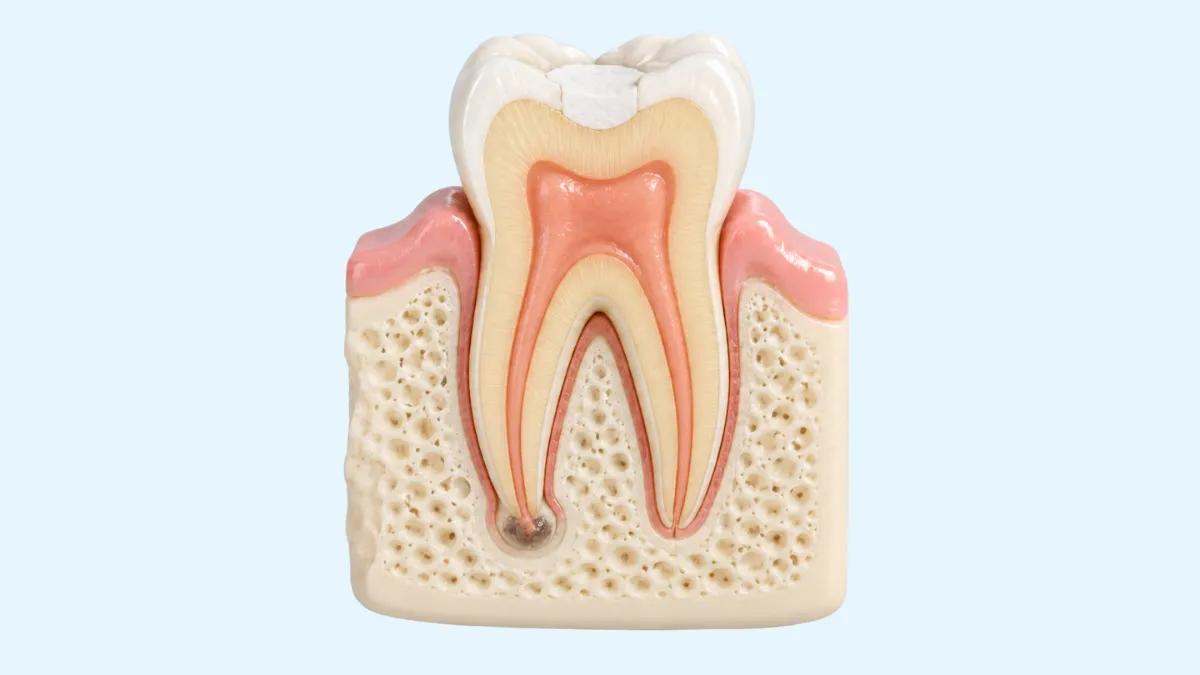
Who it suits: A nerve that is only mildly inflamed, often where decay has just reached it.
What it does: Only the affected part of the nerve is removed or covered, and the rest is kept alive.

Treatments · Vogue Clinics
Treatment that removes an inflamed or infected nerve from inside a tooth so the tooth itself can stay.

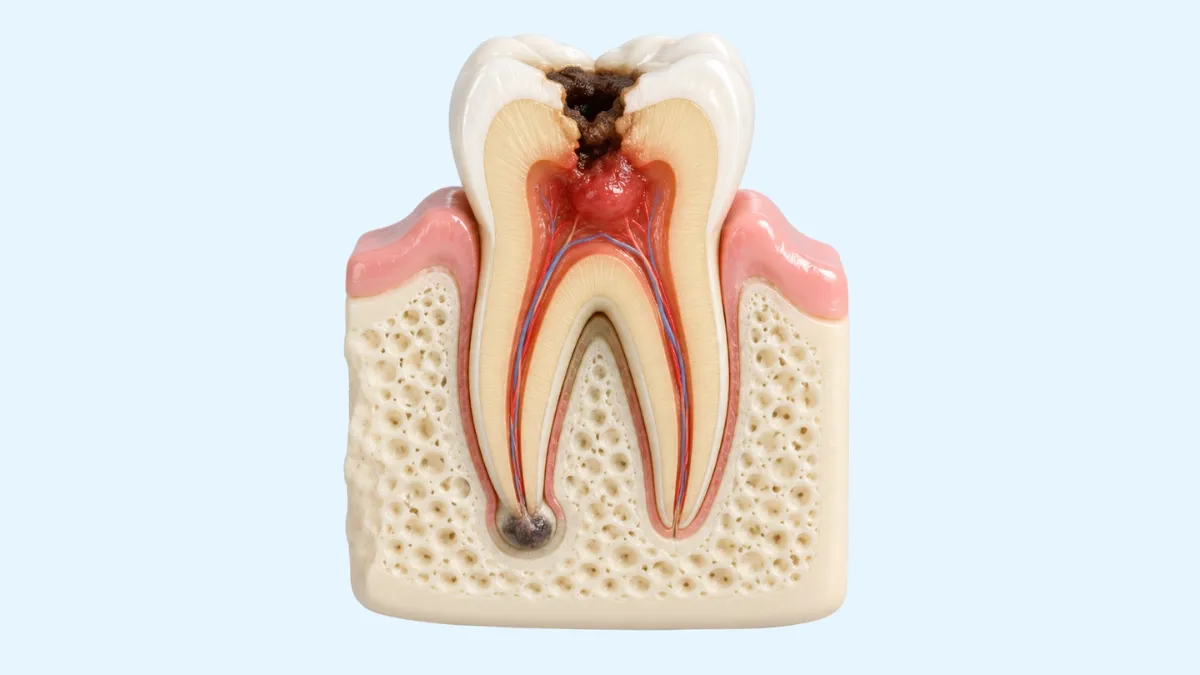
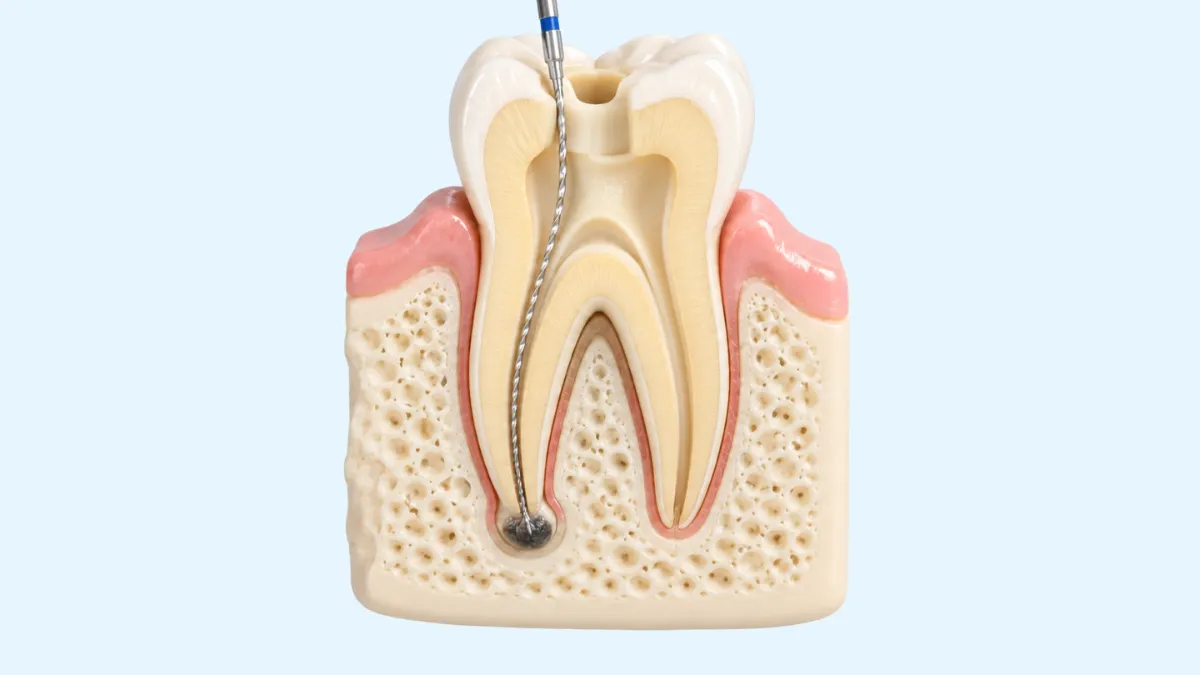
Illustration for explanation only. The number and shape of your tooth's canals, and how many visits it needs, your dentist explains after the X-ray.
What is root canal treatment and when is it needed?
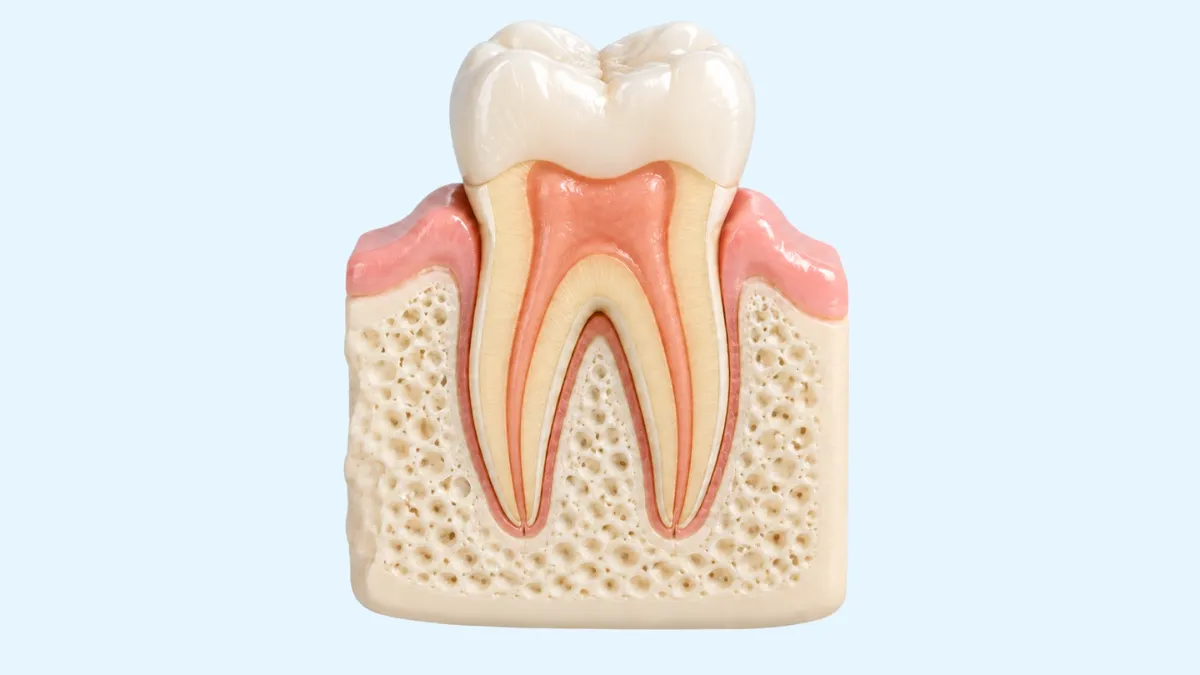
Root canal treatment cleans out the soft tissue inside a tooth, the pulp, when it is inflamed or infected beyond repair. The canals are shaped, disinfected and sealed, and the tooth is then rebuilt. It usually becomes necessary when deep decay, a crack or a knock reaches the nerve, and it lets you keep your own tooth.
Which option suits you is decided at your examination, not on this page.
Write to us on WhatsApp or through the form. Tell us which tooth, how the pain behaves and whether there is swelling. If the tooth has had a root canal before, say so and send the X-ray if you have one.
Some teeth give clear warnings; others show nothing until an X-ray. These signs may point to a problem with the nerve, and an examination confirms it.
How many visits it needs depends on the tooth and on any infection; your written plan states it.
Tenderness when you bite is common for a few days and usually settles on its own. Avoid hard food on that side until the tooth has its final restoration; a root-filled back tooth with only a temporary filling can crack.
If a tooth can't be saved, the alternative is extraction, then an implant or a bridge to fill the gap. Your dentist explains what each option means for that tooth before you decide.
Contact us if any of these happen:
A root-treated tooth can become infected again. Common reasons are a canal that was missed or not fully cleaned, new decay or a leaking filling that lets bacteria back in, or a crack. It may cause pain on biting, swelling or a spot on the gum, or show up only on an X-ray.
In a retreatment, the old filling or crown and the old root filling are removed, and the canals are cleaned and sealed again. It is usually more involved than a first root canal, and the outcome depends on what is found inside the tooth, so your dentist tells you honestly whether it is worth trying.
Retreatment may not be the right choice when:
Your treatment journey
From your first message to the follow-up after you fly home, one coordinator stays with you.
From home
A few smile photos or a recent X-ray on WhatsApp is enough to start.
From home
Our dentists prepare your treatment plan and quote, in writing.
Istanbul
We organise appointments, hotel and transfers around your treatment.
At the clinic
Digital impressions and smile design let you see the plan before anything begins. A coordinator translates in the chair and explains each step.
Back home
Your coordinator stays reachable after you've flown home.
Every dentist at our clinics provides this treatment.

Head Dentist · Founder · Ataşehir and Bağdat Caddesi

Dentist · Branch director, Bağdat Caddesi

Dentist

Dentist · Aesthetic and prosthetic dentistry

Orthodontist

Endodontist

Dentist · Pediatric dentistry

Dentist

Dentist · Bağdat Caddesi

Dentist · PhD programme in Restorative Dentistry

Dentist

Dentist

Pediatric Dentist
Dentist
You can have this treatment at both of our Istanbul clinics: Dental clinic in Ataşehir, Istanbul and Dental clinic in Kadıköy, Bağdat Caddesi.
It depends on the tooth, how many canals it has and how inflamed it is. Some root canals are finished in one appointment. If the infection needs time to settle, medicine is placed in the canals and they are filled at the next visit; retreatments often take longer. Your written plan sets out how many appointments your tooth needs.
It is done under local anaesthetic, and most people find it far less unpleasant than they expected. During treatment you feel pressure rather than pain, and if anything feels sharp the numbing can be topped up. Afterwards, some tenderness when biting for a few days is common and usually settles on its own.
Tenderness when biting can last a few days and usually fades by itself; the pain relief your dentist recommends is normally enough. Contact us if swelling appears or grows, if pain increases instead of easing, if the temporary filling falls out or if your bite feels uneven. These can mean the tooth needs another look.
They are not alternatives; the state of the nerve decides which one a tooth needs. If decay hasn't reached the nerve, a filling is enough. If the nerve is irreversibly inflamed or has died, a filling won't stop the pain, so root canal treatment is needed, and the tooth is then closed with a filling, onlay or crown. X-rays and simple cold and tapping tests show which applies.
A natural tooth that can be properly restored is usually worth keeping, and a root canal lets you keep it. When the root is cracked or too little tooth is left to rebuild, extraction may be the better plan, with the gap then filled by an implant or a bridge. Your dentist explains what each option means for that tooth before you decide.
Root canal treatment is a routine way of keeping your own tooth. Claims that root-filled teeth cause cancer or illness elsewhere in the body are not supported by current research. The usual side effect is a few days of tenderness. A treated tooth can become infected again over time and then needs attention, while leaving an infected tooth untreated carries its own risks.
Wait until the numbness has gone, then start with soft food on the other side. Until the tooth has its final filling, onlay or crown, don't chew anything hard on it; a back tooth with only a temporary filling can crack. Avoid hot drinks and alcohol while you are still numb, and check with your dentist if you are taking any medicine they prescribed.
A root-treated tooth can become infected again. Common reasons are a canal that was missed or not fully cleaned, new decay or a leaking filling that lets bacteria back in, or a crack. It may hurt on biting, swell or cause a small gum boil, and sometimes shows only on an X-ray. Your dentist checks whether retreatment is realistic or another option is better.
The nerve is removed, so the tooth no longer feels hot or cold. It isn't lost, though: it stays in place, held by the gum and bone around it, and you chew with it as before. Because a root-treated back tooth takes a lot of chewing force and can crack, it is usually protected with an onlay or crown.
Most root canals follow deep decay, a crack or a knock that reaches the nerve. Treating decay while it is small, with regular check-ups catching it before it hurts, is the best protection. Brushing, cleaning between the teeth and cutting down on frequent sugary snacks help, and a night guard can protect your teeth if you grind.
This page is for general information and doesn't replace an examination by a dentist.
Start here
A dentist looks at it and we reply with honest options and a written plan. You don't have to commit to anything.
Mon–Sat 09:30–18:30
Get directions