Treatments · Vogue Clinics

All-on-4 and All-on-6 dental implants

A full fixed arch on four to six implants, for missing or failing teeth.

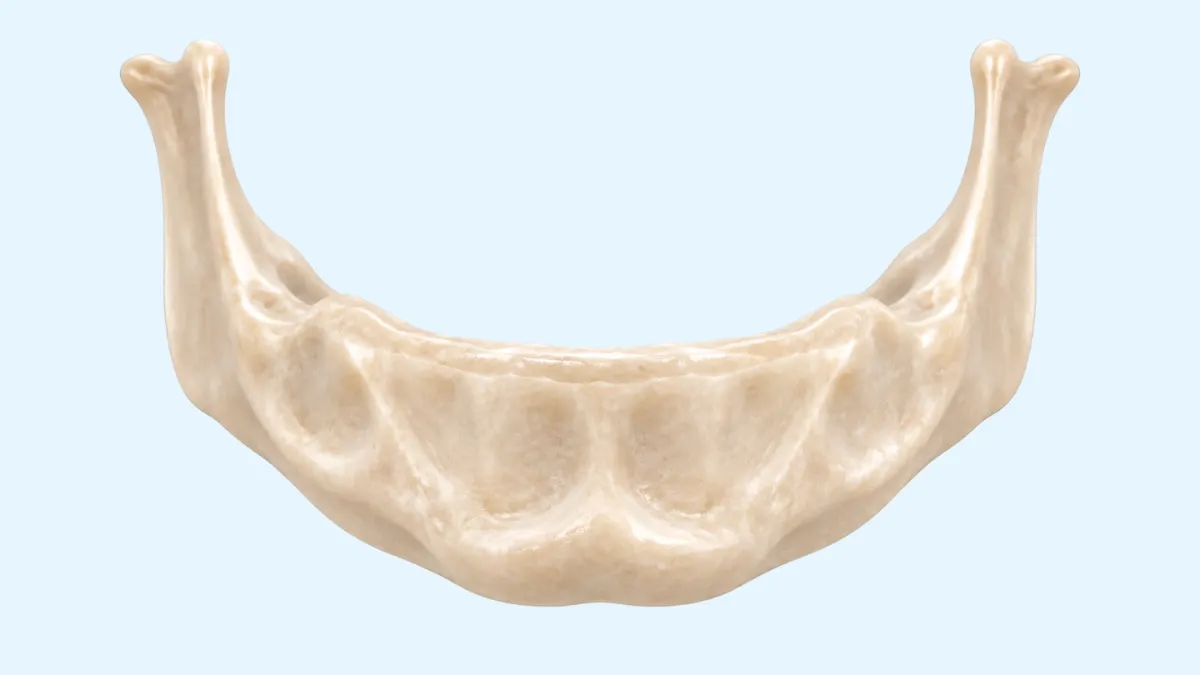
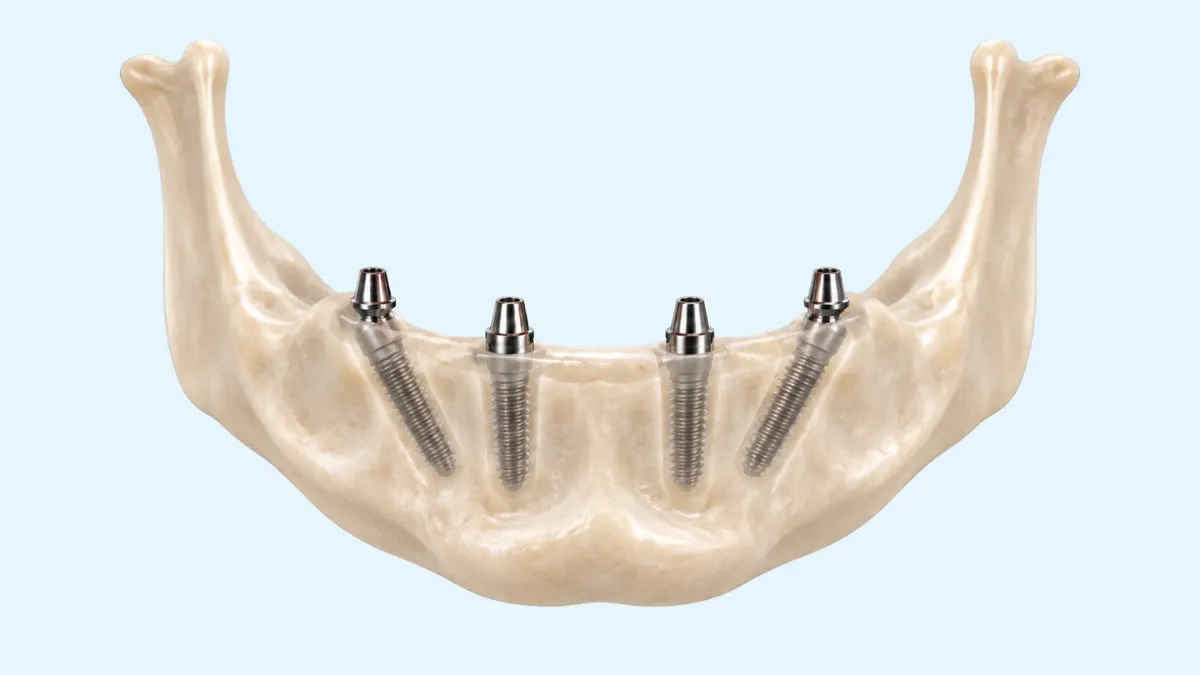
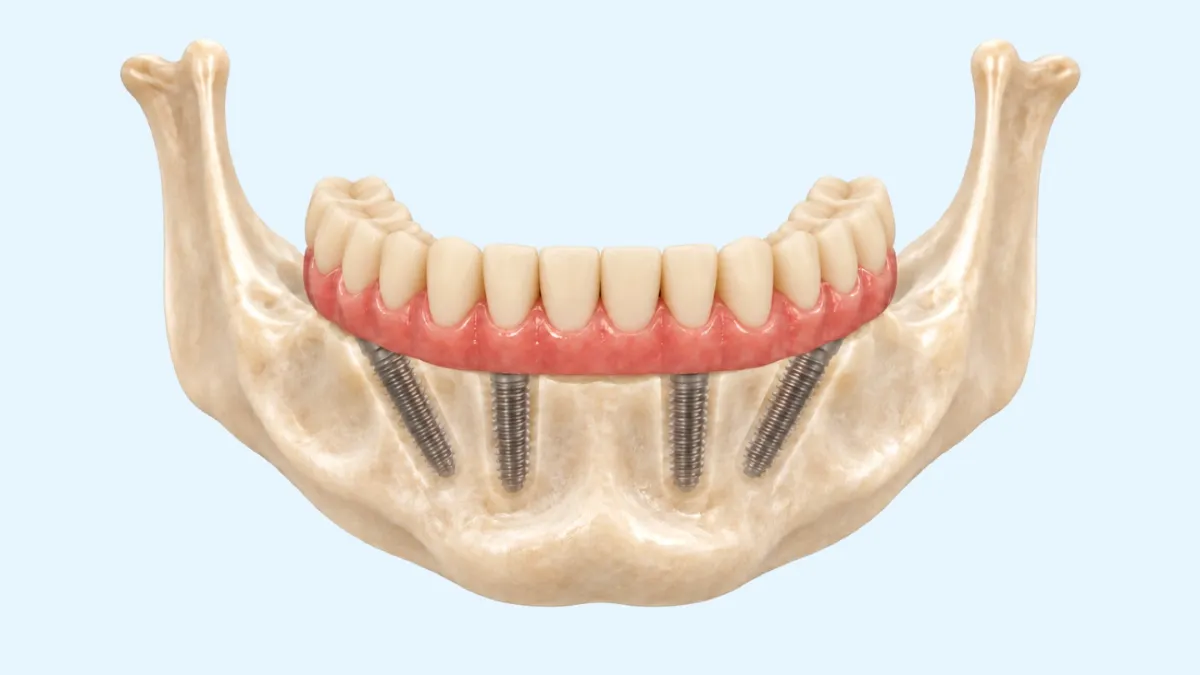
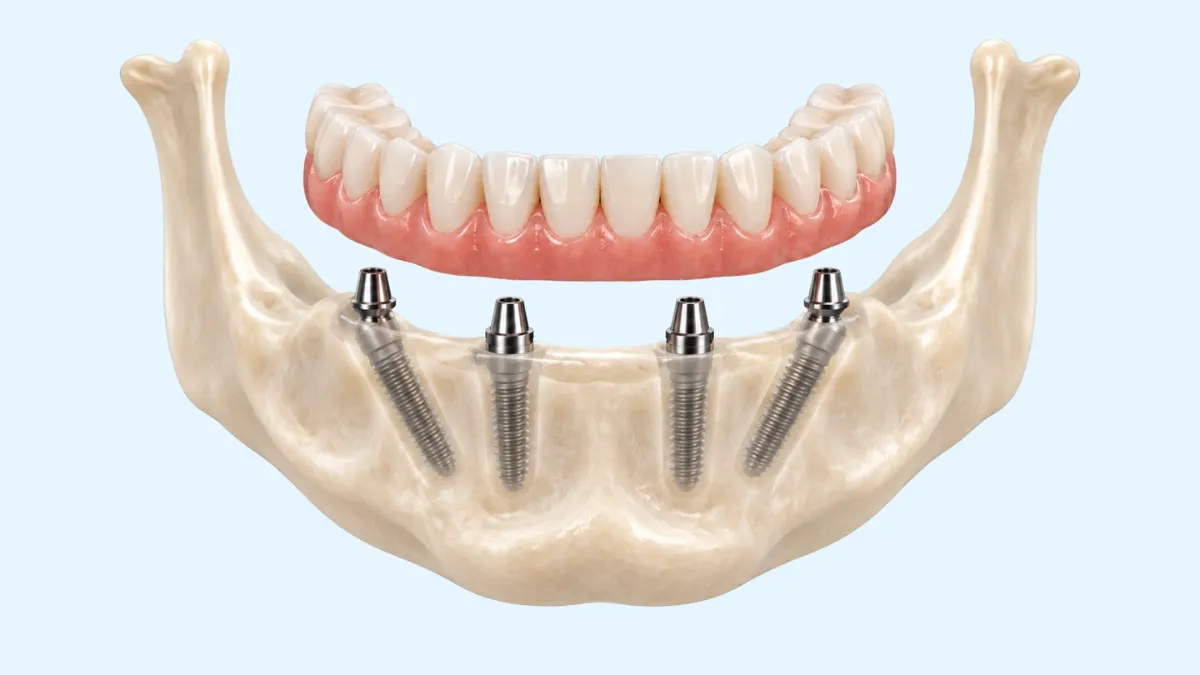
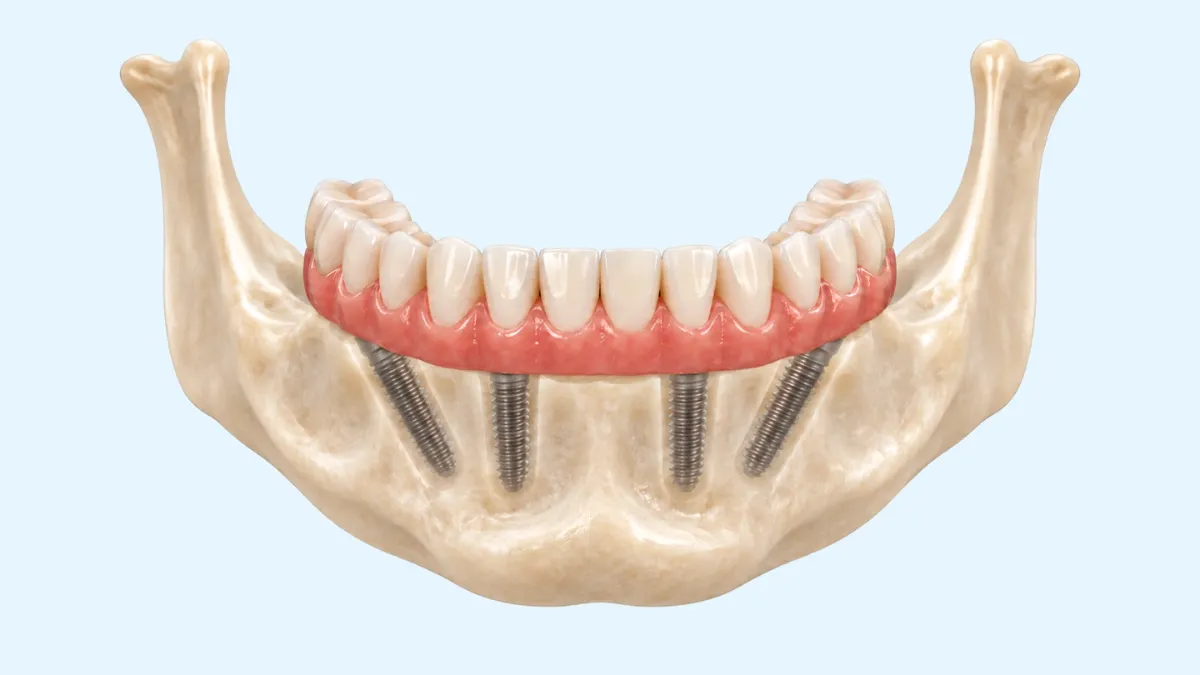
All-on-4 dental implants, 3D illustration of a lower jaw: four implants and a fixed bridge

Treatment at a glanceHow All-on-4 dental implants are placed, step by step

Illustration for explanation only. Your dentist plans the number, position and angle of the implants from your own 3D scan.

The short answer

What are All-on-4 dental implants, and who are they for?

All-on-4 replaces a whole arch of teeth with one fixed bridge held by four implants. All-on-5 and All-on-6 use more implants where the bone allows it. It suits people who have lost most of their teeth or whose remaining teeth can't be saved, and who want an alternative to removable dentures.

How it works

  1. Send your photosA few smile photos or a recent X-ray on WhatsApp is enough to start.
  2. Get a written planOur dentists prepare your treatment plan and quote, in writing.
  3. Come to IstanbulWe organise appointments, hotel and transfers around your treatment.
  4. Your treatmentDigital impressions and smile design let you see the plan before anything begins. A coordinator translates in the chair and explains each step.
  5. Stay in touchYour coordinator stays reachable after you've flown home.

All-on-4

Who it suits: People who have lost most of the teeth in one jaw, or whose remaining teeth can't be saved, and whose bone allows four well-placed implants.

What it does: One fixed bridge for the whole arch sits on four implants, and the two at the back are often angled to make the most of the bone that is there.
All-on-6

Who it suits: People with enough bone for more implants, or with a strong bite that benefits from extra support towards the back of the jaw.

What it does: Six implants share the chewing load of the bridge across the arch, so no single implant carries as much.

Dental implants

Who it suits: People who still have several healthy teeth in that jaw that are worth keeping.

What it does: Single implants or short implant bridges replace only the missing teeth, and your own healthy teeth stay where they are.

About this treatment

Implant-supported dentures

Who it suits: People who want a denture that stays put, or whose bone or general health makes a fixed arch less suitable.

What it does: A denture clips onto a small number of implants, so it holds firmly when you eat and talk, and you take it out yourself to clean it.

About this treatment

Which option suits you is decided at your examination, not on this page.

1 From home

A first answer before you book anything

Send a recent panoramic X-ray if you have one, or a few photos of your teeth, on WhatsApp or through the form. Tell us which teeth are missing or loose, and whether you wear a denture now. A dentist looks at them before we reply.

What we ask you

  • A panoramic X-ray or photos of your teeth
  • Your general health and any medication, including blood thinners
  • Whether you smoke, have diabetes or grind your teeth
  • Which dates could work for you

What you receive

  • Your options, explained in plain words
  • A written plan and quote
  • How many visits you would need in Istanbul
  • A final plan only after your 3D scan

2 Istanbul · First visit

Your scan decides the plan

  • Arrival. Your airport pick-up, hotel and transfers are arranged around your appointments, as written in your quote.
  • Examination and 3D scan. Your dentist examines your teeth, gums and bite, and takes a 3D scan of the jaw. It shows how much bone there is and where the nerves and sinuses sit.
  • Four or six, decided together. Your dentist shows you on the scan where implants can go and which teeth, if any, are worth keeping. Nothing starts until you have agreed to the written plan.
  • Translation. A coordinator translates in the chair and explains each step.

3 Istanbul · Surgery day

The implants go in, with a fixed temporary on top where possible

  • Anaesthesia. The jaw is numbed with local anaesthesia. Your dentist explains the anaesthesia options for your case beforehand, and you can ask for a break at any point.
  • Extractions and implants. Teeth that can't be saved are removed, and the implants are placed at the positions planned on your scan. If both jaws are being treated, your plan says whether they are done together or separately.
  • Fixed temporary teeth. Where the implants sit firmly enough, a fixed temporary bridge is attached to them. If that isn't possible in your case, your dentist explains the alternative before surgery, not after.
  • Before you fly home. You're shown how to clean around the temporary bridge, what to eat and what is normal in the first days.

4 At home · Healing

Living with your temporary teeth

For usually three to six months the bone grows onto the implants. You wear the temporary bridge throughout. It isn't as strong as the final bridge, so keep to softer food at first and don't bite hard things with it.

Your gums also change shape as they heal, which is why the final bridge is made afterwards. Your coordinator stays in touch, and you can send a photo or a question at any time.

5 Istanbul · Second visit

Your final bridge

  • Check and digital scan. Your dentist checks each implant and takes a digital scan of the implants, your gums and your bite.
  • Try-ins. You try the bridge in before it is finished. Your dentist checks how it looks with your lips and face, how you speak with it and how your teeth meet. If you'd like something changed, this is the moment to say it.
  • Fitting. The bridge is fixed onto the implants in the material agreed in your plan, and your bite is adjusted. You're shown how to clean underneath it.

6 Back home · Aftercare

Looking after a full arch

Food collects under a full-arch bridge, so cleaning underneath it matters as much as brushing. Most patients use interdental brushes or a water flosser; your dentist shows you which suits your bridge.

At check-ups your dentist looks at the implants and the gum around them. If you grind your teeth, a night guard protects the bridge. Routine check-ups can be done by a dentist near your home, and your coordinator stays reachable after you've flown home.

The number comes from your 3D scan, not from a price list. Bone volume, the shape of your jaw and the way you bite decide it.

Final bridgeWhat it is
Hybrid zirconiaZirconia on a supporting bar
Porcelain fused to metalPorcelain layered over a metal frame
AcrylicLighter acrylic teeth on a frame
  • Stage one: remaining teeth are removed if needed, implants are placed and a fixed temporary is fitted where the case allows.
  • Healing: usually three to six months while the implants bond with the bone.
  • Stage two: digital impressions, try-ins and the final bridge.

Many people who come to us for a full arch have avoided the dentist for years. We see it often, and nobody here will make you feel bad about the state of your teeth.

Long-term success depends on cleaning around the bridge and coming back for check-ups. We go through that routine with you before you leave.

Swelling and bruising are usually more noticeable than after a single implant, because more of the jaw is treated. They tend to peak in the first days and then settle. Your dentist tells you which pain relief suits you.

The temporary teeth will feel big at first, and some sounds may come out differently. Speech and chewing usually adjust as your tongue and lips get used to them.

Everyday lifeWhen
Soft, lukewarm or cool foodFrom the first day
Work and daily routineWhen you feel ready; many people rest at first
Straws, smoking and hard exerciseNot until your dentist says so
Firmer food on the temporary bridgeGradually, as your dentist advises
Normal chewingAfter the final bridge is fitted

If several of your teeth are healthy, taking them out to fit a full arch makes little sense. Treating your gums and replacing only what is missing may serve you better, and we will tell you so.

Uncontrolled diabetes, active gum disease, heavy smoking and some bone-strengthening medicines raise the risk that an implant won't bond. Treatment then usually waits until the condition is under control. Very limited bone may call for grafting or a different approach, which your dentist explains from your scan.

A full arch is bigger surgery than a single implant. Most people heal well, but that isn't the same as no risk. Your dentist goes through this list with you before you decide.

  • Swelling and bruising: expected after full-arch surgery, and it can spread to the cheeks or under the jaw. It settles in most people as the days pass.
  • An implant that doesn't bond: if one implant fails, it is removed and usually replaced once the area heals, and the bridge may need adjusting in the meantime. Smoking makes this more likely.
  • A chipped or cracked bridge: more likely with the temporary, or if you grind. Don't try to fix it yourself or keep chewing on it; contact us and we'll arrange a repair.
  • Inflammation around the implants: plaque under the bridge can inflame the gum and bone around the implants (peri-implantitis). Cleaning under the bridge and regular check-ups protect against it.
  • Nerves and sinuses: rare. Planning from a 3D scan is there to keep the implants clear of them.

Your treatment journey

Your visit, step by step.

From your first message to the follow-up after you fly home, one coordinator stays with you.

From home

Send your photos

A few smile photos or a recent X-ray on WhatsApp is enough to start.

  • Photos or X-ray on WhatsApp
  • A dentist takes a look

From home

Get a written plan

Our dentists prepare your treatment plan and quote, in writing.

  • Written plan
  • Written quote

Istanbul

Come to Istanbul

We organise appointments, hotel and transfers around your treatment.

  • Airport pick-up
  • Hotel
  • Daily transfers

At the clinic

Your treatment

Digital impressions and smile design let you see the plan before anything begins. A coordinator translates in the chair and explains each step.

  • Digital planning
  • Translation at appointments

Back home

Stay in touch

Your coordinator stays reachable after you've flown home.

  • Coordinator stays reachable

Before & after

Results vary from person to person. Your treatment is decided after a clinical examination.

All-on-4 and All-on-6

All-on-4 · acrylic
All-on-4 · hybrid zirconia
All-on-4/5/6 · porcelain fused to metal

Patients who had this treatment

All-on-4 and All-on-6

Could not have gone anywhere better than the clinic

I have had the best experience ever my teeth were falling out I researched many company's and talked to a lot of people from those companies however speaking to Berin I new the clinic where who I'd come to everyone of the staff are fabulous you couldn't ask for better people to look after you my dentists where great very skilled I had no pain all my teeth where removed and all on six implants put in I love them thank you Berin Asude and Hava and everyone at the clinic l'll never forget you all

N.Trustpilot · United Kingdom · Mar 2023Read our Google reviews

Our dentists

Every dentist at our clinics provides this treatment.

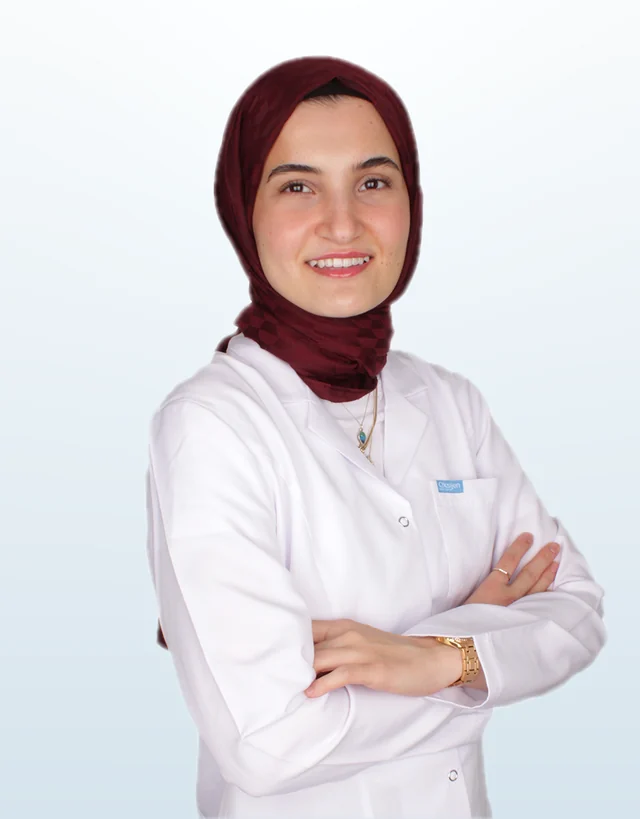
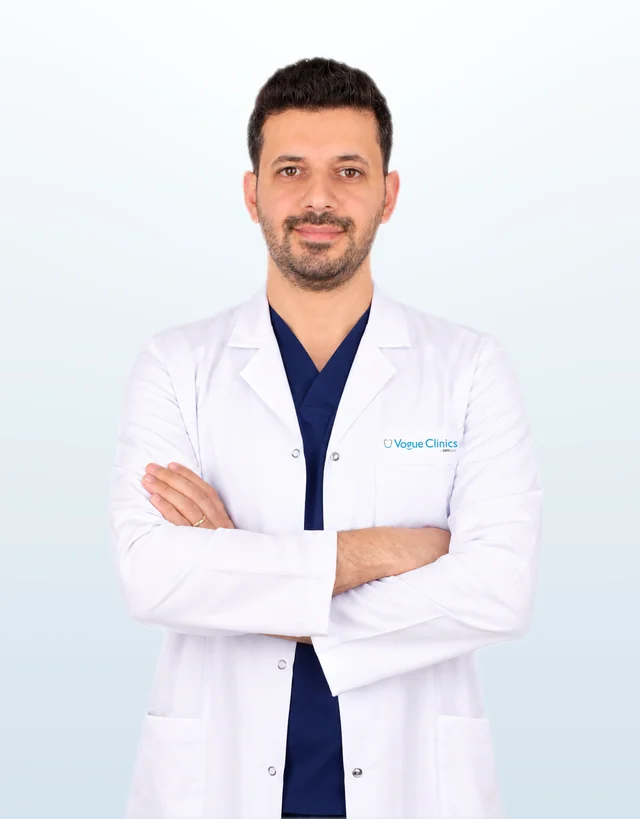
Dt. Veysel Bilge, Head Dentist, Vogue Clinics Istanbul

Dt. Veysel Bilge

Head Dentist · Founder · Ataşehir and Bağdat Caddesi

Dt. Uğur Öğüt, Dentist, Vogue Clinics Istanbul

Dt. Uğur Öğüt

Dentist · Branch director, Bağdat Caddesi

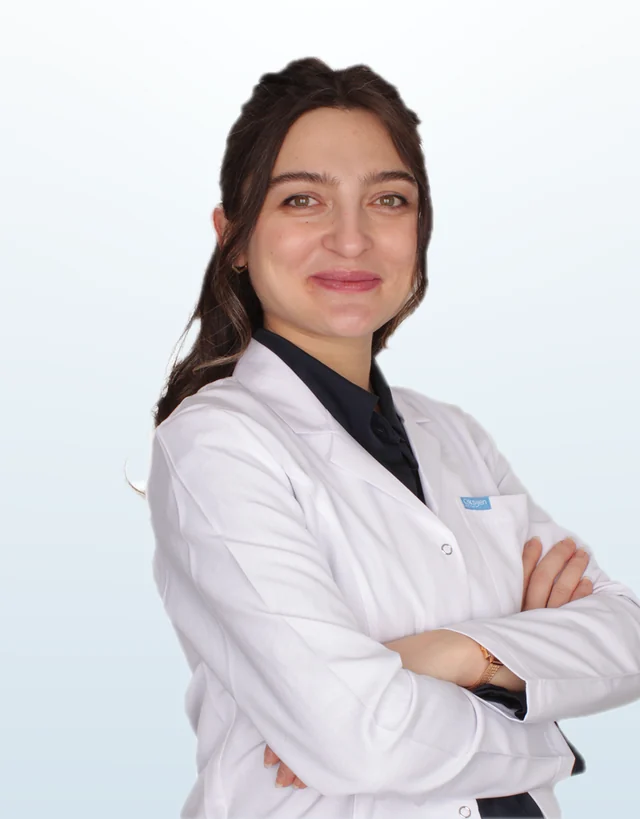
Dt. Melike Yaylakaşı, Dentist, Vogue Clinics Istanbul

Dt. Melike Yaylakaşı

Dentist

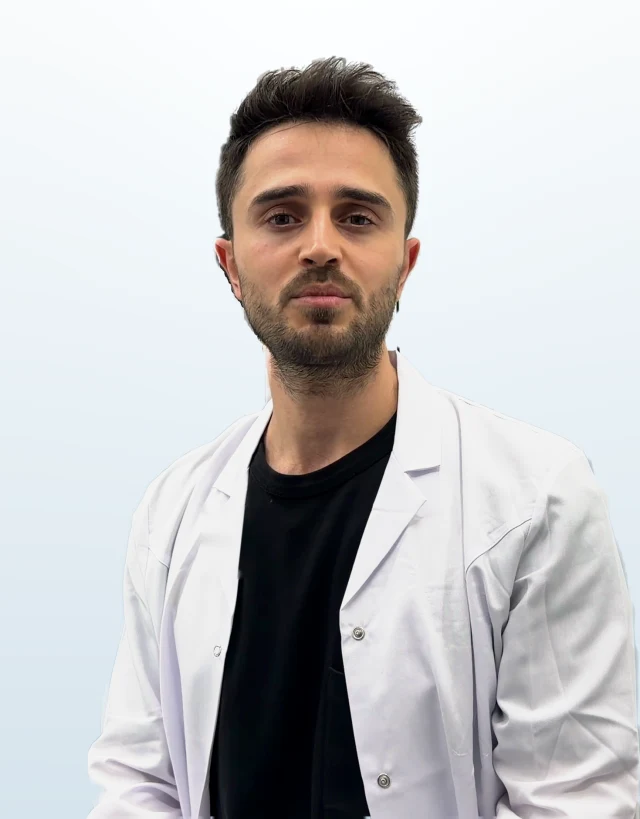
Dt. Mazlum Üren, Dentist, Vogue Clinics Istanbul

Dt. Mazlum Üren

Dentist · Aesthetic and prosthetic dentistry

Dt. Emine Karslı Çağlar, Orthodontist, Vogue Clinics Istanbul

Dt. Emine Karslı Çağlar

Orthodontist

Dr. Samet Fatih Gücer, Endodontist, Vogue Clinics Istanbul

Dr. Samet Fatih Gücer

Endodontist

Dt. Burcu İrem Başer, Dentist, Vogue Clinics Istanbul

Dt. Burcu İrem Başer

Dentist · Pediatric dentistry

Dt. Defne İyigün, Dentist, Vogue Clinics Istanbul

Dt. Defne İyigün

Dentist

Dt. İrem Karakaya, Dentist, Vogue Clinics Istanbul

Dt. İrem Karakaya

Dentist · Bağdat Caddesi

Dt. Asel Hoş, Dentist, Vogue Clinics Istanbul

Dt. Asel Hoş

Dentist · PhD programme in Restorative Dentistry

Dt. Kübra Yıldırım, Dentist, Vogue Clinics Istanbul

Dt. Kübra Yıldırım

Dentist

Dt. Didem Yağımlı, Dentist, Vogue Clinics Istanbul

Dt. Didem Yağımlı

Dentist

Dt. Ceren Tiken, Pediatric Dentist, Vogue Clinics Istanbul

Dt. Ceren Tiken

Pediatric Dentist

Dt. Elif Selçuk

Dentist

You can have this treatment at both of our Istanbul clinics: Dental clinic in Ataşehir, Istanbul and Dental clinic in Kadıköy, Bağdat Caddesi.

Common questions

How long does All-on-4 last?

There is no fixed number of years, and with good care All-on-4 teeth can last for many years. Cleaning under the bridge every day, regular check-ups, smoking and teeth grinding have the biggest effect. The bridge itself may need repairs or renewal over time, while the implants usually stay in place. If the bridge chips, don't keep chewing on it; contact us so the repair can be planned.

Is All-on-6 better than All-on-4?

Not for everyone. All-on-6 spreads the bite over six implants instead of four, which lowers the load on each one, but it needs more bone and is often chosen for the upper jaw or for a strong bite. All-on-4 makes the most of limited bone by angling the back implants, often without a graft. Your dentist chooses the number from your 3D scan.

Is All-on-4 painful?

The implants are placed under local anaesthesia, so most patients feel pressure rather than pain during surgery. Expect soreness and swelling for some days afterwards, more so if several teeth were removed at the same time; it usually builds over the first days and then eases. Your dentist tells you which pain relief to take and how to use cold compresses, and most patients find it manageable.

What is the difference between All-on-4 and dentures?

All-on-4 is fixed: a full-arch bridge is screwed onto four implants and only your dentist can remove it. A conventional denture rests on the gum without implants, needs no surgery and comes out every day, but a lower denture in particular can move. If you want something in between, a removable denture can also clip onto a few implants. Your bone, health and preference decide.

How long does All-on-4 treatment take?

All-on-4 is done in two stages, usually three to six months apart. On the implant day, any remaining teeth that can't be saved are removed, the implants are placed and, where the case allows, fixed temporary teeth are fitted. Once the implants have bonded with the bone, the final bridge is made after a digital scan and try-ins. A graft can lengthen this.

Are All-on-4 implants permanent?

Yes, in the sense that they are fixed. The implants stay in the bone and the bridge is screwed onto them, so you can't take it out yourself; your dentist can remove it for maintenance or repair. Fixed isn't the same as maintenance-free: the bridge may need repairs or renewal over time, and cleaning under it every day protects the implants.

What are All-on-4 teeth made of?

The implants are usually titanium. For the final bridge there are three main options: zirconia on a support bar (hybrid zirconia), porcelain on a metal framework, and lighter acrylic teeth on a framework. The choice depends on your bite, whether you grind your teeth and what you want from the result. You see the shape and colour at the try-in, before the bridge is finished.

Is All-on-4 worth it?

It can be, for the right person: someone who has lost most of the teeth in an arch, or whose remaining teeth can't be saved, and who wants fixed teeth rather than a removable denture. If you still have several healthy teeth, removing them for a full arch makes little sense. Long-term success depends on cleaning and check-ups, and your dentist tells you honestly whether it suits you.

Will I need two trips to Istanbul?

Usually yes: one for the implants and temporary teeth, and one for the final bridge once healing is complete. Your written plan states how many days each visit takes.

This page is for general information and doesn't replace an examination by a dentist.

Start here

Send us a photo of your smile.

A dentist looks at it and we reply with honest options and a written plan. You don't have to commit to anything.

Bağdat Caddesi

5.0 ★ Google
Caddebostan, Şerafettin Sk. No: 2/1 D: 4, 34728 Kadıköy / İstanbul
Get directions

Ataşehir

4.8 ★ Google
Barbaros Mah. Begonya Sok. No: 3/N, Nidakule Kuzey, 34750 Ataşehir / İstanbul
+90 216 606 68 04

Mon–Sat 09:30–18:30

Get directions

Request your treatment plan

We only use your details to answer this request. Your plan is confirmed after a clinical examination. Privacy policy