Composite bonding
Who it suits: A chipped corner, a worn edge or a small gap on a few teeth.
What it does: Resin is added only where it is needed and blended into the tooth, often without numbing.

Treatments · Vogue Clinics
Tooth-coloured resin shaped directly on the teeth in the chair, with little or no enamel removed and easy repair later.

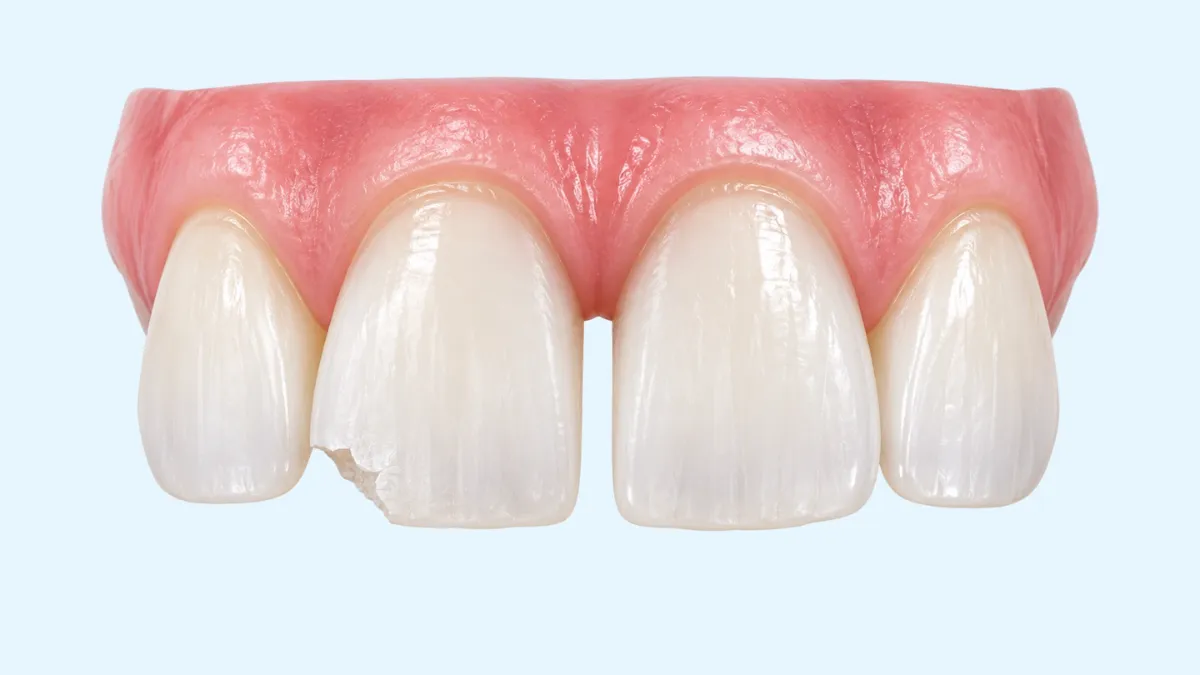
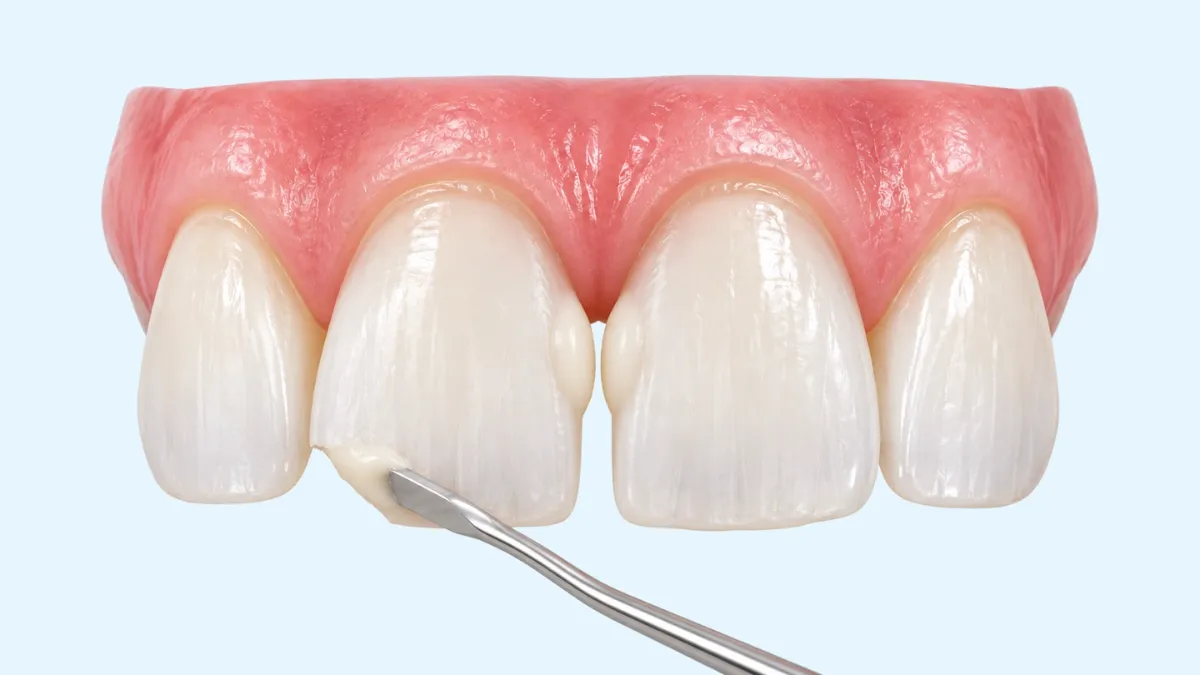
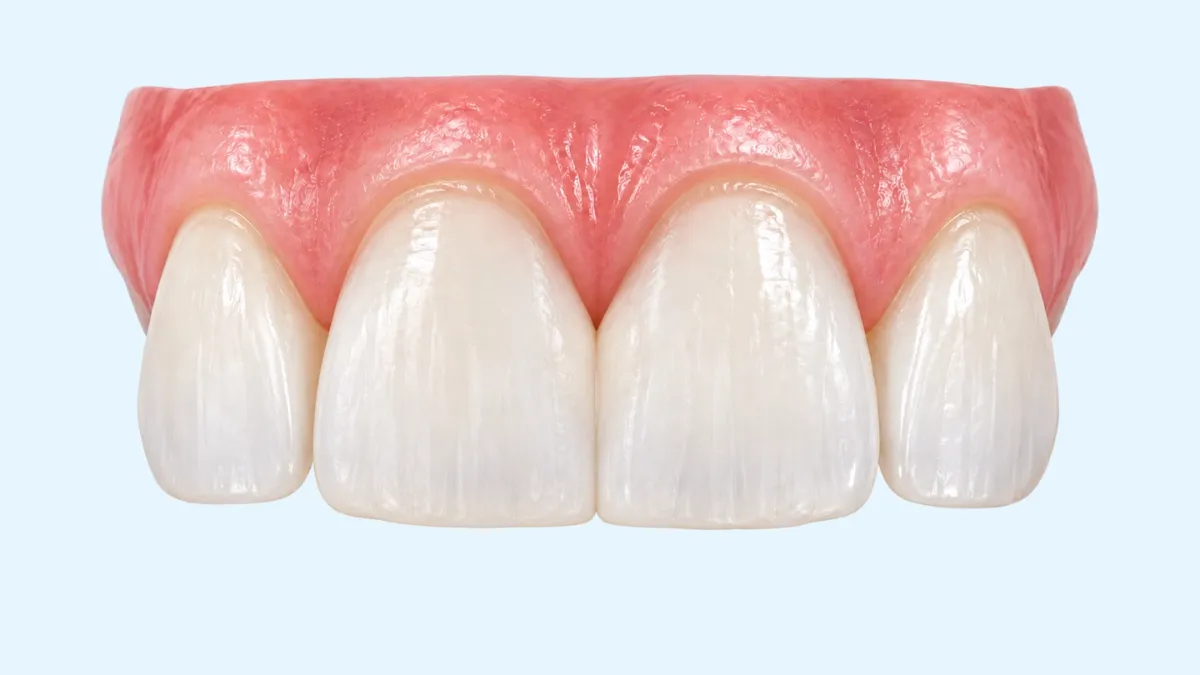
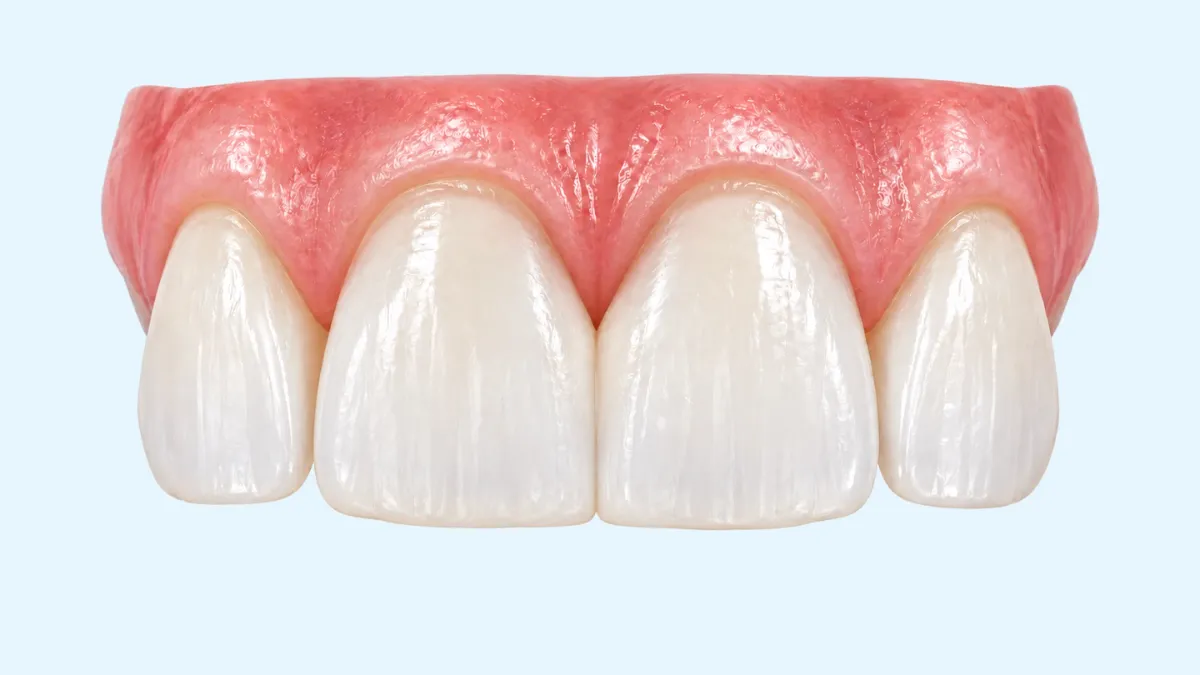
Illustration for explanation only. Whether bonding suits your teeth, and how much it can change, depends on your bite and enamel; your dentist explains after the examination.
What is composite bonding, and is it the same as a composite veneer?
Composite bonding means adding tooth-coloured resin to a tooth and shaping it in the chair. Small bonding repairs a chip, a worn edge or a gap; when resin covers the whole front surface, it becomes a composite veneer. Both usually need little or no enamel removed and can be repaired, but resin stains and wears more than ceramic.
Which option suits you is decided at your examination, not on this page.
Send a close-up photo of the teeth you want to change and one of your smile on WhatsApp or through the form. Tell us whether it's a chip, a gap or the overall shape.
The tooth surface is cleaned and lightly roughened, and resin is added layer by layer. Each layer is hardened with a curing light, then shaped and polished by hand.
Because your dentist sculpts in your mouth, you can watch the shape develop and ask for changes as it happens. Many cases need no numbing at all.
The result depends a great deal on the dentist's hands and on the planning behind them. A digital design or a trial on the teeth helps agree the shape before any resin goes on.
Both aim to save enamel, so people often weigh one against the other. Your dentist looks at where your teeth sit and how much change you want.
| Composite | Lumineer (no-prep ceramic) | |
|---|---|---|
| Made | By hand, in the chair | In a laboratory, from a scan or impression |
| Enamel | Little or none removed | Usually none removed, but etched for bonding |
| Surface | Needs polishing over time and can stain | Stays glossy and resists staining |
| If it chips | Usually repaired in the chair | Usually replaced |
| Later changes | Easy to add to or reshape | Harder to adjust once bonded |
Not as long as ceramic, and it varies too much from mouth to mouth to give a number. Bonding rarely fails all at once: it tends to dull, stain or chip at the edges, and those changes can usually be polished or repaired.
What wears it faster:
They use similar tooth-coloured resin, but for different reasons. A filling replaces tooth lost to decay or a fracture, so the tooth works properly again. Bonding is cosmetic: it adds to a healthy tooth to change its shape, length or colour.
If decay is found at the examination, it is filled first. Bonding only goes onto healthy tooth.
Your treatment journey
From your first message to the follow-up after you fly home, one coordinator stays with you.
From home
A few smile photos or a recent X-ray on WhatsApp is enough to start.
From home
Our dentists prepare your treatment plan and quote, in writing.
Istanbul
We organise appointments, hotel and transfers around your treatment.
At the clinic
Digital impressions and smile design let you see the plan before anything begins. A coordinator translates in the chair and explains each step.
Back home
Your coordinator stays reachable after you've flown home.
Every dentist at our clinics provides this treatment.

Head Dentist · Founder · Ataşehir and Bağdat Caddesi

Dentist · Branch director, Bağdat Caddesi

Dentist

Dentist · Aesthetic and prosthetic dentistry

Orthodontist

Endodontist

Dentist · Pediatric dentistry

Dentist

Dentist · Bağdat Caddesi

Dentist · PhD programme in Restorative Dentistry

Dentist

Dentist

Pediatric Dentist
Dentist
You can have this treatment at both of our Istanbul clinics: Dental clinic in Ataşehir, Istanbul and Dental clinic in Kadıköy, Bağdat Caddesi.
It depends on how much change you want. Composite is shaped in the chair with little or no enamel removed, is easy to repair and suits small chips, gaps or a first step, but it stains and wears more over time. Porcelain is made in a laboratory, usually after a thin layer of enamel is removed, and keeps its gloss and resists stains for longer.
For small chips, worn edges, narrow gaps or one oddly shaped tooth, many people find it worth it, because it changes the look with little or no enamel removed and can be repaired. It is less suited to a full colour change on many teeth, heavy grinding, or anyone who wants a surface that keeps its gloss with little upkeep; ceramic usually serves those better.
Usually not. Most cases need no drilling and no numbing, because the tooth is only cleaned and lightly roughened before the resin is added. Where an old filling is replaced or the tooth needs shaping, your dentist may use local anaesthesia. If a tooth feels sensitive afterwards and it doesn't settle, tell your dentist so it can be checked.
Generally not. In most cases little or no enamel is removed, as the tooth is only cleaned and lightly roughened so the resin can bond. That's why composite suits younger patients and people unsure about a bigger change. A rough or overhanging edge can trap plaque and irritate the gum, so the edges are polished smooth, and any decay is treated before bonding.
Usually, yes, and with little effect on the tooth where no enamel was removed. That makes composite one of the more reversible cosmetic options, and some people use it to live with a new shape before deciding on ceramic. It isn't removable day to day, though: it stays bonded to the tooth until your dentist takes it off or replaces it.
More than ceramic. Coffee, tea, red wine and smoking show on composite sooner than on enamel, and whitening or gritty toothpastes dull its polish, which makes staining more likely. Brushing with a non-abrasive paste and a professional polish at check-ups usually lifts surface staining. If composite stays yellow after polishing, your dentist may suggest refreshing or replacing that layer.
No. Whitening lightens your natural teeth but not the resin, so bonded areas can end up darker than the rest. If you want whiter teeth, have them whitened first and the bonding matched to the new shade afterwards. If you already have bonding and want to whiten, the composite can be refreshed or replaced after whitening so the colours match again.
Yes, and that is one of composite's main advantages. Bonding rarely fails all at once; it tends to dull, stain or chip at the edges, and those changes can usually be polished or repaired in the chair by adding resin. Chips are often caused by biting nails, pens or ice, or by grinding. Where a lot has worn, the composite can be replaced.
Composite is built in the chair, so there is no waiting for a laboratory to make anything. The tooth is prepared, resin is added in thin layers, each hardened with a curing light, then shaped and polished. How long it takes depends on how many teeth are treated and how much change is planned; your written plan states how many appointments you need.
Not on their own. A rough or overhanging edge can trap plaque, which may cause odour, so the edges are polished smooth when the bonding is finished and flossing matters. Daily brushing with a non-abrasive paste and a polish at check-ups help keep the surface smooth. If you notice bad breath, ask your dentist to check the edges of your composite.
This page is for general information and doesn't replace an examination by a dentist.
Start here
A dentist looks at it and we reply with honest options and a written plan. You don't have to commit to anything.
Mon–Sat 09:30–18:30
Get directions