Simple extraction
Who it suits: A tooth that has come through the gum and can be reached easily.
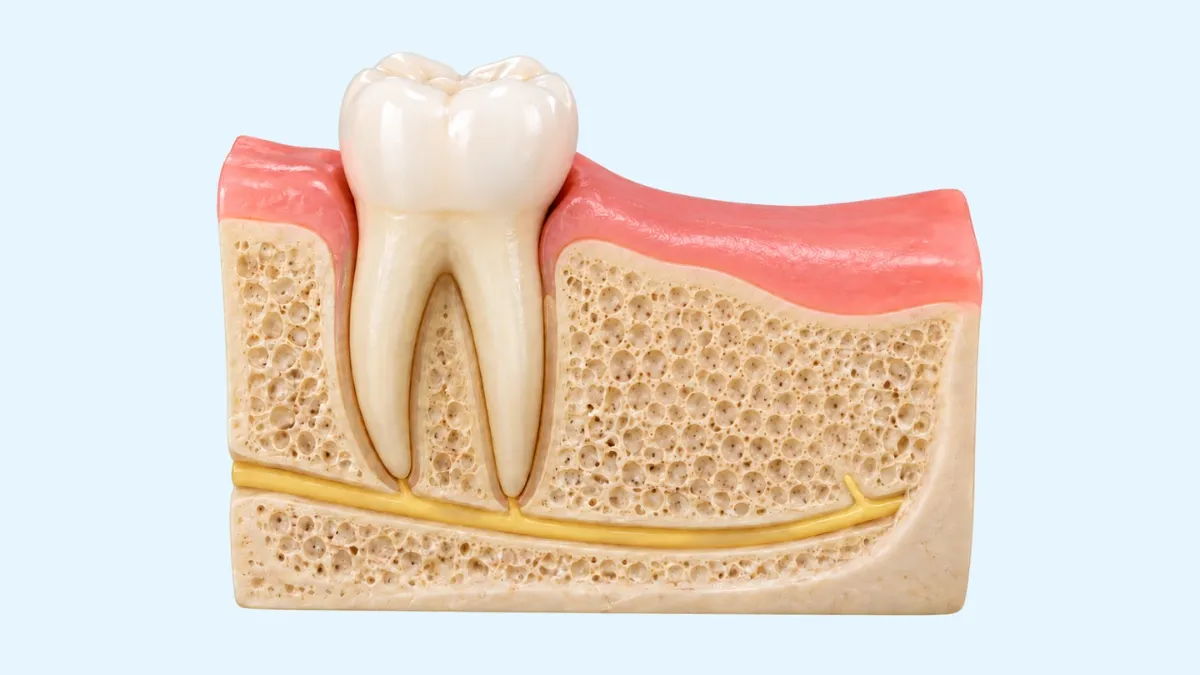
What it does: The tooth is loosened and lifted out under local anaesthesia, without cutting the gum.

Treatments · Vogue Clinics
Removing a tooth that can't be saved, with clear aftercare and a plan for the gap.

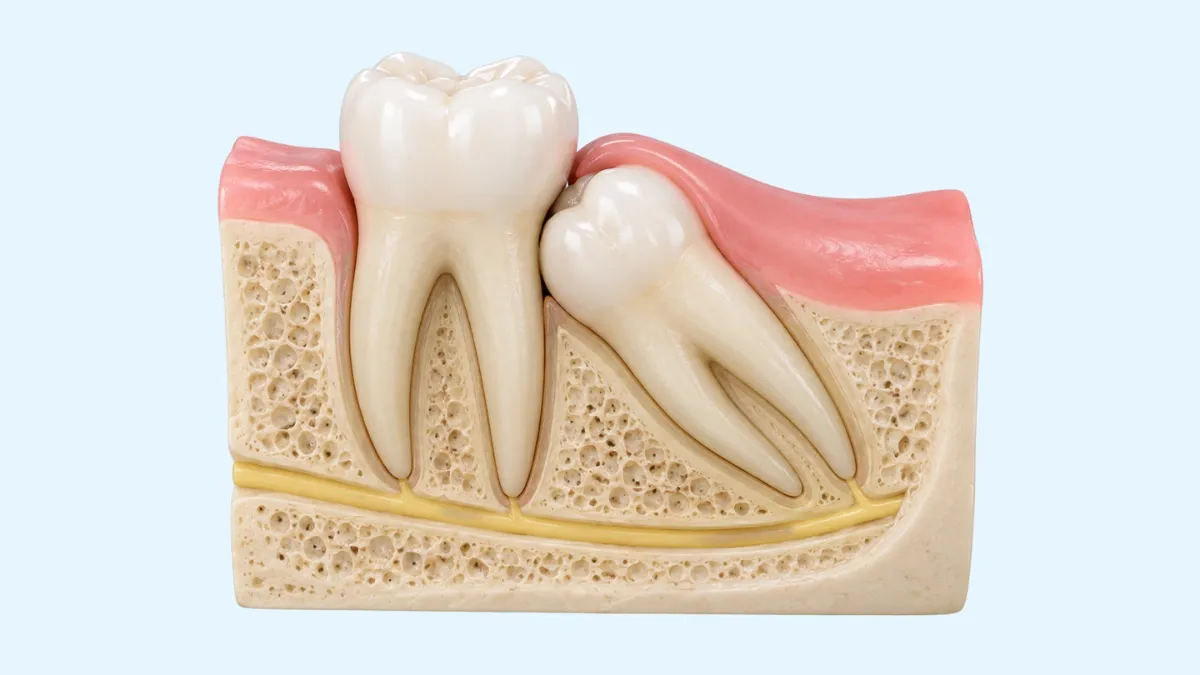
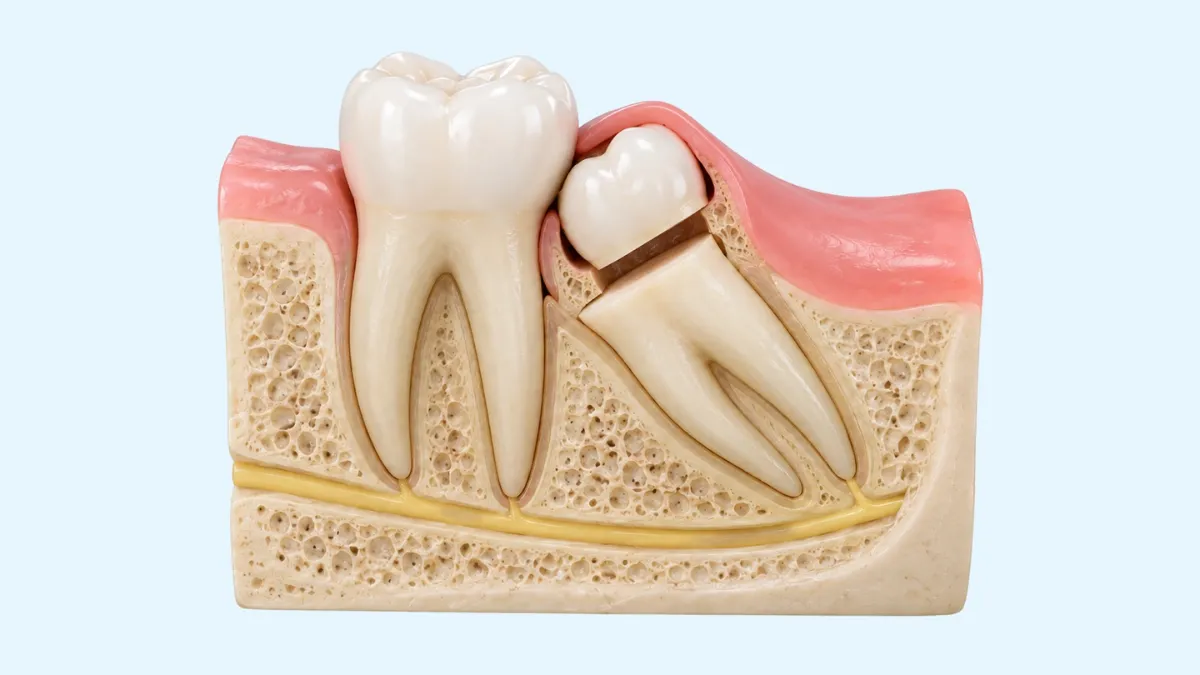
Illustration for explanation only. Not every impacted tooth is removed this way; your dentist explains your own tooth after the X-ray or 3D scan.
When does a tooth need to come out?
We remove a tooth when it can't be saved, or when keeping it would do more harm. Common reasons are decay or a fracture that goes too deep, advanced gum disease, a wisdom tooth that keeps getting infected, or orthodontic planning. Before any extraction, your dentist checks whether a filling, root canal treatment or an onlay could keep it.
Which option suits you is decided at your examination, not on this page.
Send a photo or an X-ray on WhatsApp or through the form, and tell us where it hurts and since when. If there is swelling or you can hardly open your mouth, say so and we will look for the earliest appointment.
Most extractions are done under local anaesthesia while you are awake. You feel pressure as the tooth is loosened; if anything feels sharp, tell us and we numb more.
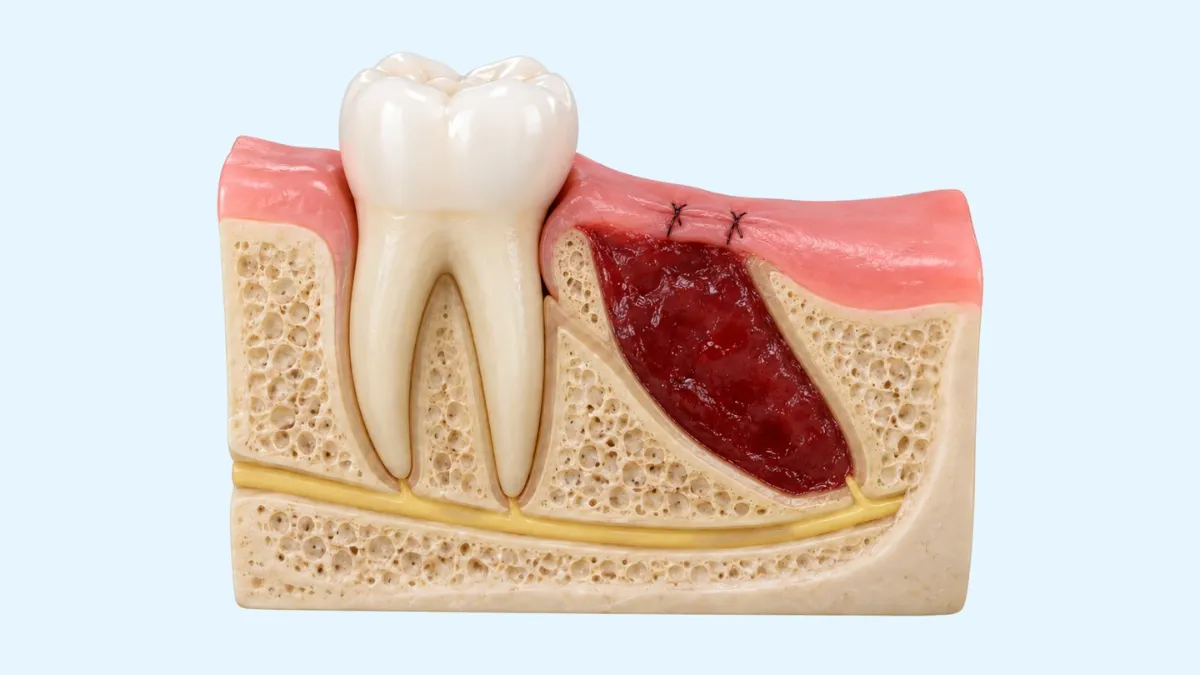
A tooth that has broken at the gumline, has curved roots or hasn't come through, such as an impacted wisdom tooth, may need a small surgical procedure. The gum is opened, the tooth is sometimes divided to lift it out, and the area is stitched.
Before your appointment, tell us about:
A surgical extraction is needed when the tooth can't simply be lifted out: it has broken at the gumline, its roots are curved, or it is still under the gum. Impacted wisdom teeth are the most common example.
How long it takes depends on the tooth's position and roots, so your dentist tells you after the X-ray rather than in advance. The swelling and stiffness afterwards are usually more noticeable than after a simple extraction.
A blood clot forms in the socket and starts the healing. Most aftercare is about protecting it.
| When | What to do |
|---|---|
| Straight after | Bite on the gauze as shown, and don't eat until the numbness wears off |
| The first day | No hard rinsing, spitting, drinking through a straw or smoking; they can dislodge the clot |
| Eating | Soft, lukewarm food, chewed on the other side |
| Cleaning | Brush your other teeth as usual and go gently near the socket; your dentist tells you when to start rinsing |
| Swelling and tenderness | Common at first; a cold pack on the cheek helps. Ask us which pain relief suits you |
Some swelling and a little oozing are normal. The signs below are not; see a dentist or doctor the same day.
Your treatment journey
From your first message to the follow-up after you fly home, one coordinator stays with you.
From home
A few smile photos or a recent X-ray on WhatsApp is enough to start.
From home
Our dentists prepare your treatment plan and quote, in writing.
Istanbul
We organise appointments, hotel and transfers around your treatment.
At the clinic
Digital impressions and smile design let you see the plan before anything begins. A coordinator translates in the chair and explains each step.
Back home
Your coordinator stays reachable after you've flown home.
Every dentist at our clinics provides this treatment.

Head Dentist · Founder · Ataşehir and Bağdat Caddesi

Dentist · Branch director, Bağdat Caddesi

Dentist

Dentist · Aesthetic and prosthetic dentistry

Orthodontist

Endodontist

Dentist · Pediatric dentistry

Dentist

Dentist · Bağdat Caddesi

Dentist · PhD programme in Restorative Dentistry

Dentist

Dentist

Pediatric Dentist
Dentist
You can have this treatment at both of our Istanbul clinics: Dental clinic in Ataşehir, Istanbul and Dental clinic in Kadıköy, Bağdat Caddesi.
Healing happens in stages. A blood clot forms in the socket straight away and starts the process; soreness and swelling are usually worst in the first days and then ease. The gum closes over before the bone underneath fills in, which takes longer. Surgical and wisdom tooth extractions generally take longer to heal than simple ones, and your dentist checks the site at a follow-up.
Most extractions are done with local anaesthetic while you are awake. You feel pressure as the tooth is loosened, but not pain; if anything feels sharp, tell us and we numb more. Some soreness and swelling after the numbness wears off is normal. A cold pack on the cheek helps, and you can ask us which pain relief suits you.
Pain and swelling are usually worst in the first days and ease a little each day; after a surgical extraction they can last longer. Pain that gets worse a few days later, often with a bad taste in the mouth, can point to a dry socket, which needs checking. Contact us in that case, or if the swelling keeps growing.
A simple extraction of a visible tooth is usually quick. A surgical extraction, such as an impacted wisdom tooth, takes longer, and how long depends on the tooth's position and roots, so your dentist tells you after the X-ray or scan. Most extractions are done in one appointment; surgical cases or several teeth may need more.
Once the numbness has gone, eat soft, lukewarm food such as soup, yoghurt, mashed potato, eggs or porridge, chewing on the other side. Avoid hard, crunchy or very hot food and drinks, and don't use a straw on the first day, as heat and suction can disturb the clot. Tea is fine once it has cooled. Your dentist tells you when to return to normal chewing.
Not always. A wisdom tooth that has come through straight, can be cleaned and causes no trouble can stay, and one sitting fully in the bone without causing problems may simply be monitored. Your dentist may suggest removing it if it keeps getting infected, decays, damages the tooth in front of it or can't be kept clean.
Some oozing and pink-tinged saliva on the first day is normal. Bite on the gauze as shown, and if bleeding starts again, press firmly on a folded piece of clean gauze. Avoid rinsing hard, spitting and hot drinks at first. If bleeding doesn't stop with firm pressure, contact a dentist or doctor the same day.
Simple extractions often don't need stitches; surgical ones, such as an impacted wisdom tooth, usually do. Your dentist tells you whether they dissolve on their own or are taken out at a check-up. Until then, keep the area clean with gentle care and avoid pulling at the stitches with your tongue or fingers.
Often, yes, and removing it can help the infection drain. Sometimes the swelling needs to settle first; your dentist decides after examining you. An abscessed tooth doesn't always have to come out, though: if it can be kept, root canal treatment may be an option. If swelling spreads towards the eye or neck, see a dentist or doctor the same day.
Removing wisdom teeth doesn't usually change the shape of your face, and any swelling afterwards settles. Over the longer term, a gap left open can let neighbouring teeth tip and the jawbone in that area shrink, and losing several back teeth without replacing them can affect how the lower face is supported. That is why your dentist talks about filling the gap.
This page is for general information and doesn't replace an examination by a dentist.
Start here
A dentist looks at it and we reply with honest options and a written plan. You don't have to commit to anything.
Mon–Sat 09:30–18:30
Get directions