Zirconia implant
Who it suits: People who want a metal-free implant, or a front tooth with thin gum, where the bone is good.
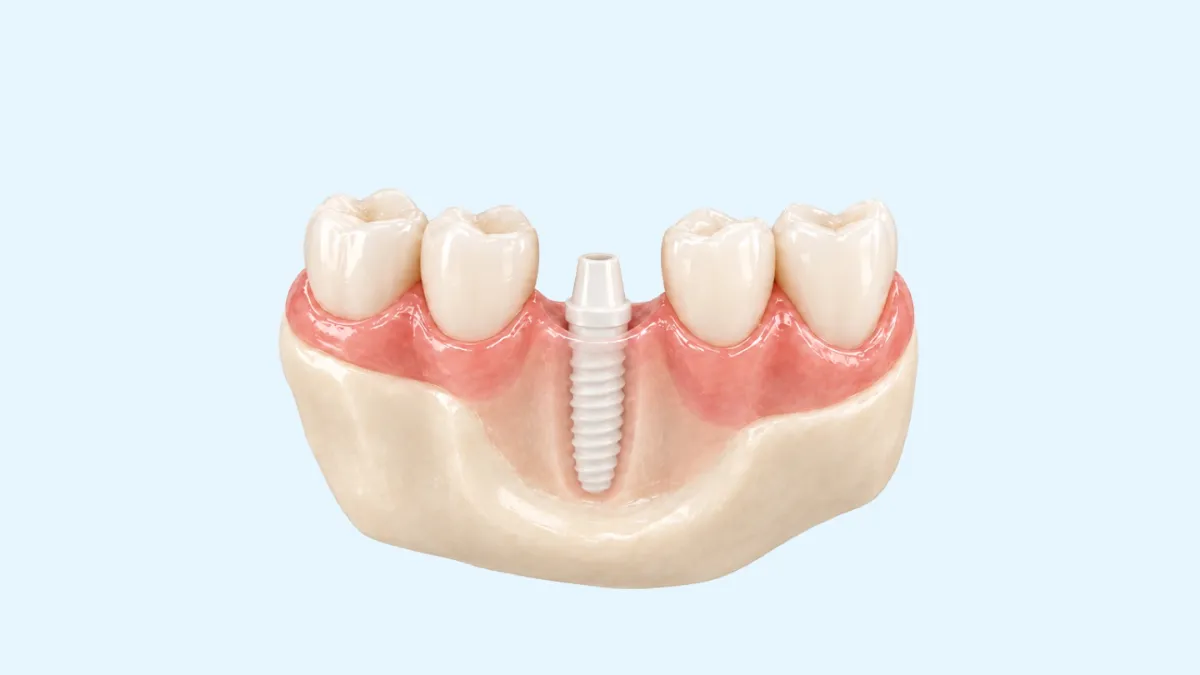
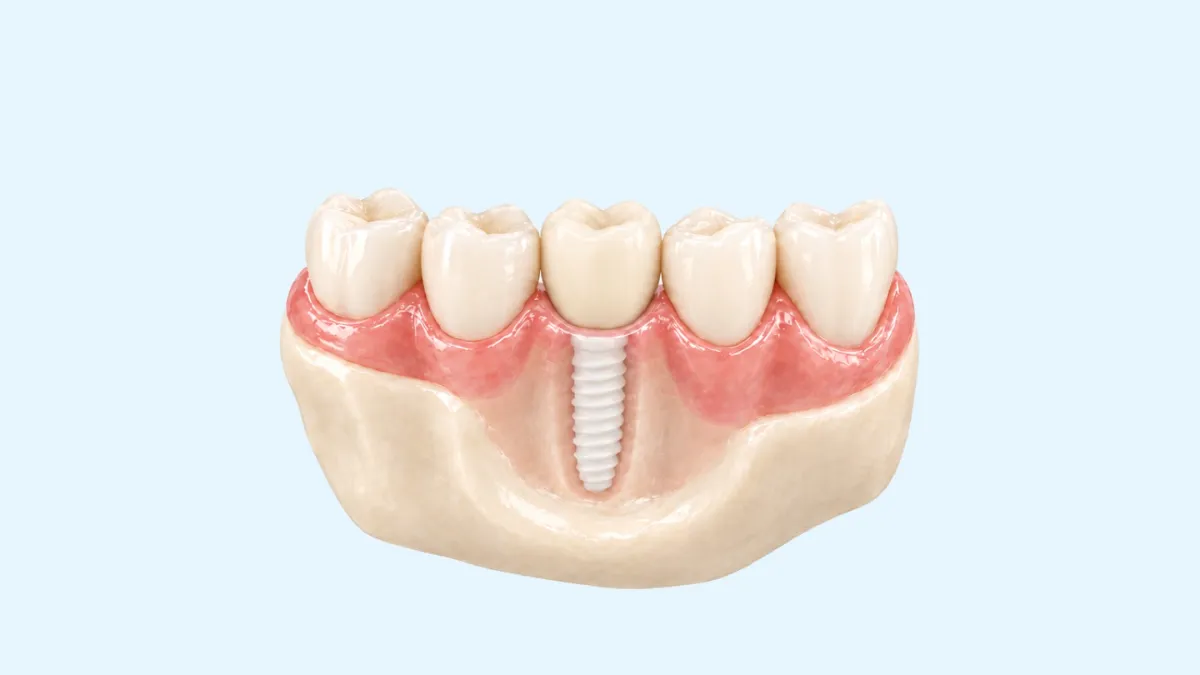
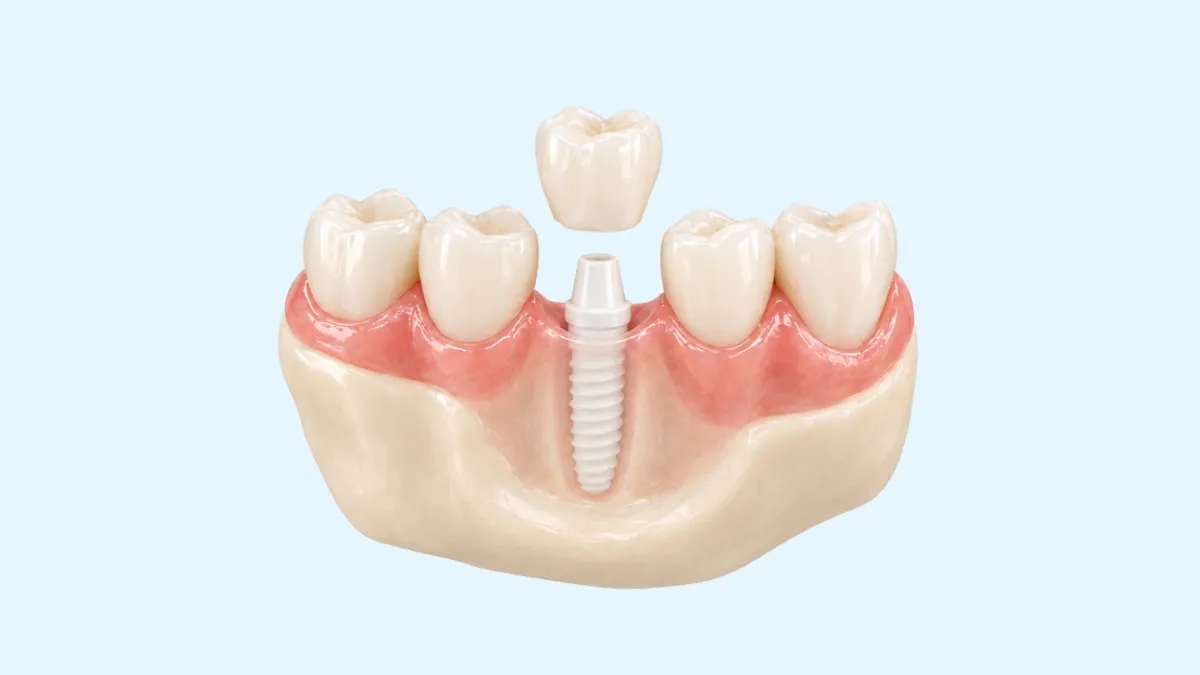
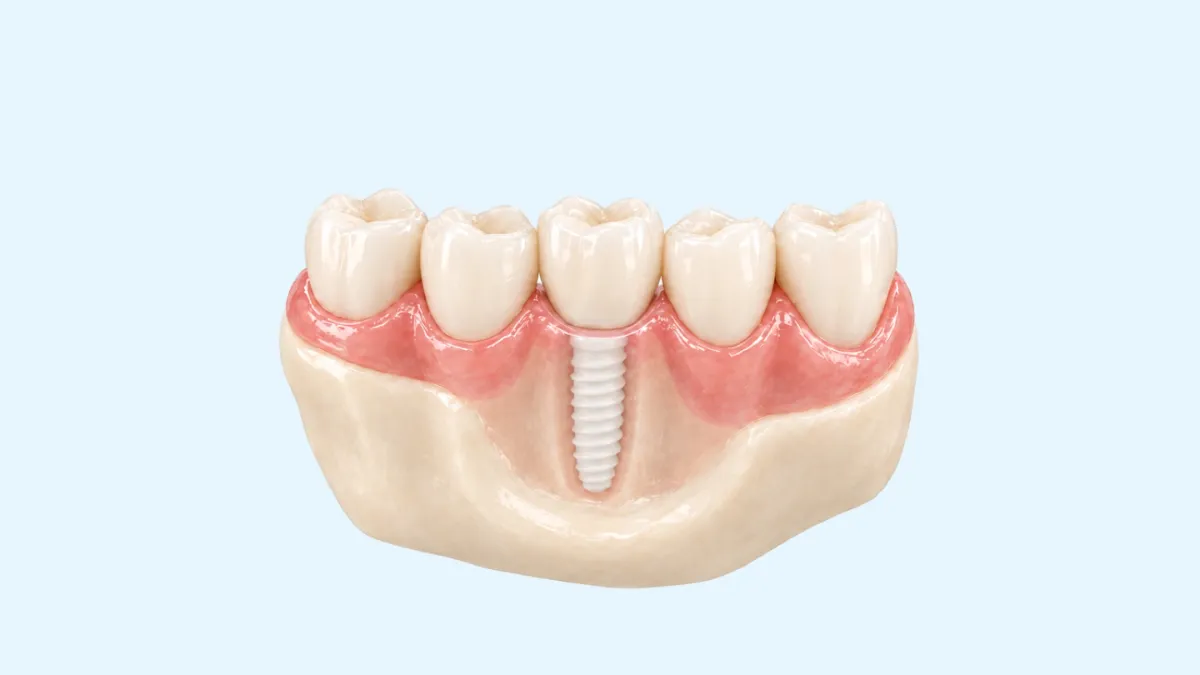
What it does: A white ceramic implant replaces the root and carries a ceramic crown.

Treatments · Vogue Clinics
A metal-free, tooth-coloured implant for people who prefer to avoid titanium or have thin gum at the front.

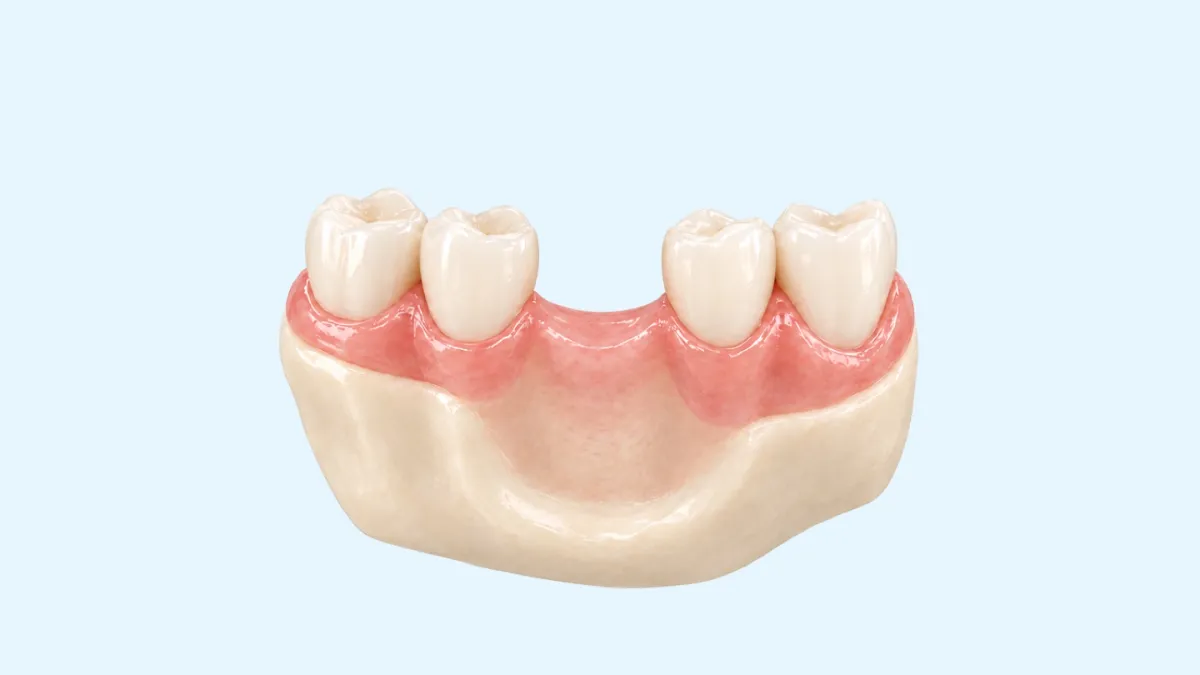
Illustration for explanation only. Your dentist decides from your own 3D scan whether a zirconia implant suits that gap, or whether titanium is the better choice.
What are zirconia dental implants, and who are they for?
Zirconia dental implants are made of a white ceramic instead of titanium. They suit people who want no metal in their mouth, and front teeth where thin gum could let a grey titanium edge show through. Titanium has the longer research record and more design options, so your dentist explains which suits your case.
Which option suits you is decided at your examination, not on this page.
Send a photo of your smile or an X-ray on WhatsApp or through the form. Tell us which tooth is missing and why you are interested in a metal-free implant. A dentist looks at it before we reply.
Clean around it like a natural tooth, with care at the gumline. If you grind your teeth, ask about a night guard. Routine check-ups can be done by a dentist near your home, and your coordinator stays reachable.
Both are placed in a similar way and both need time to bond with the bone. The difference lies in colour, metal content and how much freedom the design gives your dentist.
| Zirconia | Titanium | |
|---|---|---|
| Colour | White, like a tooth root | Grey metal |
| Metal | None | Titanium or a titanium alloy |
| Research record | Shorter | The longest of any implant material |
| Design | Often one piece; fewer angle and part options | Usually two pieces, with a wide range of parts |
| Full-arch bridges | Rarely used | The usual choice |
Titanium is usually the better choice for full-arch bridges, for implants that need to sit at an angle, and where limited bone calls for more design options.
Heavy grinding is a reason to discuss the choice carefully. Zirconia is very hard but less forgiving of strong forces than titanium.
The surgery is much like that for a titanium implant and is done under local anaesthesia. With a one-piece zirconia implant, the part that will hold the crown stands above the gum from the start, so it has to be protected from chewing while it bonds.
Bonding usually takes three to six months, as with titanium. Daily cleaning and check-ups still matter: the gum and bone around any implant can become inflamed if plaque builds up.
How many visits it takes depends on your case; your written plan states it.
In everyday use, yes. Zirconium is a metal element; zirconia is the white ceramic made from it, and that ceramic is what the implant is made of. "Ceramic implant" and "zirconium implant" usually mean the same thing.
The name doesn't tell you the design, though. Some zirconia implants are one piece, others come in two parts. Ask your dentist which type is planned for you and whether any part of it contains metal.
Your treatment journey
From your first message to the follow-up after you fly home, one coordinator stays with you.
From home
A few smile photos or a recent X-ray on WhatsApp is enough to start.
From home
Our dentists prepare your treatment plan and quote, in writing.
Istanbul
We organise appointments, hotel and transfers around your treatment.
At the clinic
Digital impressions and smile design let you see the plan before anything begins. A coordinator translates in the chair and explains each step.
Back home
Your coordinator stays reachable after you've flown home.
Every dentist at our clinics provides this treatment.

Head Dentist · Founder · Ataşehir and Bağdat Caddesi

Dentist · Branch director, Bağdat Caddesi

Dentist

Dentist · Aesthetic and prosthetic dentistry

Orthodontist

Endodontist

Dentist · Pediatric dentistry

Dentist

Dentist · Bağdat Caddesi

Dentist · PhD programme in Restorative Dentistry

Dentist

Dentist

Pediatric Dentist
Dentist
You can have this treatment at both of our Istanbul clinics: Dental clinic in Ataşehir, Istanbul and Dental clinic in Kadıköy, Bağdat Caddesi.
Zirconia is a white ceramic that the body tolerates well, and the implant itself contains no metal. As with any implant, the main risks come from the surgery and aftercare: swelling at first, and inflammation around the implant if plaque builds up. Titanium has the longer research record, so there is less long-term evidence for zirconia. Your dentist explains which suits your case.
There is no fixed number of years. Zirconia implants have a shorter research record than titanium, so there is less long-term evidence on whether they last as long. As with any implant, daily cleaning, regular check-ups, smoking and teeth grinding have the biggest effect. Zirconia copes less well with heavy biting forces, which is one reason your dentist checks your bite first.
The zirconia implant itself is a white ceramic with no metal in it. Designs differ, though: some zirconia implants are one piece and others have two parts, and the connecting parts vary. Ask your dentist which type is planned for you and whether any part of it contains metal. The crown on top can be made of metal-free ceramic too.
They can. Zirconia is harder than titanium but more brittle, so it copes less well with heavy biting forces. That is why your dentist discusses the choice carefully if you grind your teeth or the implant would replace a back tooth. A one-piece zirconia implant also has to be protected from chewing forces while it bonds with the bone.
The implant sits in the bone under the crown, so staining isn't really a concern for the implant itself. What you see is the crown on top, which is usually ceramic and made to match your teeth. Ceramic crowns don't change colour with whitening, so if you plan to whiten your natural teeth, it is best to do it before the crown's shade is chosen.
Compared with titanium, zirconia has a shorter research record and fewer design options, as many zirconia implants are one piece with fewer angles and parts to choose from. It is more brittle under heavy biting forces and is rarely used for full-arch bridges. A one-piece implant also needs protecting from chewing while it heals. Where bone is limited, titanium is usually the better choice.
Yes. Like titanium, a zirconia implant bonds with the jaw bone over time, a process called osseointegration. This typically takes three to six months, as with titanium, and the final crown is fitted once it is complete. With a one-piece zirconia implant, the part that will carry the crown sits above the gum from the start, so it has to be protected from chewing meanwhile.
The implant itself sits in the bone and can't be seen; what you see is the crown, matched to the colour and shape of your teeth. The white colour matters most at the front, where the gum is thin. If the gum thins over the years, a white implant won't show through as a grey edge the way titanium can, which is one reason it is chosen there.
Usually one stage for the implant and another for the crown once it has bonded. Your written plan and quote state how many days each visit takes.
This page is for general information and doesn't replace an examination by a dentist.
Start here
A dentist looks at it and we reply with honest options and a written plan. You don't have to commit to anything.
Mon–Sat 09:30–18:30
Get directions