Cantilever on one tooth
Who it suits: A small front tooth next to a strong tooth with a long root, where the bite is light.
What it does: One crown carries the false tooth, and only that tooth is shaped.

Treatments · Vogue Clinics
A bridge held from one side only, used for a few carefully chosen gaps, mostly at the front.

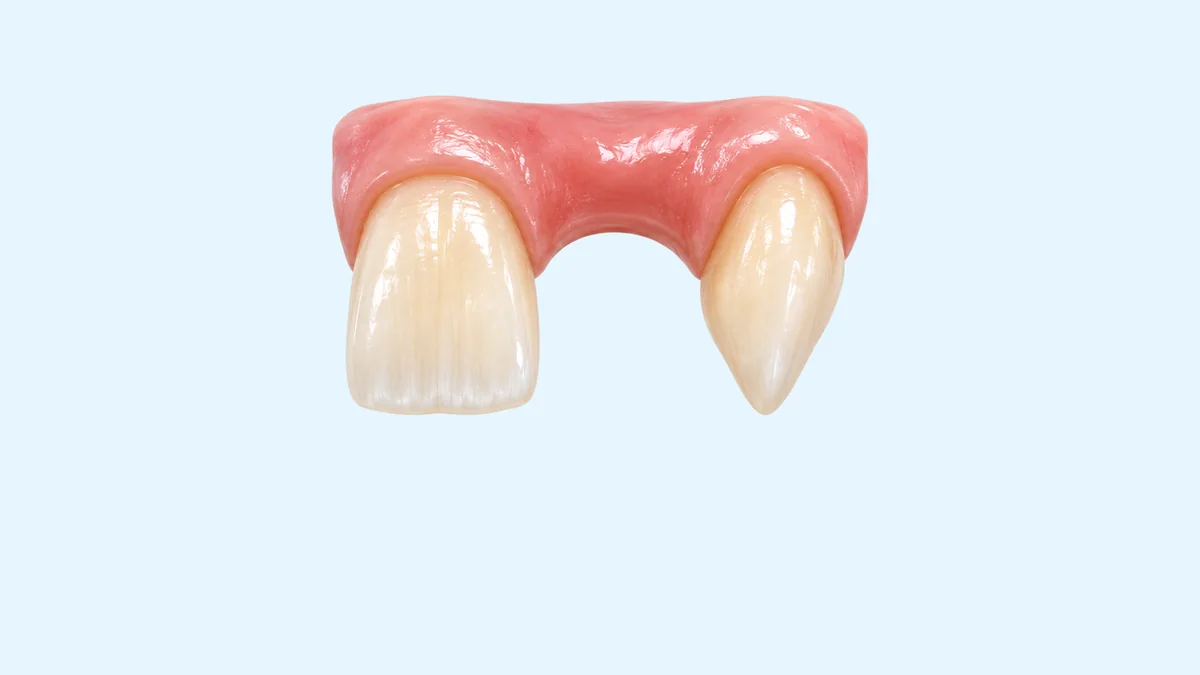
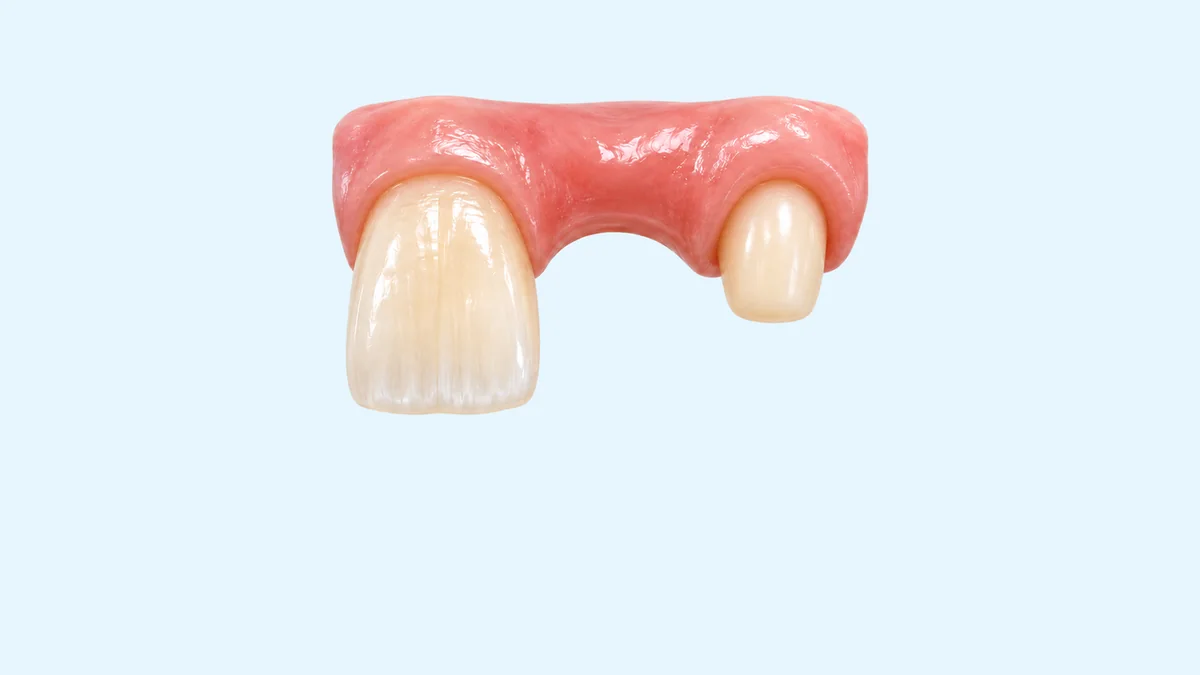
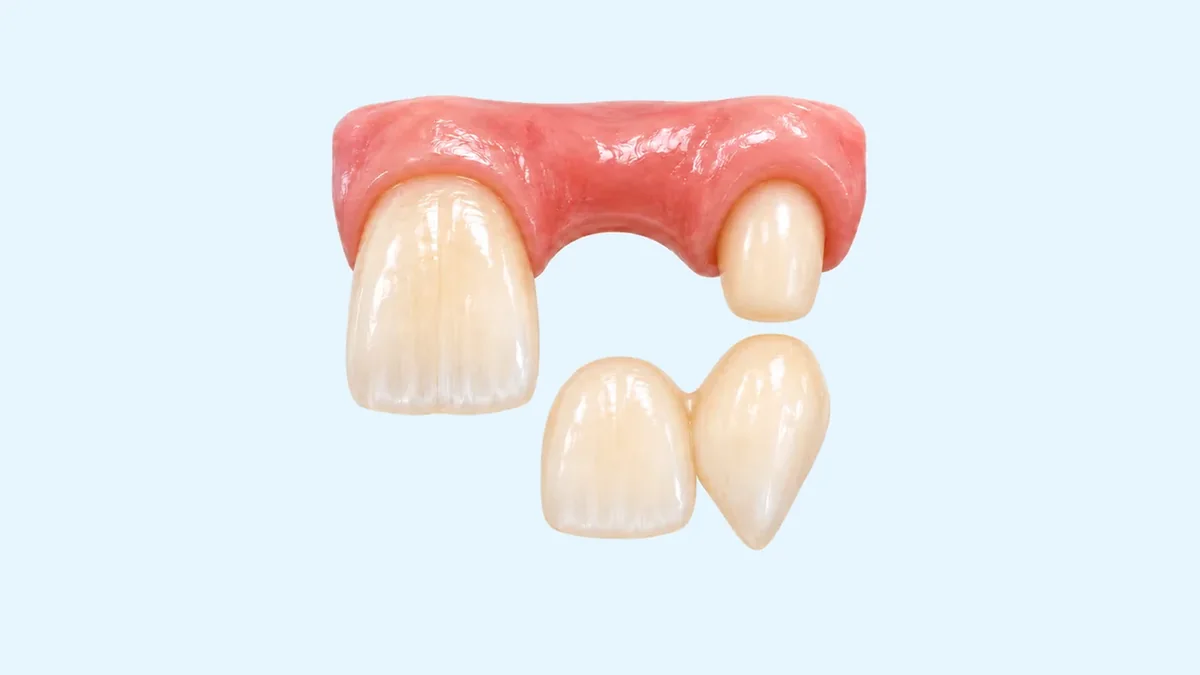
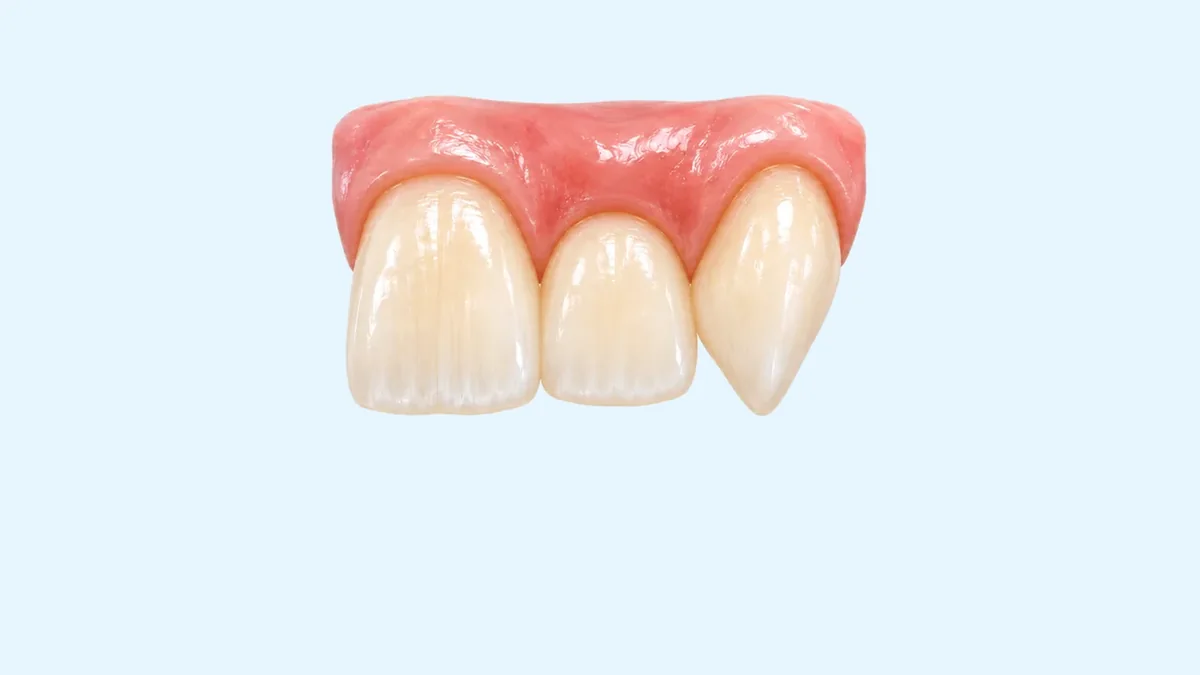
Illustration for explanation only. Whether a one-sided bridge is safe for your gap depends on the supporting tooth and your bite, which your dentist checks at your examination.
What is a cantilever bridge, and when is it used?
A cantilever bridge, also called a one-sided bridge, holds a false tooth from a crowned tooth on one side of the gap only. It is used for carefully chosen gaps, most often a small front tooth with a light bite. Because it puts leverage on the supporting tooth, your dentist often discusses an implant first.
Which option suits you is decided at your examination, not on this page.
Send a photo of your smile and the gap, and an X-ray if you have one, on WhatsApp or through the form. Tell us which tooth is missing and whether you grind.
Clean under the false tooth every day and keep up check-ups, where your dentist checks the supporting tooth for movement. Tell us straight away if the bridge feels loose or the supporting tooth aches. Routine check-ups can be done by a dentist near your home, and your coordinator stays reachable.
A traditional bridge rests on teeth at both ends of the gap. A cantilever bridge is fixed at one end only, so the false tooth sticks out like a small diving board.
That design means fewer teeth are prepared, sometimes just one. The trade-off is leverage: each time you bite on the false tooth, the force tries to tip the supporting tooth. This is why cantilevers are kept short and are rarely used where chewing forces are heavy.
Some cantilever bridges for front teeth are held by a thin wing bonded to the back of the neighbouring tooth, which needs little or no drilling. This suits only certain bites, and the wing can come unstuck and need bonding again.
Your dentist looks at the roots, the gums and the way your teeth meet before suggesting one. These are the situations where it is most often considered.
We say this plainly: for many gaps, an implant is the better long-term choice. It doesn't depend on a neighbouring tooth, and no healthy tooth has to be shaped to hold it.
A cantilever puts extra load on its supporting tooth. Over time this can loosen the tooth, break the cement seal or crack the crown, and grinding makes all three more likely. If you grind or have a heavy bite, a cantilever is usually not recommended.
If the tooth beside the gap is healthy and you have enough bone, your dentist will usually talk you through an implant first.
Most of what you notice in the first days settles by itself. With a one-sided bridge, the main habit to learn is to spare the false tooth from hard biting.
Your treatment journey
From your first message to the follow-up after you fly home, one coordinator stays with you.
From home
A few smile photos or a recent X-ray on WhatsApp is enough to start.
From home
Our dentists prepare your treatment plan and quote, in writing.
Istanbul
We organise appointments, hotel and transfers around your treatment.
At the clinic
Digital impressions and smile design let you see the plan before anything begins. A coordinator translates in the chair and explains each step.
Back home
Your coordinator stays reachable after you've flown home.
Every dentist at our clinics provides this treatment.

Head Dentist · Founder · Ataşehir and Bağdat Caddesi

Dentist · Branch director, Bağdat Caddesi

Dentist

Dentist · Aesthetic and prosthetic dentistry

Orthodontist

Endodontist

Dentist · Pediatric dentistry

Dentist

Dentist · Bağdat Caddesi

Dentist · PhD programme in Restorative Dentistry

Dentist

Dentist

Pediatric Dentist
Dentist
You can have this treatment at both of our Istanbul clinics: Dental clinic in Ataşehir, Istanbul and Dental clinic in Kadıköy, Bağdat Caddesi.
The false tooth is joined to a crown on a tooth on one side of the gap only and reaches out from it, a little like a diving board. Sometimes two neighbouring teeth are crowned and joined so they share the load. Because every bite on the false tooth levers the supporting tooth, cantilever bridges are kept short and placed where the bite is light.
After an examination and X-rays, the supporting tooth, or two joined teeth, is numbed and shaped so a crown can fit, and a digital scan records it and your bite. A temporary covers the area while the bridge is made. At the next visit it is tried in, the bite is checked so the false tooth takes very little load, and the bridge is cemented.
The supporting tooth is numbed before it is shaped, so most people feel pressure rather than pain. Afterwards the supporting tooth and the gum under the false tooth may feel sore for some days, and cold may sting; if you need pain relief, ask us which suits you. A supporting tooth that hurts more on biting as the days pass should be checked.
There is no fixed number of years. Because it is held at one end, a cantilever bridge puts extra leverage on its supporting tooth, so its life depends mostly on that tooth, the load from your bite and how well the area is cleaned. Kept short and placed where the bite is light, it can work well; grinding makes loosening or cracking more likely.
Often, yes, if there is enough bone where the tooth is missing; sometimes bone has to be built up first. The false tooth is removed, an implant placed in the gap carries its own crown, and the supporting tooth keeps a crown of its own. Your dentist checks the bone on X-rays or a scan before suggesting it.
From the front it looks like a row of teeth, and the false tooth is shaped to sit on the gum like a natural one. Its shade is matched to the teeth beside it, and you see it in daylight at the try-in before it is cemented. Cantilever bridges are used most often for a small front tooth, so the appearance is planned with care.
Most foods, with one habit to learn: protect the false tooth from hard bites. Bite into apples, crusty bread and similar foods with your natural teeth rather than the false tooth, and don't bite ice or objects at all. If the false tooth touches first when you close, tell us. If you grind at night, ask your dentist about a night guard.
Keep it, don't glue it back yourself, and contact us. A loose cantilever can rock the supporting tooth, so it shouldn't be left as it is. If the supporting tooth and the bridge are sound, it can often be cemented back; if decay has started under the crown, the tooth is treated first and the bridge is then refitted or remade.
Like a traditional bridge, it has no healing period between steps unless other treatment comes first. Your written plan states how many days to allow.
This page is for general information and doesn't replace an examination by a dentist.
Start here
A dentist looks at it and we reply with honest options and a written plan. You don't have to commit to anything.
Mon–Sat 09:30–18:30
Get directions