Inlay
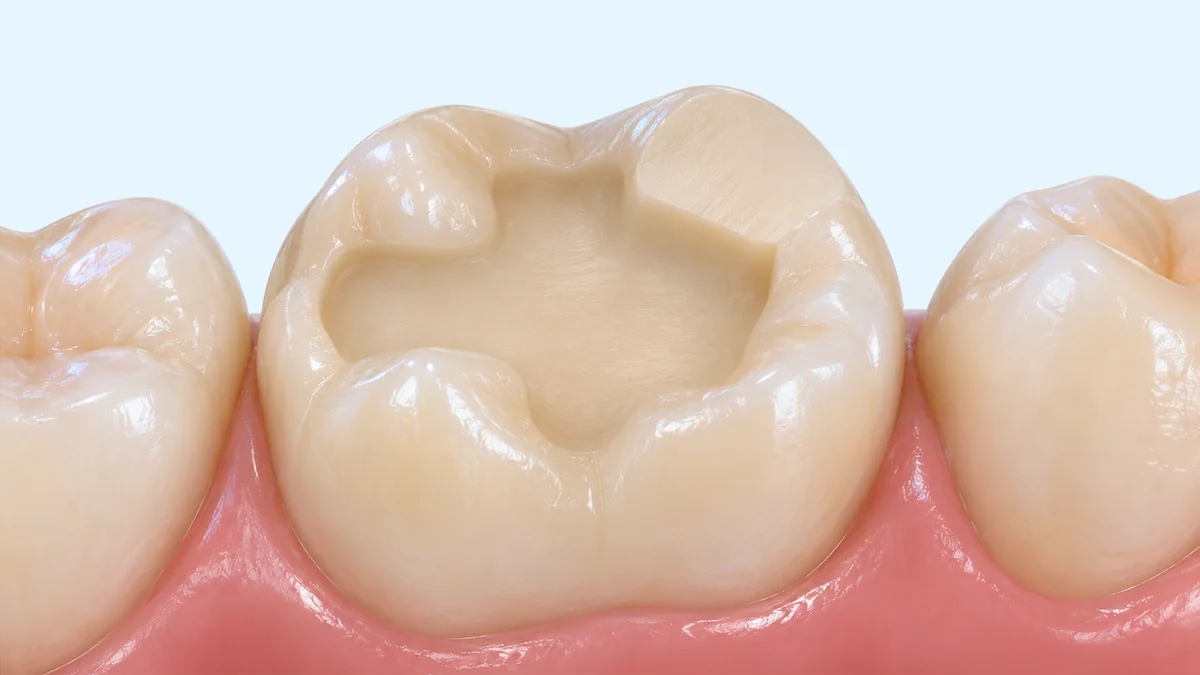
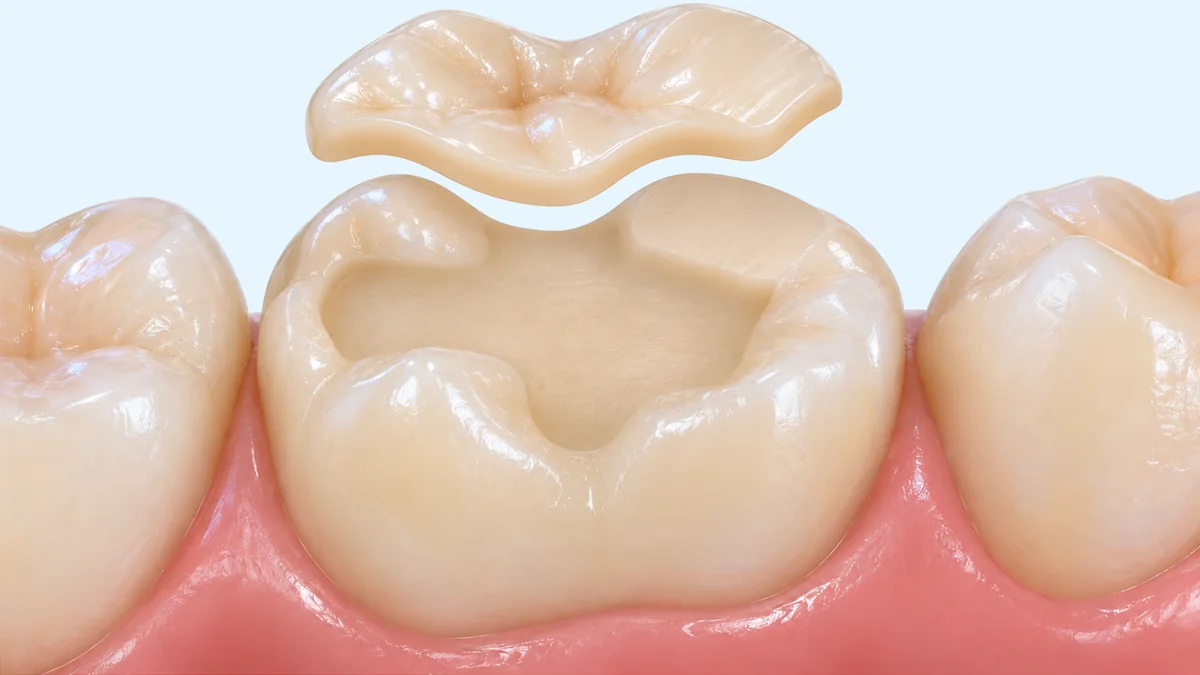
Who it suits: A larger cavity between the cusps, where the cusps themselves are still sound.
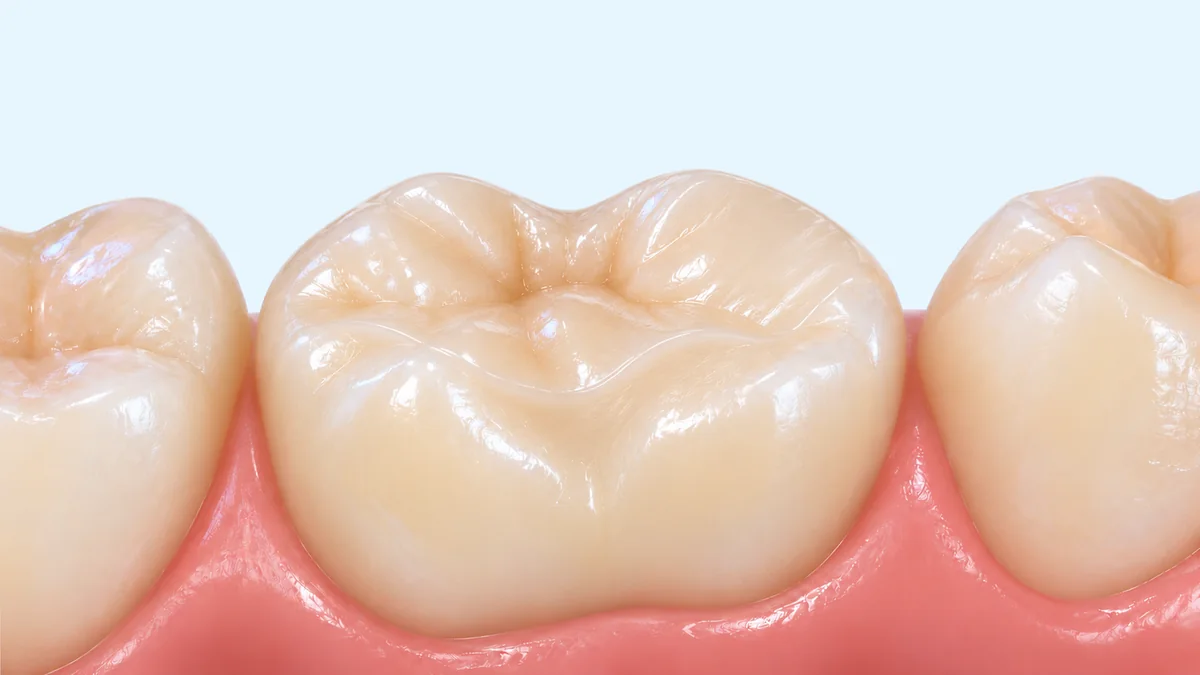
What it does: A ceramic or composite piece made from a scan fills the cavity and is bonded in.

Treatments · Vogue Clinics
Made-to-measure restorations for large cavities in back teeth, keeping more of your own tooth than a full crown.

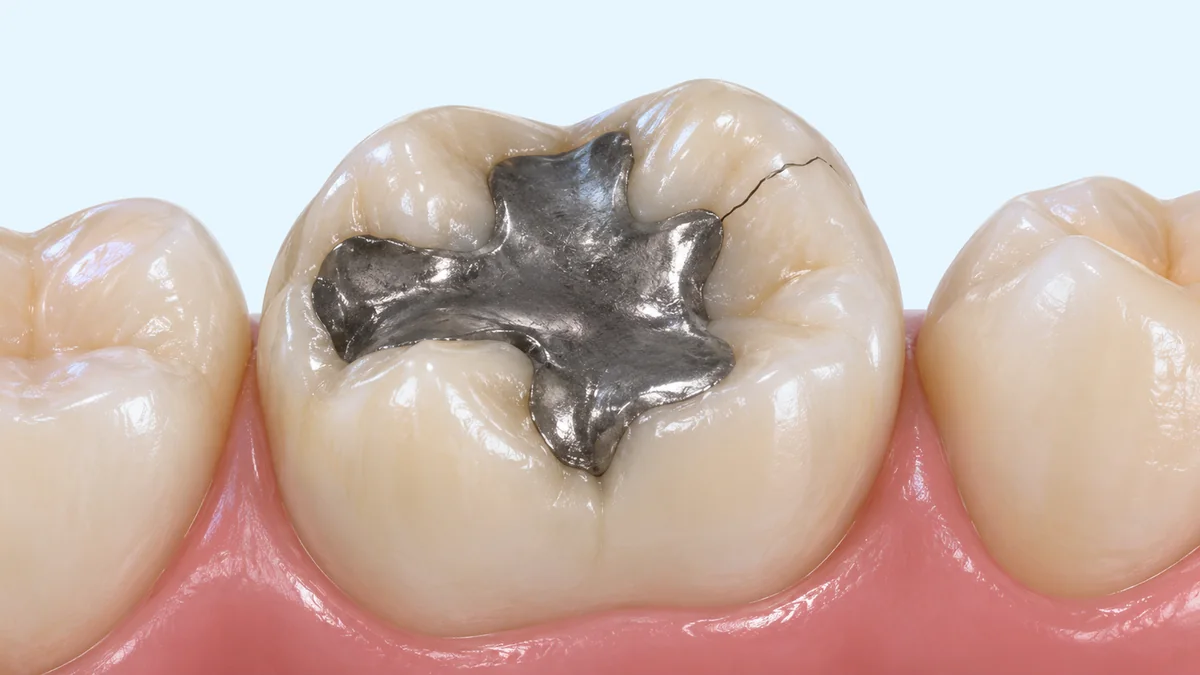
Illustration for explanation only. Whether your tooth needs an inlay, an onlay or a crown, and which material suits it, is decided at your examination.
What are inlays and onlays, and who are they for?
Inlays and onlays are made outside the mouth from a digital scan, then bonded into a back tooth. An inlay sits between the tooth's cusps; an onlay also covers one or more of them. They suit cavities too large for a filling to hold well, where a full crown would remove more healthy tooth than needed.
Which option suits you is decided at your examination, not on this page.
Write to us on WhatsApp or through the form. Tell us if an old filling has broken, a piece of tooth has chipped off, or a tooth hurts when you bite. Send an X-ray if you have one.
The point of an onlay is to protect the weak parts of a tooth without trimming the strong ones. A crown needs the tooth reduced on every side; an onlay leaves the healthy walls alone.
| Option | What it covers | Usually suits |
|---|---|---|
| Filling | Fills the cavity, shaped directly in the mouth | Small and medium cavities with strong walls |
| Inlay | Fills the cavity between the cusps | Larger cavities where the cusps are still sound |
| Onlay | Fills the cavity and covers one or more cusps | Cracked or weakened cusps, or teeth after root canal treatment |
| Crown | Covers the whole tooth above the gum | Teeth with very little left, or where an onlay can't be bonded well |
Inlays and onlays are made in ceramic or composite; your dentist explains which material suits that tooth. How many visits it takes depends on your case; your written plan states it.
Onlays rely on bonding, so they need enough healthy enamel at the edges and a tooth that can be kept dry while they go in. Cavities that run deep under the gum can make that hard.
Heavy grinding is worth discussing too. It doesn't rule an onlay out, but your dentist may suggest a night guard to protect it. Front teeth are usually restored with fillings, veneers or crowns instead.
For a wide cavity, often yes; for a small one, usually not. A filling is shaped and hardened in the mouth, and a very large one can flex under chewing. An inlay is made outside the mouth in one piece and then bonded in, so its shape and its contact with the next tooth can be controlled more closely.
The trade-off is that an inlay needs a scan, a little more preparation and sometimes a second visit. For small cavities with strong walls, a filling stays the simpler choice.
| Filling | Inlay |
|---|---|
| Shaped and hardened in the mouth | Made outside the mouth from a scan, then bonded |
| Usually finished in one appointment | May need a second appointment |
| Best for small and medium cavities | Suits larger cavities between sound cusps |
| A very large one can flex under chewing | One solid piece supports the walls better |
Your treatment journey
From your first message to the follow-up after you fly home, one coordinator stays with you.
From home
A few smile photos or a recent X-ray on WhatsApp is enough to start.
From home
Our dentists prepare your treatment plan and quote, in writing.
Istanbul
We organise appointments, hotel and transfers around your treatment.
At the clinic
Digital impressions and smile design let you see the plan before anything begins. A coordinator translates in the chair and explains each step.
Back home
Your coordinator stays reachable after you've flown home.
Every dentist at our clinics provides this treatment.

Head Dentist · Founder · Ataşehir and Bağdat Caddesi

Dentist · Branch director, Bağdat Caddesi

Dentist

Dentist · Aesthetic and prosthetic dentistry

Orthodontist

Endodontist

Dentist · Pediatric dentistry

Dentist

Dentist · Bağdat Caddesi

Dentist · PhD programme in Restorative Dentistry

Dentist

Dentist

Pediatric Dentist
Dentist
You can have this treatment at both of our Istanbul clinics: Dental clinic in Ataşehir, Istanbul and Dental clinic in Kadıköy, Bağdat Caddesi.
There is no fixed number of years. It depends on your bite, whether you grind your teeth and how well the edges are kept clean. Made in one piece and bonded in place, an onlay in a wide cavity usually holds up better than a large filling. The edge where onlay meets tooth is where decay can start again, so your dentist checks it at every visit.
The tooth is numbed while it is prepared and again while the onlay is bonded, so you feel pressure and vibration rather than pain. Some sensitivity to cold or on biting afterwards is common and usually settles. If it doesn't, or your bite feels high, tell us; a small adjustment is often all it needs.
They differ in how much of the chewing surface they cover. An inlay sits between the cusps, the raised points of a back tooth; an onlay covers one or more cusps; an overlay covers the whole chewing surface. None of them involves trimming the tooth down on every side as a crown does. Which fits depends on how much sound tooth is left.
They are made from ceramic or composite, and both are tooth-coloured. Ceramic keeps its colour and polish well over time; composite is easier to repair or adjust in the mouth. Your dentist suggests one based on the size of the cavity, your bite and whether you grind, and the shade is matched to the teeth around it.
They do a similar job, but they are made differently. A filling is a direct restoration: it is shaped and set inside the mouth. Inlays and onlays are indirect: the tooth is scanned, the piece is made outside the mouth to fit it, and then it is bonded in place. That is why they may need a second appointment.
It can be either, or a filling. MOD describes the surfaces involved: the side facing the front of the mouth, the chewing surface and the side facing the back. If the cusps are sound, an MOD cavity can be restored with a filling or an inlay; if one or more cusps are weak or cracked, an onlay that covers them protects the tooth better.
Often, yes, and it is one of the common reasons for an onlay. A root-treated back tooth is more likely to crack, and an onlay that covers its cusps helps protect it. If too little tooth is left, a crown is suggested instead. Your written plan shows when the onlay is made after the root canal treatment.
The tooth is prepared under local anaesthetic, scanned digitally, and the onlay is made outside the mouth to fit it. If it is fitted at a later appointment, a temporary filling protects the tooth in between, so unlike a filling an onlay may need a second visit. How many appointments your case needs is set out in your written plan.
This page is for general information and doesn't replace an examination by a dentist.
Start here
A dentist looks at it and we reply with honest options and a written plan. You don't have to commit to anything.
Mon–Sat 09:30–18:30
Get directions