Single tooth implant
Who it suits: One missing tooth, or one that can no longer be saved.
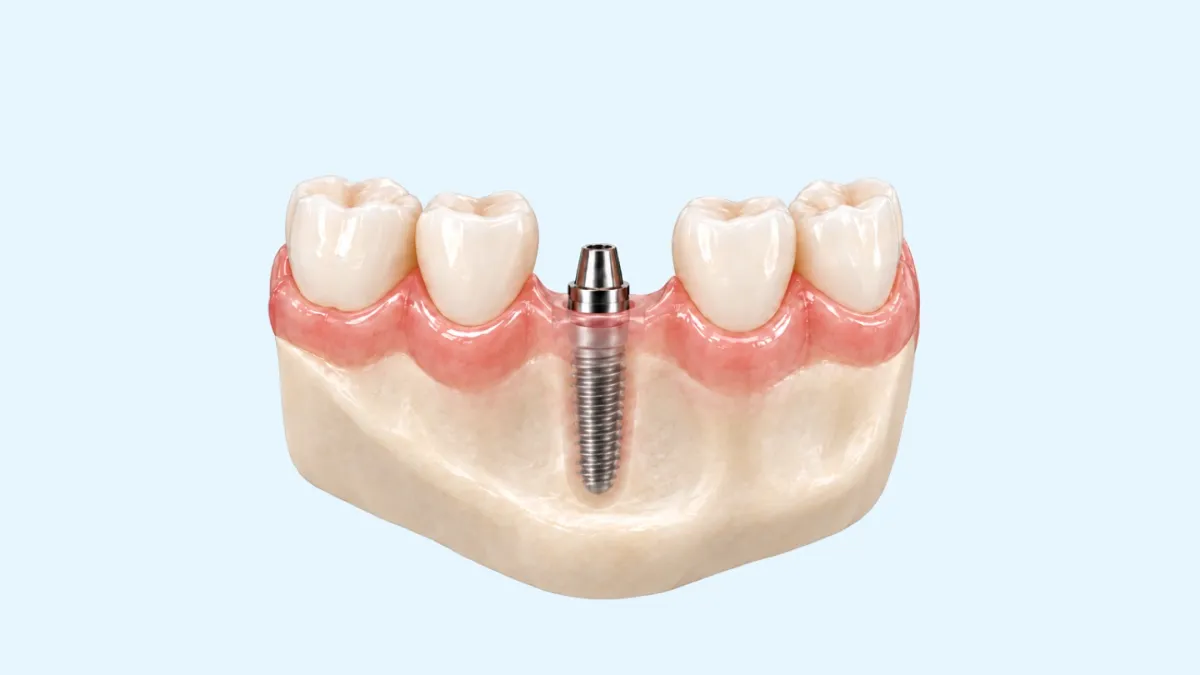
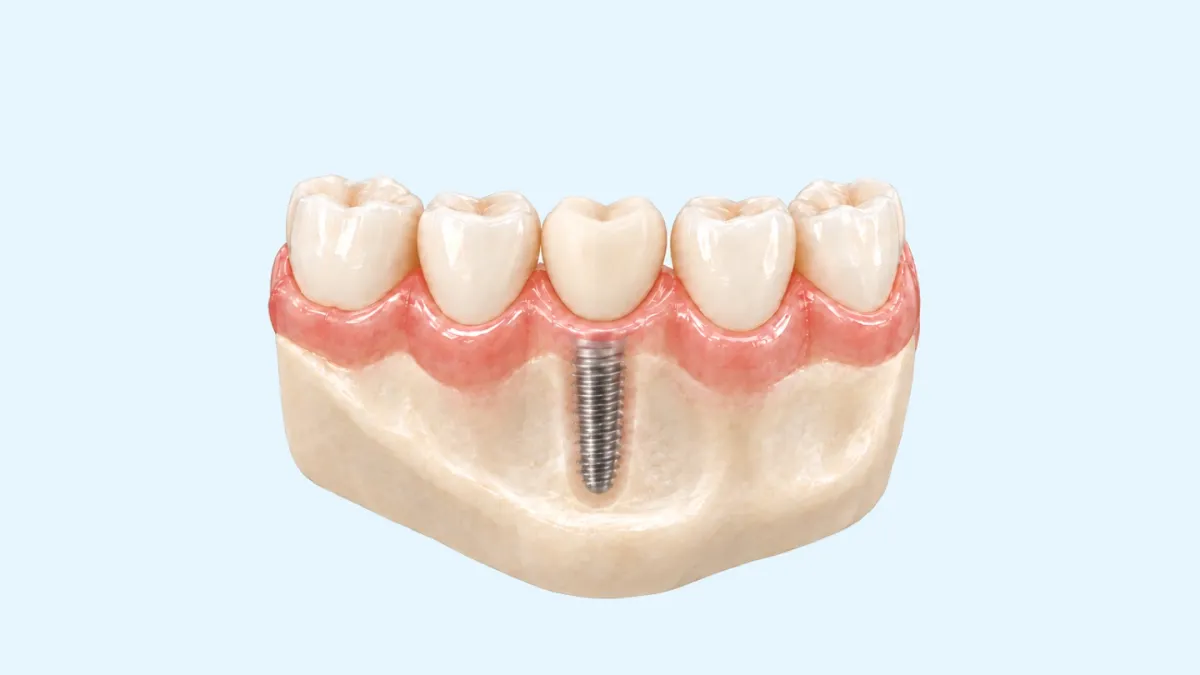
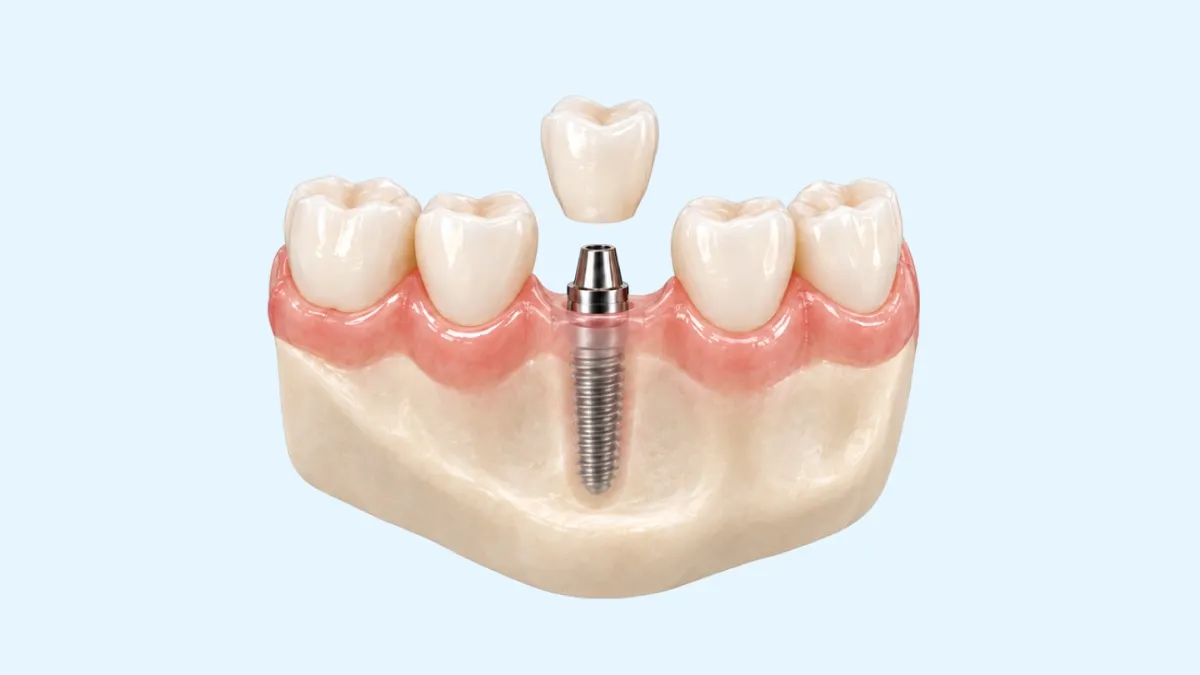
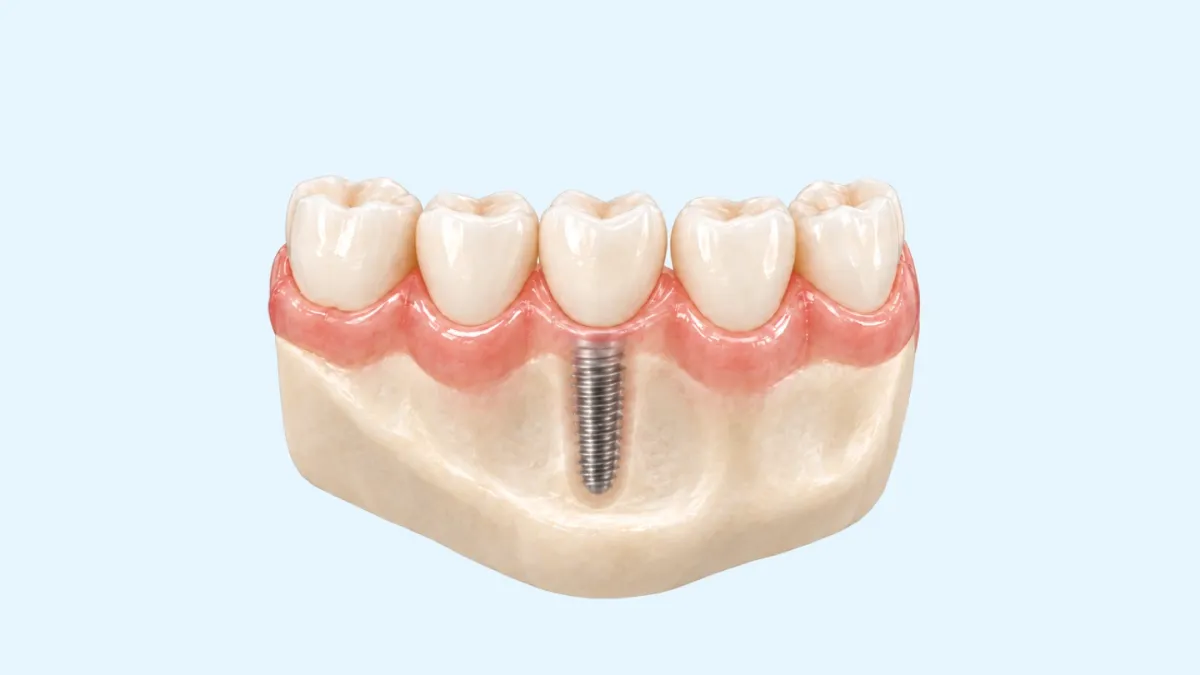
What it does: One implant with a connector and a crown; the teeth either side are not cut down.

Treatments · Vogue Clinics
One implant for one missing tooth; for several, separate implants or an implant-supported bridge.

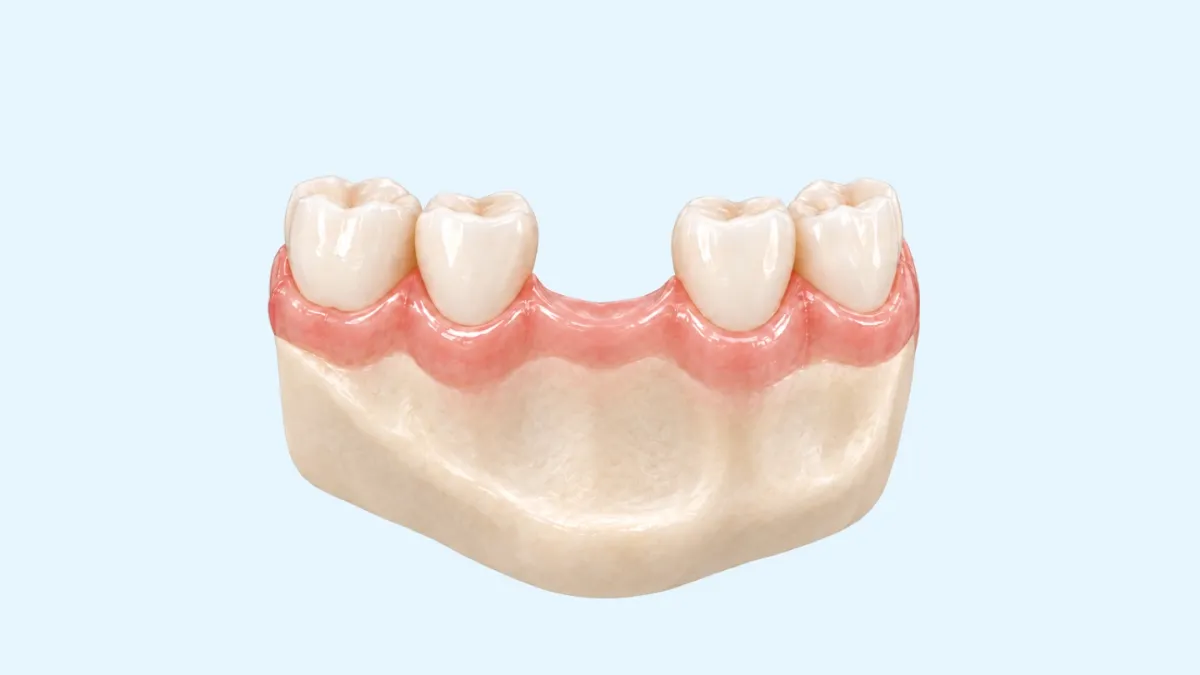
Illustration for explanation only. How many implants you need, and where, is planned from your own scan.
What are single and multiple dental implants, and which suits me?
A single tooth implant replaces the root of one missing tooth: an implant in the bone, a connector (abutment) on top and a crown that matches your other teeth. If several teeth are missing, each can have its own implant, or fewer implants can carry a bridge across the gap. Your dentist decides which suits you after an examination and a scan.
Which option suits you is decided at your examination, not on this page.
Send an X-ray or a photo on WhatsApp or through the form, and tell us which teeth are missing or causing trouble. If there is swelling, say so.
Clean around implant crowns like natural teeth, with extra care at the gumline. Routine check-ups can be done by a dentist near your home, and your coordinator stays reachable.
A dental implant replaces the root of a missing tooth. It is a small screw, usually titanium, placed in the jawbone. Once it has healed, a connector called an abutment goes on top, then a crown that matches your other teeth. Unlike a traditional bridge, the teeth beside the gap are not cut down.
If several teeth are missing, you may not need an implant for each one. Each implant can carry its own crown, or a few implants can carry a bridge that fills several teeth in a row.
| Single tooth implant | Several implants | |
|---|---|---|
| Replaces | One missing tooth | Several teeth, side by side or apart |
| On top | One crown | A crown on each implant, or a bridge on a few |
| Neighbouring teeth | Left as they are | Left as they are |
| Before the final teeth | The implant bonds with the bone | The implants bond with the bone |
This gives a first idea. Your dentist makes the final decision after an examination and a scan.
Sometimes. If a tooth has to come out and the bone around it is intact with no spreading infection, the implant can go into its socket at the same appointment; this is called an immediate implant. If not, the socket heals first and the implant is placed later, sometimes after a graft.
Either way, the final crown waits until the implant has bonded with the bone. If the implant sits firmly on the day, a temporary crown that stays out of your bite may be fitted.
An implant isn't the only way to fill a gap. If the teeth beside the gap already need crowns, for example, a bridge or a partial denture can be the better choice for some mouths.
| Implant | Bridge | Partial denture | |
|---|---|---|---|
| Held by | An implant in the bone | Crowns on the teeth beside the gap | Clasps on your remaining teeth |
| Neighbouring teeth | Left as they are | Cut down to carry the bridge | Usually not cut; clasps rest on them |
| Fixed or removable | Fixed | Fixed | Comes out for cleaning |
| Surgery | Yes, then a healing period | No | No |
Your treatment journey
From your first message to the follow-up after you fly home, one coordinator stays with you.
From home
A few smile photos or a recent X-ray on WhatsApp is enough to start.
From home
Our dentists prepare your treatment plan and quote, in writing.
Istanbul
We organise appointments, hotel and transfers around your treatment.
At the clinic
Digital impressions and smile design let you see the plan before anything begins. A coordinator translates in the chair and explains each step.
Back home
Your coordinator stays reachable after you've flown home.
Every dentist at our clinics provides this treatment.

Head Dentist · Founder · Ataşehir and Bağdat Caddesi

Dentist · Branch director, Bağdat Caddesi

Dentist

Dentist · Aesthetic and prosthetic dentistry

Orthodontist

Endodontist

Dentist · Pediatric dentistry

Dentist

Dentist · Bağdat Caddesi

Dentist · PhD programme in Restorative Dentistry

Dentist

Dentist

Pediatric Dentist
Dentist
You can have this treatment at both of our Istanbul clinics: Dental clinic in Ataşehir, Istanbul and Dental clinic in Kadıköy, Bağdat Caddesi.
The implant is placed at one appointment, and if it sits firmly that day a temporary crown that doesn't touch your bite may be fitted. The final crown can't be fitted on the same day, because the implant first has to bond with the bone. If a tooth needs removing, the implant can sometimes go into the socket at the same visit; otherwise the socket heals first.
A single tooth implant has no set lifespan; how long it lasts depends mostly on daily cleaning, regular check-ups, smoking and grinding. The implant and the crown age differently: the implant stays in the bone, while the crown may need repair or replacement after wear or a chip. Inflammation around the implant caused by plaque is the main threat, which is why check-ups matter.
The area is numbed with local anaesthesia, so most people feel pressure rather than pain while the implant is placed. Some soreness and swelling afterwards is normal and usually settles over the first days. Your dentist tells you which pain relief suits you. Contact us if the swelling keeps getting worse instead of settling, if you have a fever, or if bleeding doesn't stop with gentle pressure.
Your dentist first measures the bone under the gap on a scan and plans where the implant goes. The implant is placed in the bone under local anaesthesia, and a temporary crown may fill the gap while it heals. Once the implant has bonded with the bone, a connector (abutment) and a crown matched to your teeth are fitted. The teeth beside the gap aren't cut down.
Usually two stages: the implant goes in at one appointment, and the final crown is fitted once the implant has bonded with the bone. How long that bonding takes depends on your bone and can't be hurried; a bone graft lengthens it. If a tooth has to come out first, the implant may go in at the same visit or after the socket has healed. Your written plan gives the timeline.
It often is when one tooth is missing and the teeth beside it are healthy. The main advantages are that the neighbouring teeth stay untouched and the implant is fixed rather than removable. The drawbacks are surgery and a healing period before the final crown. If the teeth beside the gap already need crowns, a bridge can make more sense; your dentist goes through this with you.
There are two kinds of healing. Soreness and swelling usually settle over the first days, and many people go back to work and their routine when they feel ready. Bonding of the implant with the bone takes much longer, and the final crown is only fitted once it is complete. Until then, chew on the other side while the area is tender and don't bite hard on a temporary crown.
Once it is finished, it looks like a tooth. The implant itself sits in the bone under the gum and can't be seen; what shows is the crown, made to match the colour and shape of the teeth beside it. At the front, the gum can recede a little after an extraction, so your dentist checks the gum and the thin bone there before placing the implant.
The implant goes in at one visit, but the final crown waits for healing, so most patients come back for a second stage. Your written plan and quote set out both.
This page is for general information and doesn't replace an examination by a dentist.
Start here
A dentist looks at it and we reply with honest options and a written plan. You don't have to commit to anything.
Mon–Sat 09:30–18:30
Get directions